Navigating the Complexity of Personal Injury Claims
Insurance is a promise of protection. It is a safety net for life's unexpected events. But what happens when an insurance company fails to keep its word? When insurers act unfairly or dishonestly, it is called 'bad faith.' This can cause great hardship for policyholders.
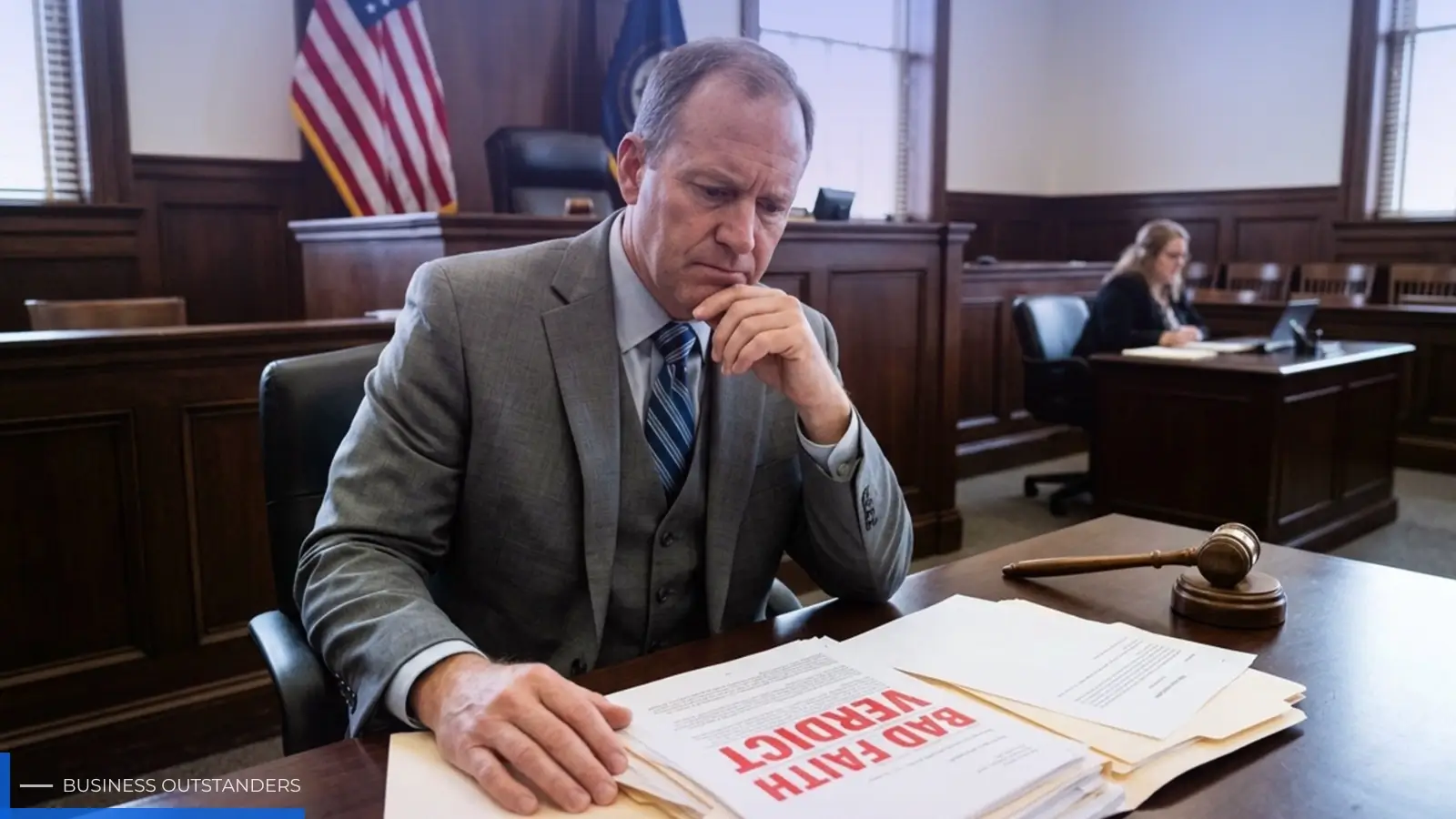
Understanding insurance bad faith verdicts is crucial for anyone relying on their insurance. These verdicts show how courts hold insurers accountable. They highlight when companies put profits over people.
We will define insurance bad faith. We will explain its main types. We will look at common actions insurers take that lead to bad faith findings. We will share details on some of the largest bad faith verdicts and settlements. We will also discuss punitive damages and the laws that govern them. Finally, we will provide clear steps policyholders can take if they suspect bad faith. Our goal is to help you understand your rights and the path to justice in these complex cases.
Navigating a personal injury claim can be a complex and emotionally taxing experience. When an individual suffers harm due to another's negligence, the legal system provides avenues for recovery, but these paths are often fraught with challenges, particularly when dealing with insurance companies. Our legal team understands that securing rightful compensation involves more than just proving injury; it requires a deep understanding of duty of care, negligence, and the intricate web of Florida tort law, especially in areas like Clearwater.
Establishing Liability in Personal Injury Claims
The cornerstone of any successful personal injury claim is establishing liability. This means proving that another party’s actions, or inactions, were the proximate cause of the injury. For instance, in a car accident, this might involve demonstrating that a driver failed to yield, leading to a collision. Our process typically begins with meticulous evidence collection, which can include gathering police reports, medical records, and witness testimony. In complex cases, we might engage accident reconstruction specialists to paint a clear picture of what transpired. The burden of proof rests on the injured party, requiring a comprehensive and compelling presentation of facts to show how the defendant's negligence directly led to the harm suffered.
The Role of Documentation in Legal Disputes
Effective documentation is paramount in personal injury litigation. Every piece of evidence, from medical bills detailing treatment for injuries to records of lost wages, contributes to building a robust case. In Florida, specific statutes often dictate the types of documentation required and the timelines for submission. For example, detailed medical records are essential not only to prove the extent of the injury but also to link it directly to the incident in question. Similarly, police reports provide an official account of an accident, while photographic evidence can capture the immediate aftermath. This meticulous approach ensures that all aspects of the claim, including property damage and future medical needs, are thoroughly substantiated, laying the groundwork for fair compensation.
The Intersection of Insurance Bad Faith and Personal Injury
Insurance policies are contracts built on an implied covenant of good faith and fair dealing. This means that both the insurer and the policyholder are expected to act honestly and fairly towards each other. However, when an insurance company prioritizes its profits over its contractual obligations, it can lead to what is known as insurance bad faith. This misconduct can manifest in various forms, impacting policyholders directly (first-party claims) or affecting their ability to protect themselves against claims from others (third-party claims).

Identifying Misconduct in Personal Injury Claims
When an insurer acts in bad faith, it often engages in behaviors that undermine the very purpose of insurance. Common red flags include an unreasonable denial of a valid claim without proper investigation, excessive delays in processing or paying claims, or failing to defend an insured party in a lawsuit when obligated. Insurers might also offer "lowball" settlements that are significantly less than the claim's true value, or misrepresent policy language to avoid payouts. Insurers might also offer "lowball" settlements that are significantly less than the claim's true value, or misrepresent policy language to avoid payouts. One of the most common misconceptions about personal injury claims is that a low settlement offer reflects what the case is actually worth, what you need to know is that these offers are often a deliberate tactic, not an honest assessment. Investigative failures, such as ignoring crucial evidence or refusing to interview key witnesses, also point to potential bad faith. These actions can leave policyholders in dire financial straits, struggling to cover medical bills, lost wages, and other damages after a personal injury.
Statutory Protections for Florida Policyholders
Florida law provides specific protections against insurance bad faith, primarily through Florida Statute § 624.155. This statute outlines what constitutes unfair claims settlement practices and grants policyholders the right to pursue a bad faith lawsuit against their insurer. A critical step in this process is issuing a Civil Remedy Notice, which gives the insurance company a 60-day window to rectify its behavior before a lawsuit can be filed. This notice serves as a formal warning and a final opportunity for the insurer to act in good faith. The Florida Unfair Insurance Trade Practices Act further defines various acts that constitute bad faith, ensuring that insurers adhere to fair business practices. For residents in Clearwater and across Florida, understanding these legal standards is vital when confronting an insurer's misconduct.
Analyzing Record-Breaking Insurance Bad Faith Verdicts
The legal landscape of insurance bad faith has seen some truly monumental verdicts, sending a clear message to insurers that courts and juries will not tolerate egregious misconduct. These cases often involve severe personal injuries where insurers have failed to uphold their duties, leading to significant financial and emotional distress for policyholders.
In recent years, we've witnessed juries award staggering sums. For example, a Colorado jury in 2024 awarded $145.26 million to Fermin Salguero-Quijada against NorGUARD Insurance for denying rehabilitation after a traumatic brain injury. Similarly, a Nevada verdict against USAA reached $114 million ($100 million punitive, $14 million compensatory) for delaying a traumatic brain injury claim. These outcomes highlight a growing trend of corporate accountability when insurers prioritize profits over people.
Other notable cases include an $84,000,000 verdict for bad faith denial of disability benefits (Ceimo v. Paul Revere) and a $42,000,000 judgment for breach of duty to defend (Murriel-Don Coal Co. v. Aspen Insurance UK Ltd.), where the insurer abandoned a small coal company, leaving it vulnerable to a default judgment. These figures underscore the severe consequences insurers face for failing to act in good faith. For a deeper dive into some of the most significant cases, exploring Personal injury bad faith verdicts can provide valuable insights into the scale of accountability insurers can face.
The Mechanics of Punitive Damages
A significant component of these massive verdicts often comes from punitive damages. Unlike compensatory damages, which aim to reimburse the policyholder for actual losses, punitive damages are designed to punish the insurer for particularly reprehensible conduct and to deter similar actions in the future.
The U.S. Supreme Court has established guideposts for reviewing punitive awards to ensure they comply with the Due Process Clause, primarily through cases like BMW of North America, Inc. v. Gore and State Farm Mutual Automobile Insurance Co. v. Campbell. These guideposts consider the reprehensibility of the insurer's conduct, the disparity between the harm suffered and the punitive award (often suggesting a "single-digit ratio" to compensatory damages), and the difference between the punitive award and civil penalties authorized in comparable cases. Juries often award punitive damages when they find evidence of "actual malice" or a conscious disregard for the policyholder's rights, signaling their outrage at an insurer's misconduct.
Recent Trends in High-Stakes Litigation
The trend of increasing punitive awards and large verdicts continues in May 2026. Insurers are facing significant liability, particularly in cases involving catastrophic injuries and clear evidence of bad faith. Recent court rulings, such as a Travelers unit being hit with a bad faith suit over a $241 million jury verdict in an underlying case, illustrate the ongoing challenges insurers face when their handling of claims leads to excess judgments. This particular case, filed in March 2026, alleges that the Travelers unit recklessly disregarded its insured's interests, leading to the substantial underlying verdict. You can read more about the Travelers unit bad faith suit over the $241M jury verdict for further details. Another instance is the USAA case where a zero-fault insured received a $100 million punitive verdict due to the insurer's delay in paying a claim, as reported by CVN. This case highlighted how an insurer's intervention on behalf of an at-fault driver against its own insured can backfire spectacularly.
These cases often reflect what some legal observers describe as "jury outrage" at corporate profit-shifting tactics, where insurers are perceived as prioritizing their bottom line over their policyholders' well-being. The legal system, through these verdicts, is increasingly holding insurers accountable for their conduct, especially when it involves deliberate delays, unreasonable denials, or a failure to properly defend their insureds.
Florida Legal Standards and Statutory Requirements
Florida's legal framework for insurance bad faith is distinct and continuously evolving, shaped by state statutes and appellate court decisions. Understanding these specific requirements is paramount for policyholders seeking justice.
In May 2026, we continue to see the influence of rulings from the 11th Circuit Court of Appeals, particularly concerning an insurer's duty to initiate settlement. A significant 2025 decision by the 11th Circuit reversed a judgment against a Florida lodge, emphasizing that a jury should determine whether an insurer's failure to initiate settlement proceedings before a claim was filed constituted bad faith. This ruling reinforced the idea that insurers have an affirmative duty to act diligently, even pre-suit, when liability is clear and damages are likely to exceed policy limits, effectively reaffirming an insurer’s duty to initiate settlement in Florida bad faith cases.
Another crucial development comes from a federal judge's decision in a Hurricane Michael coverage dispute, where a bad faith claim was severed to allow a $9.8 million judgment in favor of the insured to proceed. This procedural move, reported by Mealey's, highlights the complexities of insurance litigation and the courts' efforts to resolve "procedural conundrums" while protecting policyholders' rights. This Federal Judge Severs Bad Faith Claim, Enters $9.8M Judgment In Favor Of Insured.
The case of Woods v. Progressive American Insurance Company also provides important guidance on how evidence is handled in Florida bad faith trials. The court affirmed that while an underlying uninsured motorist (UM) jury verdict or excess judgment provides a measure of damages, it is not, in itself, substantive evidence of bad faith conduct. Instead, the "totality of the circumstances" surrounding the insurer's claims handling at the time is what truly matters.
Uninsured and Underinsured Motorist Coverage in Florida
Uninsured (UM) and Underinsured Motorist (UIM) coverage is a critical component of personal injury protection in Florida, given the high percentage of uninsured drivers in the state. Bad faith claims often arise when insurers improperly handle UM/UIM claims. Florida law, as highlighted by cases like Fridman v. Safeco, has established that a jury's determination of total damages in an underlying UM claim can be binding in subsequent bad faith litigation. This prevents insurers from employing delay tactics, such as making a policy limits offer just before trial, to avoid a jury's full assessment of damages. The Florida Supreme Court has rejected such insurer delay tactics, ensuring that policyholders are not unduly burdened by re-litigating damages that have already been established. With Pinellas County accident statistics reflecting ongoing risks, understanding UM coverage and how insurers must handle these claims is more important than ever in the May 2026 legal landscape.
Emerging Defenses in Bad Faith Litigation
While policyholders gain ground, insurers are also developing and refining defenses against bad faith allegations. One common defense is the "genuine dispute doctrine," which argues that if there was a legitimate disagreement over coverage or the value of a claim, the insurer cannot be found to have acted in bad faith. This often involves the insurer demonstrating reliance on expert opinions, such as forensic accounting in business income loss claims, to justify their position.
However, as recent court rulings from early 2025 illustrate, the success of these defenses often hinges on specific factual allegations and the insurer's overall conduct. The Dykema Insurance Bad Faith Report, April 2025, details several cases where insurers successfully used defenses like a claimant's refusal to provide medical records or the exercise of contractual appraisal rights to defeat bad faith claims. Conversely, the report also shows instances where allegations of fraudulent joinder or an insurer's knowledge of weak defenses could lead to punitive damages. The report highlights that conclusory allegations are often insufficient; specific factual details are required to sustain a bad faith claim. This ongoing interplay between policyholder claims and insurer defenses shapes the current legal landscape.
Frequently Asked Questions about Personal Injury Litigation
What constitutes "bad faith" under Florida law?
Under Florida Statute § 624.155, an insurance company acts in "bad faith" when it fails to deal fairly and honestly with its policyholders regarding a claim. This can include, but is not limited to, denying a claim without a reasonable basis, failing to conduct a thorough and timely investigation, offering an unreasonably low settlement, or failing to settle a claim when it had the opportunity to do so and a reasonable person would have settled. Essentially, it means the insurer is not upholding its implied duty of good faith and fair dealing. In Clearwater, as elsewhere in Florida, we rely on these standards to protect our clients.
How do punitive damages differ from compensatory damages?
Compensatory damages are intended to make the injured party whole again by covering their actual losses, such as medical expenses, lost wages, pain and suffering, and property damage. Punitive damages, on the other hand, are not about compensating the victim. Instead, they are awarded to punish the defendant (the insurance company in bad faith cases) for egregious, willful, or malicious conduct and to deter them and others from similar actions in the future. These awards are typically much larger than compensatory damages and are subject to constitutional limits and judicial review.
What is the significance of a Civil Remedy Notice?
In Florida, before a policyholder can file a bad faith lawsuit against an insurer, they must first send a Civil Remedy Notice to the Florida Department of Financial Services and the insurer. This notice serves as a statutory prerequisite, giving the insurance company a 60-day "cure period" to resolve the claim in good faith. If the insurer fails to resolve the claim within this 60-day window, the policyholder can then proceed with a bad faith lawsuit. It's a critical step that formally triggers the bad faith litigation process and provides a final opportunity for the insurer to avoid a lawsuit.
Conclusion
The journey through a personal injury claim, especially when complicated by an insurer's bad faith, can be daunting. However, the legal system, supported by landmark verdicts and specific state statutes like Florida Statute § 624.155, offers powerful avenues for justice. As we look at the legal landscape in May 2026, it's clear that courts and juries are increasingly committed to holding insurance companies accountable for their actions.
Policyholders have rights, and understanding these rights is the first step toward securing the compensation they deserve. From recognizing the signs of bad faith to meticulously documenting every interaction, proactive steps can make a significant difference. If you suspect your insurance company is acting in bad faith, seeking experienced legal counsel is crucial. We are dedicated to ensuring legal accountability and upholding policyholder rights, providing transparent guidance through every step of the legal process.
For those in Clearwater and the surrounding Pinellas County area facing insurance disputes, our team is here to help you navigate these complex challenges. Learn more about how experienced legal representation can make a difference in your fight against insurance bad faith.
Business Outstanders brings you sharp insights on tech, business, entrepreneurship, law, crypto, and more. We uncover what’s next. Stay updated, sign up for our newsletter and be part of the future!