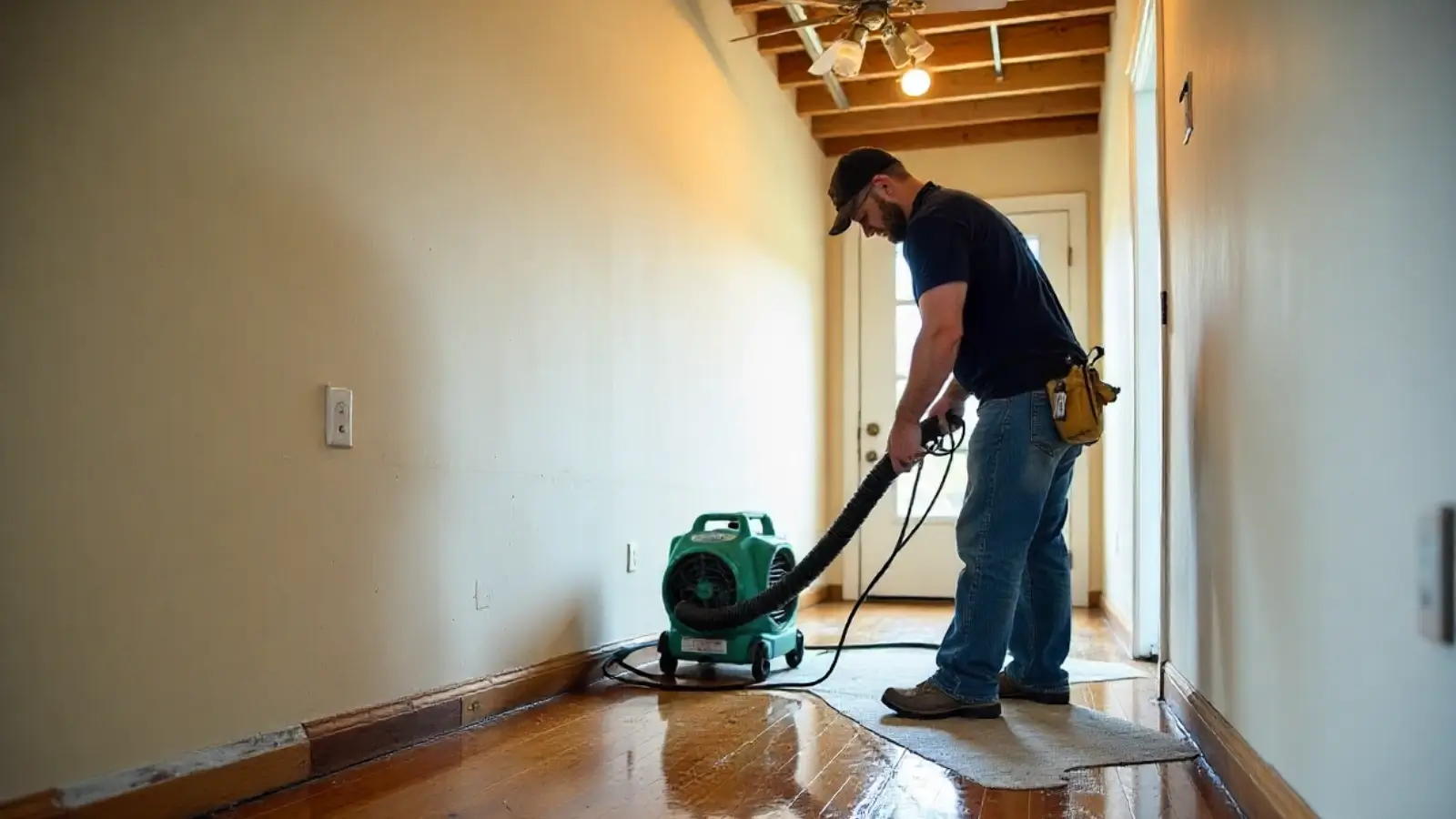
Water that penetrates building materials doesn't just evaporate on its own. It soaks into wood framing, concrete slabs, drywall, and insulation where it causes rot, mold growth, and structural deterioration that might not show up for months. Structural drying is the engineered process of removing moisture from these materials using controlled airflow, dehumidification, and heat to restore them to acceptable dryness levels. The Institute of Inspection, Cleaning and Restoration Certification sets industry standards that define acceptable moisture content for different materials, and professional drying aims to meet those standards rather than just making things "feel dry." Most building failures after water damage trace back to inadequate drying that left hidden moisture in structural components.
How Moisture Affects Different Building Materials
Timber framing starts experiencing fungal decay when moisture content exceeds 20%. Australian softwoods like pine reach equilibrium moisture content around 10% to 12% in normal indoor conditions. Anything above 17% creates conditions for mold and rot. Hardwoods like jarrah have slightly different thresholds but follow the same principle.
Concrete and masonry absorb water differently than wood. These materials have high density and low porosity, which means water penetrates slowly but also leaves slowly. A concrete slab might take weeks or even months to dry completely after flooding. The moisture doesn't just sit on the surface, it migrates through the material's capillary structure.
Drywall is basically compressed gypsum between paper facing. The gypsum core can handle moisture reasonably well, but the paper facing provides perfect food for mold. Once drywall stays wet for more than 48 hours, the paper starts degrading and mold colonizes it. Many restoration standards call for replacing drywall that's been saturated rather than trying to dry it because the paper facing never fully recovers.
The Physics of Controlled Drying
Evaporation requires three things: heat, airflow, and low humidity. Professional structural drying optimizes all three simultaneously. Heat increases molecular activity and helps moisture move from materials into the air. Every 10-degree increase in temperature roughly doubles the evaporation rate.
Airflow carries moisture-laden air away from surfaces and replaces it with drier air. This maintains the vapor pressure gradient that drives evaporation. Still air quickly becomes saturated with moisture right at the surface, which stops further evaporation. Moving air prevents this saturation.
Relative humidity in the drying environment needs to stay below 50% for efficient drying. When humidity gets too high, the air can't accept more moisture regardless of temperature or airflow. Dehumidifiers maintain low humidity by continuously removing water vapor from the air.
Specialized Drying Techniques for Hidden Spaces
Cavity drying systems force air through enclosed spaces like wall cavities and subfloor areas. The basic approach uses flexible ducting connected to air movers. Technicians create small access points, insert the ducting, and seal around it to direct airflow through the entire cavity.
Injecti-dry systems use positive pressure to push heated, dried air into cavities. The air flows through the space and exits through weep holes or other openings. This method works well for wall cavities and ceiling spaces where moisture gets trapped.
Floor mat systems sit on top of finished floors and create negative pressure underneath. They pull air through the subfloor assembly, which dries everything from the underside of the finished floor down to the structural framing. This saves hardwood and engineered floors that would otherwise need replacement.
Monitoring and Documentation Requirements
Moisture mapping establishes baseline readings and tracks progress throughout the drying process. Technicians measure moisture at the same locations daily and plot the data on floor plans or graphs. The measurements need to show consistent downward trends.
Target moisture levels vary by material. Wood framing should reach 15% or lower. Concrete should drop to 4% or less when measured with a pin meter on the surface. Drywall needs to be under 1% moisture content.
Psychrometric calculations help technicians adjust equipment settings. These calculations relate temperature, humidity, and dew point to determine optimal drying conditions. Professional software takes current readings and calculates how many dehumidifiers and air movers are needed for the space size and moisture load.
Common Mistakes That Extend Drying Time
Using too few air movers is probably the biggest error. People think one or two fans will handle a whole room, but professional standards call for much more airflow. Inadequate air movement leaves pockets of stagnant, humid air that slow drying dramatically.
Closing up the space too early happens frequently. Once surface moisture disappears, people assume everything's dry and remove equipment. But structural materials retain moisture longer than surfaces. Premature equipment removal lets moisture redistribute from deep within materials back to surfaces.
Business Outstanders brings you sharp insights on tech, business, entrepreneurship, law, crypto, and more. We uncover what’s next. Stay updated, sign up for our newsletter and be part of the future!