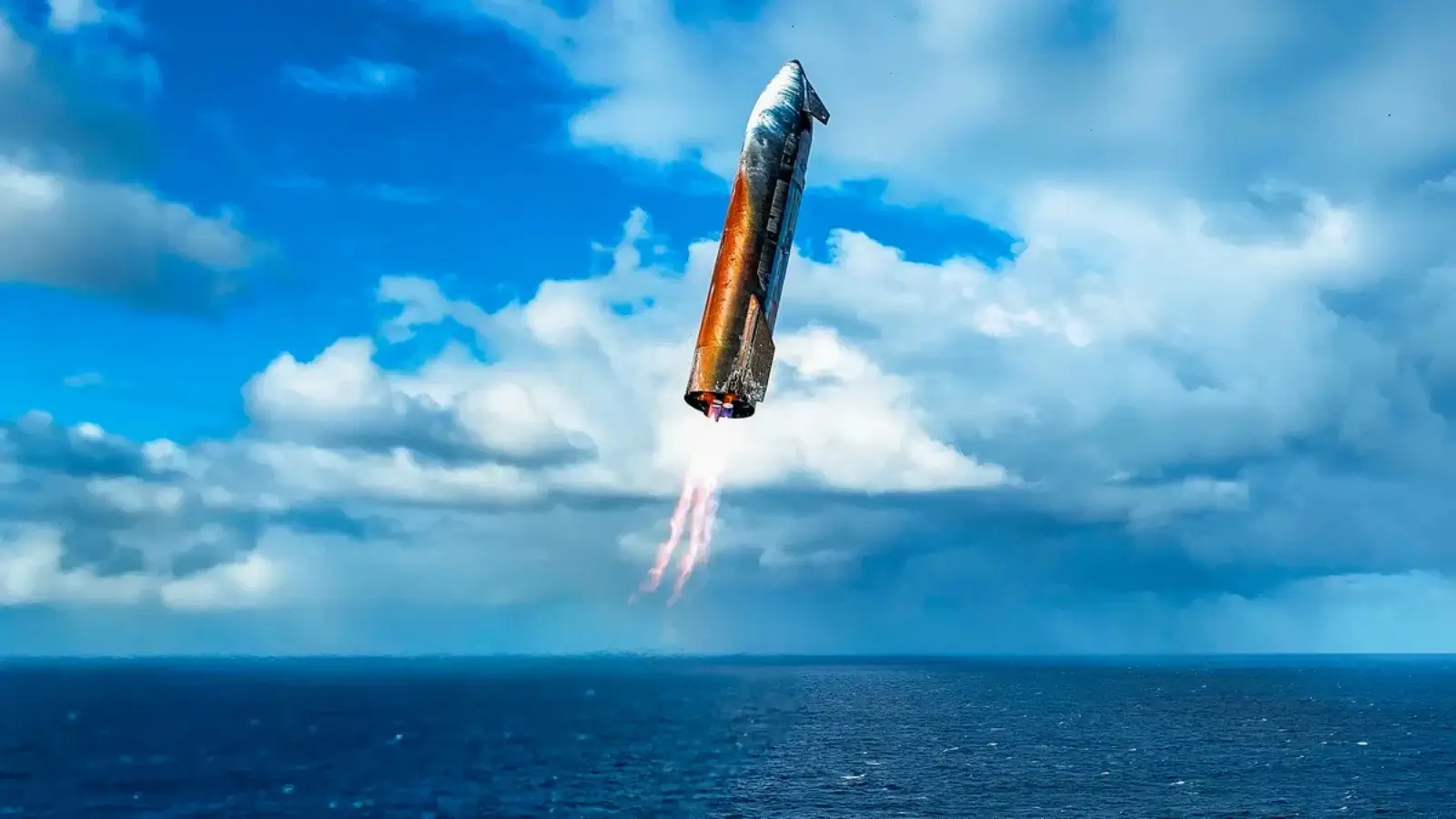
Space X’s 11th Starship, world’s most powerful rocket, wrapped up in a fiery but controlled stable ocean touchdown, in the Indian Ocean. Elon Musk’s dream of a completely reusable space travel is marked with this calibrated splashdown. The Starship Super Heavy Rocket launched skyward from Space X’s Starbase in Texas, on October 13, 2025 and checked off critical goals.
Significant flight tests were carried out on the two-stage Starship system, encompassing the Super Heavy Booster and the upper Starship spacecraft. A regulated downward trajectory was administered by the Super Heavy Booster that commenced a partial landing thrust over the Gulf of Mexico, which was deliberately ended before touchdown. The upper stage Starship performed different but crucial roles engaging the heat-shield tiles and their reentry systems. The spacecraft, upon reentering Earth’s atmosphere, entered a fiery and forceful descent into the Indian Ocean, near Australia. Space X’s 11th Starship has highlighted a new chapter in their quest for completely reusable rockets. Since it was a high-speed reentry the telemetry of the rocket was lost, however, the landing was controlled and intentional. Space X claimed that the attempt was a success as they mentioned that it was a data-rich flight, which pushes the development of next generation starships.
The reusability milestones achieved include successful engine re-ignition at the orbit, during reentry, heat shield performance and trajectory precision. Besides, the spacecraft also took along eight mock Starlink satellites aimed at accessing payload ejection protocols in the suborbital setting. Later this year, the debut of the upgraded prototype is expected from Space X while the 11th Starship marks its final flight. The final goal that Space X attempts to achieve is the participation of Starship variants in NASA’s Artemis Lunar landings and eventually the Mars landings.
Business Outstanders brings you sharp insights on tech, business, entrepreneurship, law, crypto, and more. We uncover what’s next. Stay updated, sign up for our newsletter and be part of the future!