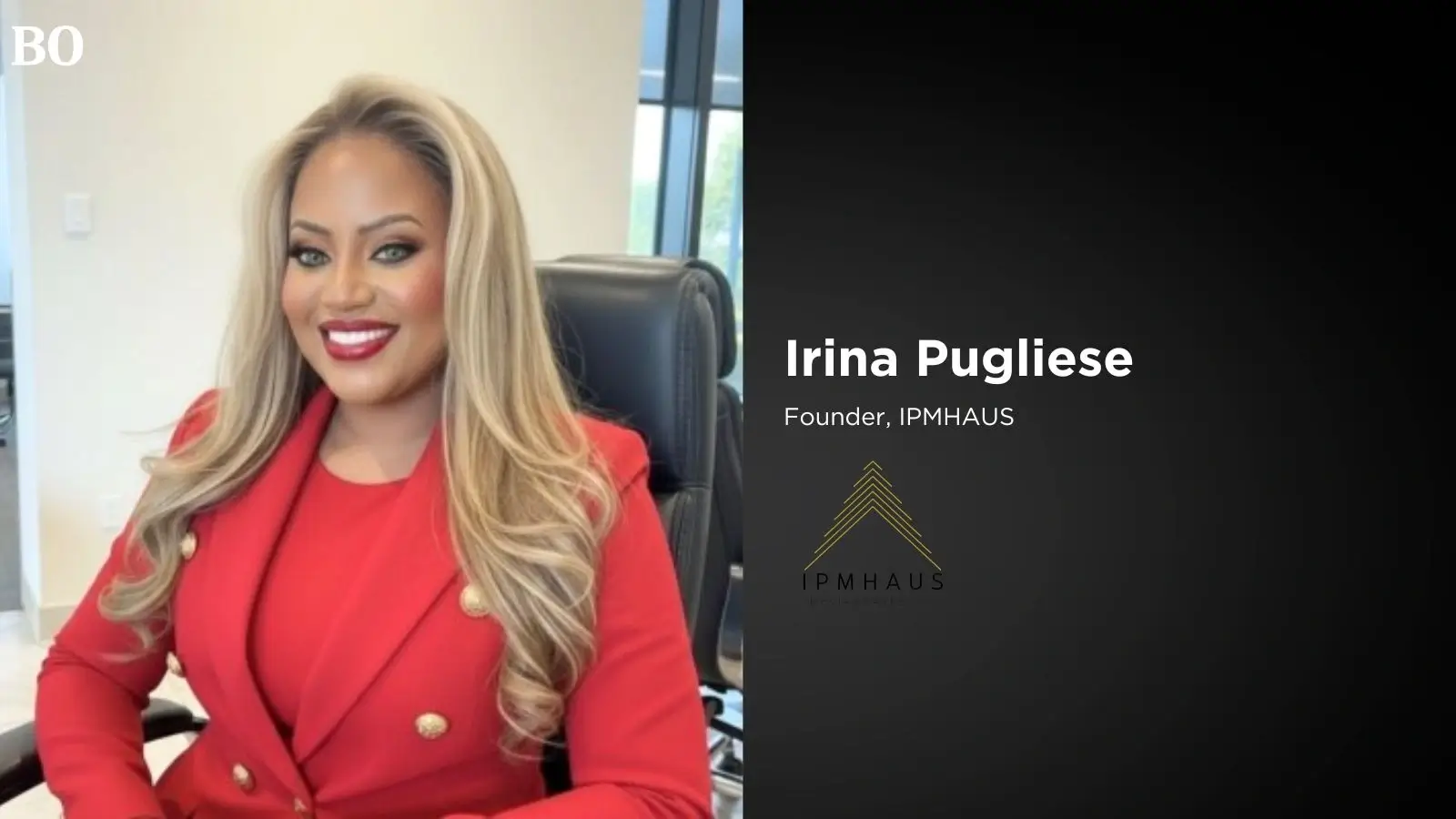
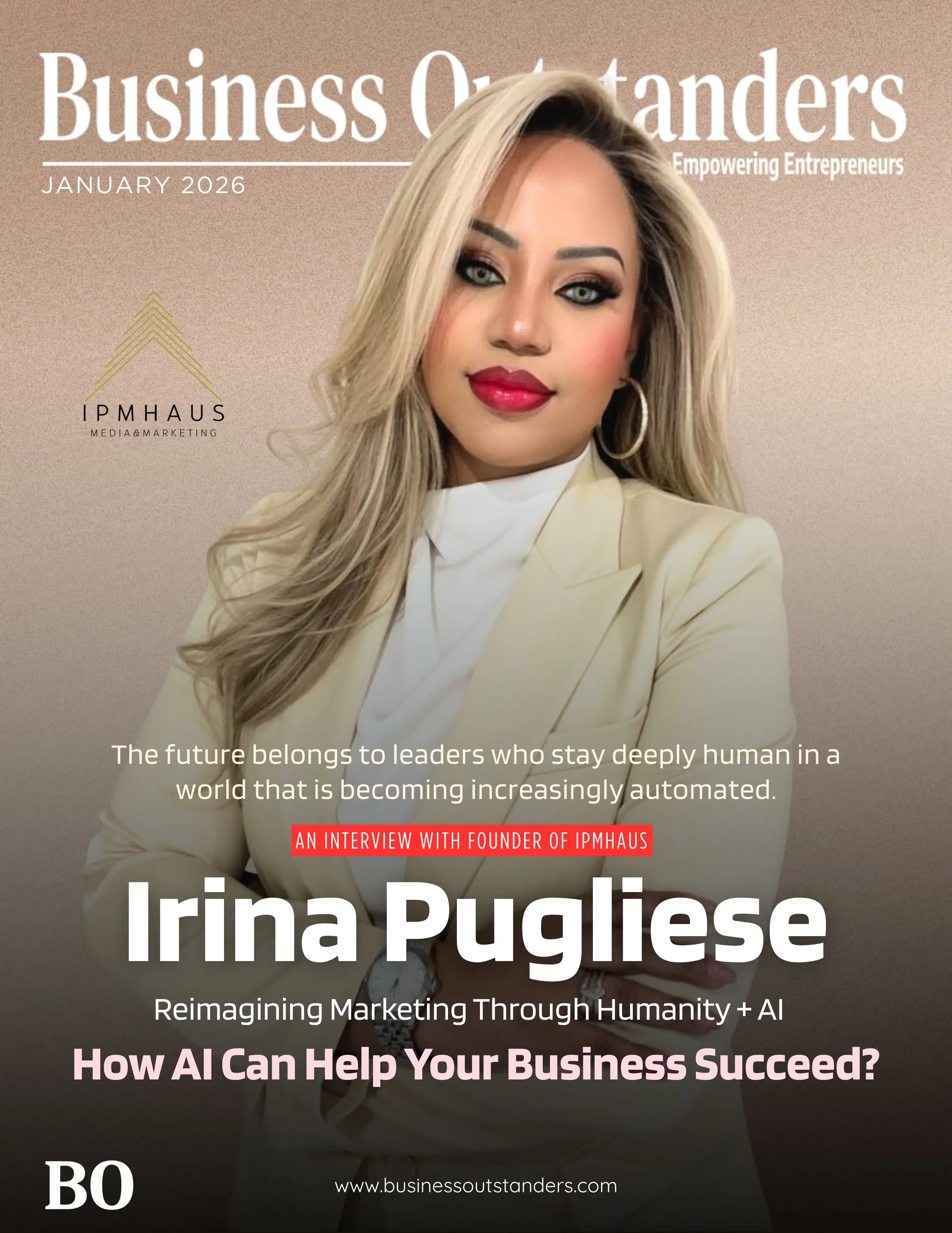
In this exclusive one-on-one conversation, Irina Pugliese, AI expert and Founder of IPMHAUS. This interview gathers her thoughts regarding the changing landscape in digital branding, leadership communication, and the associated management of reputation in the AI-laden digital environment. Celebrated for her more humanistic approach in AI consulting, Irina is forthcoming in her discussion regarding the opportunities complementing the new dimensions in communication in the AI age. Countering the perception of AI being a replacement solution in place of human resource, the expert goes on to define it as an excellent enabling tool. She states it as a potential tool if being used morally by the capable leaders.
Amidst a background that witnesses the growth of automated processes overshadowing authenticity, this dialogue draws attention to the increasing imperatives of achieving harmonies between developments in technology and the human ethic. Irina makes it abundantly clear that credibility, trust, and intelligence based on emotions continue to denote the primary elements of effective communication, even as AI software continues its developments. Her viewpoint thus underscores assertions that the future of online brands or communication for leaders would not be dominated by algorithms but by the intentions behind the use of algorithms.
Business Outstanders have welcomed an opportunity to interview this inspiring personality, Irina Pugliese. Let's get some interesting insights together.
Interview Highlights:
Q. Miss Irina, how do you see AI transforming the landscape of digital branding and leadership communication?
In my opinion, AI is changing not just how we communicate, but why we communicate the way we do.
For years, digital branding was about visibility…Now it’s about meaning. AI can generate content in seconds, but it cannot generate content we can fully trust yet.
This is pushing leaders to become more intentional, more self-aware, and more human in how they show up. The brands that will stand out will not be the most automated but the ones who can mix humanity with automation.
Q. How does IPMHAUS help organizations implement AI responsibly while keeping people at the center of technological advancement?
In my experience, most companies don’t need more technology. They need more clarity. Working with many African clients in the past has brought this to my attention.
At IPMHAUS, we start by understanding people…their culture, their fears, their ambitions. Only then do we introduce AI in a way that still feels real and human, and that supports teams instead of overwhelming them.
I believe technology should feel like a helping hand, not a replacement. When people feel included in the transformation, they become stronger, not threatened and overwhelmed.
Q. What role does AI play in managing reputation and crisis communication online?
I see AI as a radar.
It senses when something is shifting before it becomes visible to everyone else and that’s powerful. But when a crisis happens, people don’t want to hear from a machine. They want to hear from a leader who cares, who takes responsibility, who speaks with empathy. AI prepares the ground, but humans are the ones that must always step forward.
Q. How can AI assist in identifying emerging trends and opportunities for industry leaders?
In my opinion, AI helps leaders listen at a scale that was never possible before because of the data available… but then you must decide between what data is helpful and what data is credible.
It picks up early signals in conversations, behavior, sentiment that tell us where the world is quietly moving. But the real skill is knowing which signals matter for your own purpose. So even though AI shows us the map … leadership must choose the direction.
Q. What ethical considerations should organizations keep in mind when leveraging AI for reputation management and influence?
I believe trust is fragile.
If people feel manipulated, tracked without consent, or spoken to by machines pretending to be human, trust disappears.
Ethical AI means being transparent, protecting privacy, and always keeping a human accountable for what is said and done. Influence should inspire never deceive.
Q. How do you envision AI influencing the development of narrative architecture for brands and leaders?
Well AI has the potential to become a mirror.
It will show leaders how they are perceived, what resonates, what feels authentic, and what doesn’t. That feedback is invaluable. But the story itself must still come from lived experience, purpose, and courage. AI can refine the message. But only humans can create meaning.
Q. What are the main challenges organizations face when integrating AI into their communication strategies?
Honestly, the biggest challenge is fear.
Fear of being replaced. Fear of getting it wrong. Fear of moving too fast or too slow. Without education and open conversation, AI becomes a threat instead of an ally.
The organizations that succeed are the ones that invite their people into the process slowly rather than imposing it on them for the sake of “keeping up with the times”.
Q. How can organizations implement AI in a way that enhances human judgment and responsibility rather than replacing them?
In my experience, AI should sit beside us, not in front of us. Let it gather insight, process data, and reduce repetitive work.
But let humans make the final call, take responsibility, and own the consequences.
That balance keeps wisdom, and accountability in check…not just efficiency at the center of decision-making.
Q. How does IPMHAUS assist clients in balancing innovation with responsible AI deployment to foster trust and accountability?
At IPMHAUS, we want to walk with our clients.
We don’t just deliver tools we train and build understanding. We create governance, train teams, define ethical boundaries, and design systems where innovation never outruns responsibility.
That’s how trust is built: step by step, with people who can be fully part of the journey.
Q. What advice would you give to business leaders and communication professionals seeking to leverage AI effectively in their branding efforts?
My advice is simple don’t chase AI. Let AI serve your purpose.
Start by understanding who you are, what you believe, and how you want to contribute. Then use technology to amplify that truth not to replace it. The future belongs to leaders who stay deeply human in a world that is becoming increasingly automated.
“The future belongs to leaders who stay deeply human in a world that is becoming increasingly automated.”
Throughout the interview, Irina Pugliese reinforces a clear message: AI is most powerful when it enhances, not erases, human judgment. From crisis communication to narrative building, she highlights the irreplaceable role of empathy, accountability, and lived experience in leadership. Her approach at IPMHAUS demonstrates how innovation can coexist with ethical responsibility when people are included in the transformation process. Rather than chasing trends, Irina encourages leaders to stay grounded in their values and use AI as a tool to amplify authenticity. Her perspective serves as a timely reminder that in the age of automation, humanity remains the strongest currency of trust.
Connect with Irina Pugliese on LinkedIn
IPMHAUS: https://www.ipmhaus.com/
Article: How to Lead with AI Without Losing Your Humanity | Lessons from Irina Pugliese
About Business Outstanders
Business Outstanders is a business magazine featuring interviews, growth strategies, and leadership insights for entrepreneurs and small business owners. If you know a business leader with a story worth telling, nominate them for a feature interview.