In many organizations, change often focuses on quick fixes and surface-level solutions. But one forward-thinking leader is exploring something deeper, looking into the unconscious mind to create real, lasting change.
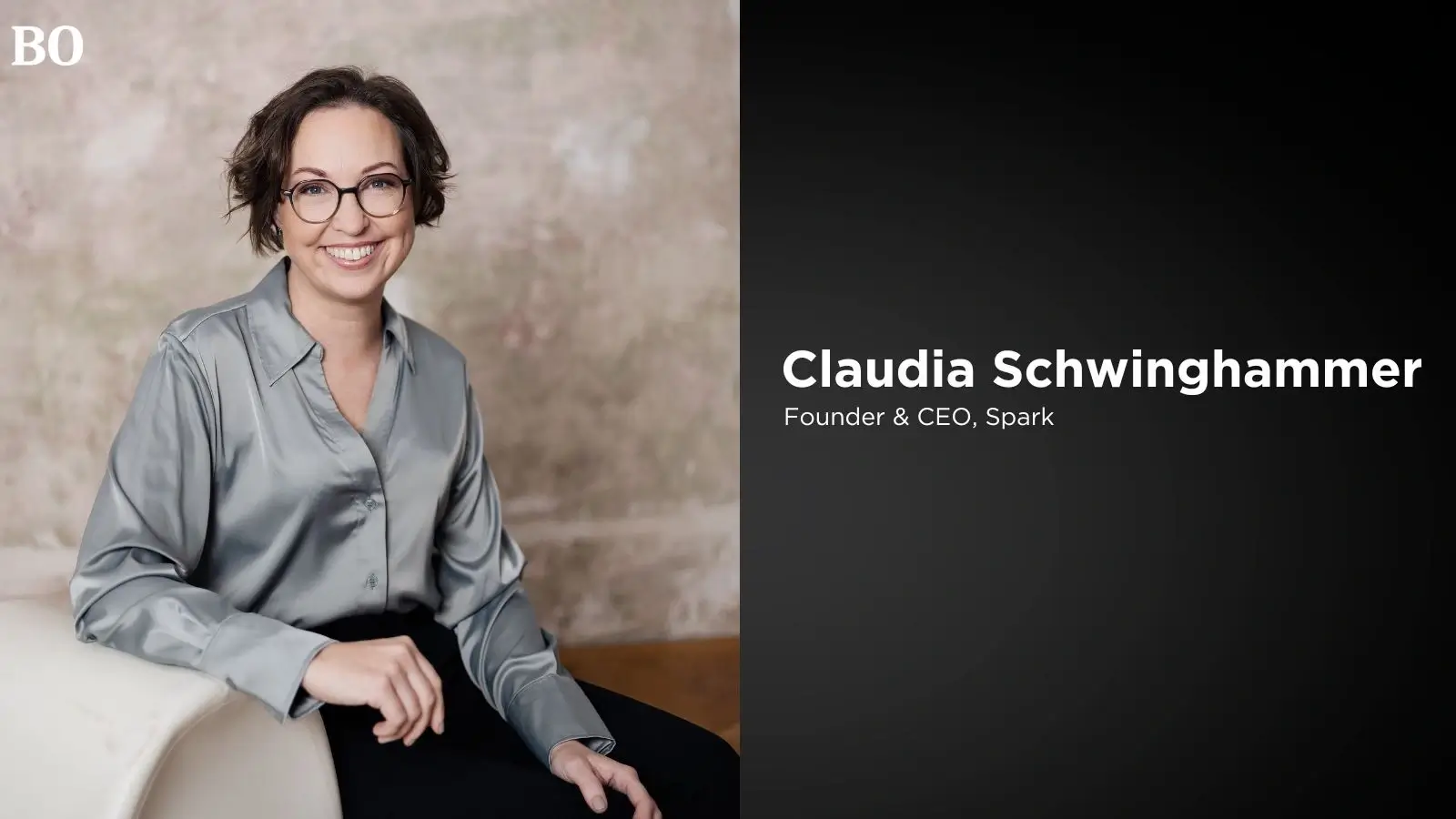
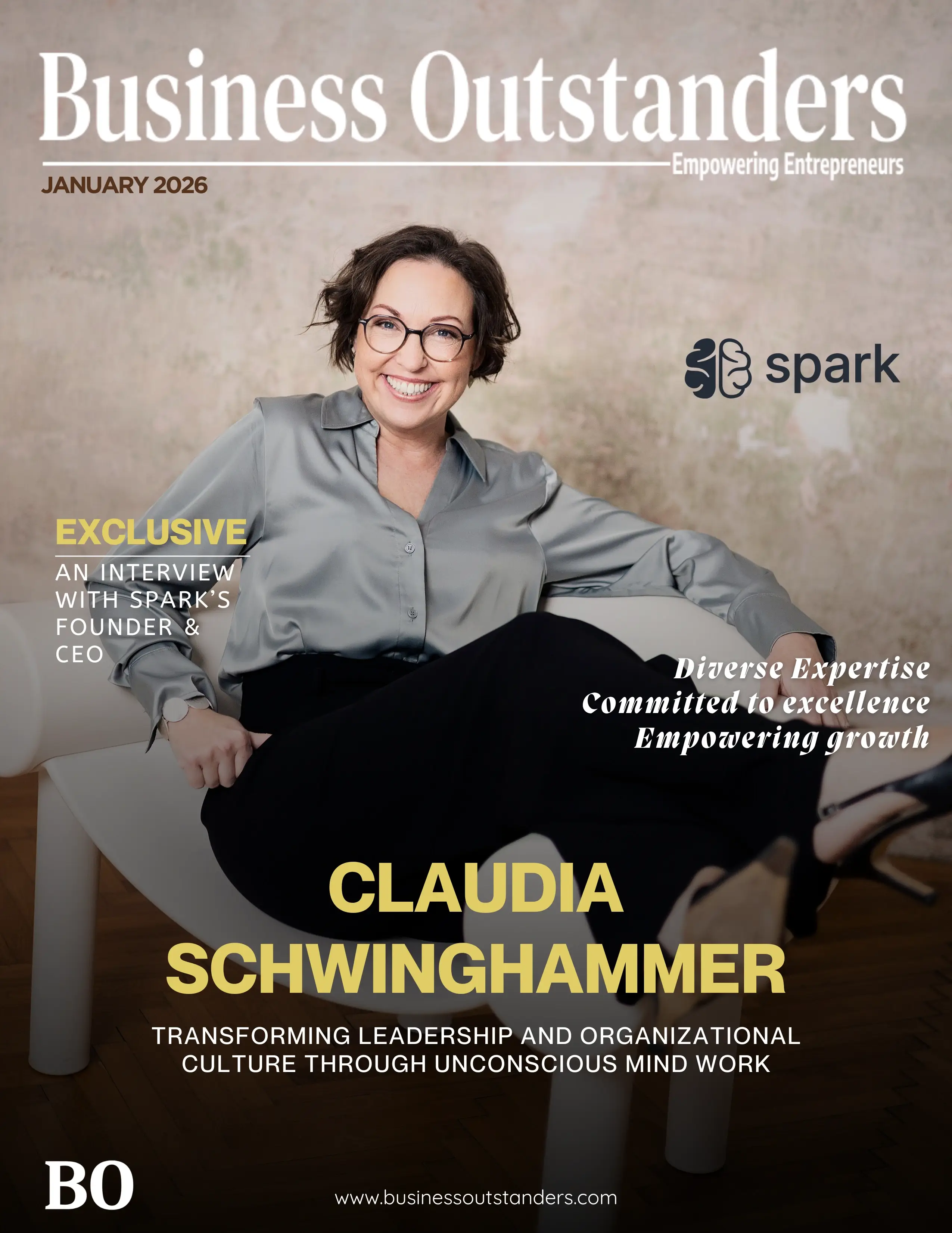
Meet Claudia Schwinghammer, the founder and CEO of Spark. She combines her experience in business and psychology to help leaders understand themselves better. Since starting Spark, Claudia has been working to help leaders see their inner patterns and build a culture based on awareness, resilience, and authenticity.
In this honest conversation, Claudia shares her personal story, how Spark’s unique approach has developed, and her thoughts on the future of mental health, leadership, and work culture. Get ready to see what’s hidden beneath the surface and learn what really shapes the future of work.
Let’s get started.
Q. What personal experiences or moments during your career most deeply shaped your belief in the power of unconscious mind work for organizational change?
During my business studies and early professional career, business being very much my world and lived experience at the time, I became deeply intrigued by the realization that our conscious mind accounts for only about five percent of how we think, decide, and act. From a business perspective, this felt inefficient. Why would we attempt transformation using only the conscious mind, our “Fiat 500”, when the unconscious holds the power and speed of a high-performance engine?
Working with private clients confirmed this insight. I saw repeatedly that sustainable change does not happen on the surface. True transformation requires working at a deeper, unconscious level, where long-standing patterns, beliefs, and emotional drivers are formed.
In April 2022, I made a conscious decision to connect these two worlds, business, which was my professional foundation, and psychology. This integration became the basis of Spark. Our work enables leaders to recognize their internal patterns, actively work with them, and unlock their potential in a way that is both high-performing and deeply human. The objective is not only better results, but sustainable leadership rooted in awareness, responsibility, and authenticity
Q. How has Spark’s approach evolved since its inception during the pandemic, and what key lessons have you learned along the way?
When Spark was first launched, our approach was almost too innovative for the market. It challenged established thinking, was unfamiliar to many organizations, and initially met with skepticism. At that time, integrating unconscious mind work, psychology, and leadership development was still considered unconventional, if not uncomfortable, for the business world.
The pandemic changed that. It acted as a catalyst, making underlying dynamics in organizations suddenly visible: leadership blind spots, emotional overload, toxic patterns, and cultural weaknesses that had previously remained hidden. Crisis reveals character, both in people and in organizations, and many issues surfaced simultaneously.
For me, this moment made it clear that Spark’s work was not only relevant, but necessary. Launching our services during this period was a conscious decision to “do something bold” when certainty was gone. What changed over time was not our core approach, but the context in which it was delivered. Due to lockdowns, there was a phase in which our clients decided to work exclusively online. This shift confirmed an important insight: while the settings evolved, the effectiveness and depth of the work remained unchanged.
Q. What are some common misconceptions organizations have about mental health and transformational coaching, and how do you effectively address them?
One of the most common misconceptions is that mental health initiatives exist merely to “check a box” or to serve employer branding purposes. In many organizations, mental health is still treated as a symbolic gesture rather than a strategic priority. At the same time, we continue to live in a world where mental health challenges are associated with taboo, vulnerability, or perceived weakness, and therefore are not openly discussed.
At Spark, we address this by shifting the narrative. We focus on raising awareness and reframing mental health and transformational coaching as leadership competencies rather than personal shortcomings. Leaders play a central role in this process. When leaders openly engage with our work, speak about their own experiences, and demonstrate the impact it has had on their decision-making, resilience, and leadership effectiveness, it creates psychological safety across the organization.
By positioning leaders as role models and openly communicating how our services support them and what they have achieved, mental health becomes normalized, actionable, and embedded into the culture, not a checkbox, but a catalyst for sustainable performance and human-centered leadership
Q. Beyond client testimonials, what metrics or indicators do you use to assess the long-term success and impact of Spark’s programs?
Beyond qualitative testimonials, we assess the long-term success of our work through a combination of client feedback, retention, and sustained partnerships. Continuous feedback from our clients is central, as it allows us to evaluate not only immediate impact, but also how effectively the work translates into long-term behavioral and leadership change.
A key indicator for us is our retention rate. Our primary focus is on maintaining and deepening existing client relationships, when organizations choose to work with us repeatedly, it demonstrates trust, relevance, and measurable value. New business leads are a secondary priority and often emerge organically as a result of this sustained impact.
To date, Spark has achieved a 94% client satisfaction rate, which we consider a strong validation of both our methodology and our long-term effectiveness. For us, success is reflected not only in numbers, but in enduring partnerships and continued engagement over time.
Q. With rapid advancements in AI and digital tools, how do you see technology augmenting or complementing the deeply personalized nature of Spark’s coaching?
At Spark, we view technology as an enabler, not a replacement, for human transformation. We have developed a dedicated Spark portal that serves as a central meeting point for coaches, coaches, business partners, and resellers. It creates connection, continuity, and structure, while supporting the personalized nature of our work.
At the same time, we are very aware that technology evolves at an extraordinary pace. Building digital tools is not a one-time project; it is an ongoing process of adaptation and learning. We see this constant evolution as an opportunity rather than a challenge.
Looking ahead, we are actively exploring how AI can be integrated into the Spark process in a meaningful way, whether to support reflection, recognize patterns, or personalize learning journeys more deeply. There are many innovative ideas in development, and while human connection will always remain at the core of our work, technology will increasingly enhance accessibility, insight, and scalability.
In short, we are building the future step by step, and there is more to come.
Q. What role does emotional intelligence play in modern leadership, and how does Spark help leaders cultivate this skill?
Emotional intelligence is no longer a “nice-to-have” in leadership, it is a core competency. In an environment defined by complexity, constant change, and high pressure, leaders must first be able to regulate themselves before they can effectively lead others. Emotional intelligence enables leaders to make better decisions, communicate clearly, manage conflict constructively, and build trust within their teams.
At Spark, we help leaders cultivate emotional intelligence by working at the level where emotional responses are formed: the unconscious mind. By increasing awareness of internal patterns, emotional triggers, and behavioral responses, leaders learn to respond rather than react. This strengthens self-regulation, empathy, and clarity, especially in challenging situations.
Our work allows leaders to develop a grounded leadership presence: calm under pressure, emotionally available without losing authority, and capable of leading with both strength and humanity. This is where emotional intelligence becomes a tangible driver of sustainable performance and healthy organizational culture.
Q. What emerging trends or challenges in workplace mental health do you predict will shape the next decade, and how is Spark preparing for them?
Over the next decade, workplace mental health will increasingly be defined by complexity, speed, and constant change. Leaders and employees will face rising cognitive overload, emotional fatigue, and stress related to identity and purpose as roles and technologies evolve faster than human adaptation. The real challenge will not be stress itself, but the inability to recover and maintain resilience amid continuous disruption.
At Spark, we are preparing by focusing on developing inner stability and adaptability as core competencies. This includes strengthening nervous system regulation, unconscious pattern awareness, and emotional intelligence, skills that allow individuals and organizations to thrive under pressure, rather than merely survive. We are also integrating tools and processes that support sustainable practices, ensuring that mental health and leadership growth are embedded into daily workflows, not treated as occasional interventions.
Our goal is to equip leaders and teams with the capacity to navigate change consciously, sustain performance, and create cultures where well-being and high achievement coexist.
Q. Where do you see Spark in five years, and what is your ultimate vision for its role in global corporate culture?
In five years, I see Spark as a recognized global leader in conscious organizational transformation, an essential partner for companies that want leadership and culture to thrive sustainably. Our aim is to normalize unconscious mind work and transformational coaching as strategic tools, not optional extras, embedded into the fabric of corporate life.
Our ultimate vision is to help organizations become places where high performance and human well-being coexist. Leaders will not only drive results, but also create cultures of awareness, empathy, and resilience. Spark’s role will be to guide this transformation, helping organizations unlock potential at all levels, address systemic patterns, and build environments where people can truly show up as their best selves, professionally and personally.
In short, we aspire to make conscious leadership the standard, not the exception, in global corporate culture.
“If you are an ocean. Be an ocean. Don´t be a pond just because people can´t swim.”
Claudia LinkedIn Handle: https://www.linkedin.com/in/claudia-schwinghammer-593a0562/
Company Domain: https://spark.co.at/
About Business Outstanders
Business Outstanders is a business magazine featuring interviews, growth strategies, and leadership insights for entrepreneurs and small business owners. If you know a business leader with a story worth telling, nominate them for a feature interview.