In the current landscape of performance marketing, the primary constraint is no longer the cost of distribution but the velocity of creative production. Ad platforms have become increasingly proficient at finding audiences, provided they are fed a constant stream of high-quality, varied creative assets. For most content teams, the bottleneck remains the time between a creative hypothesis—like "will a minimalist aesthetic outperform a busy one for this product?"—and the deployment of that test.
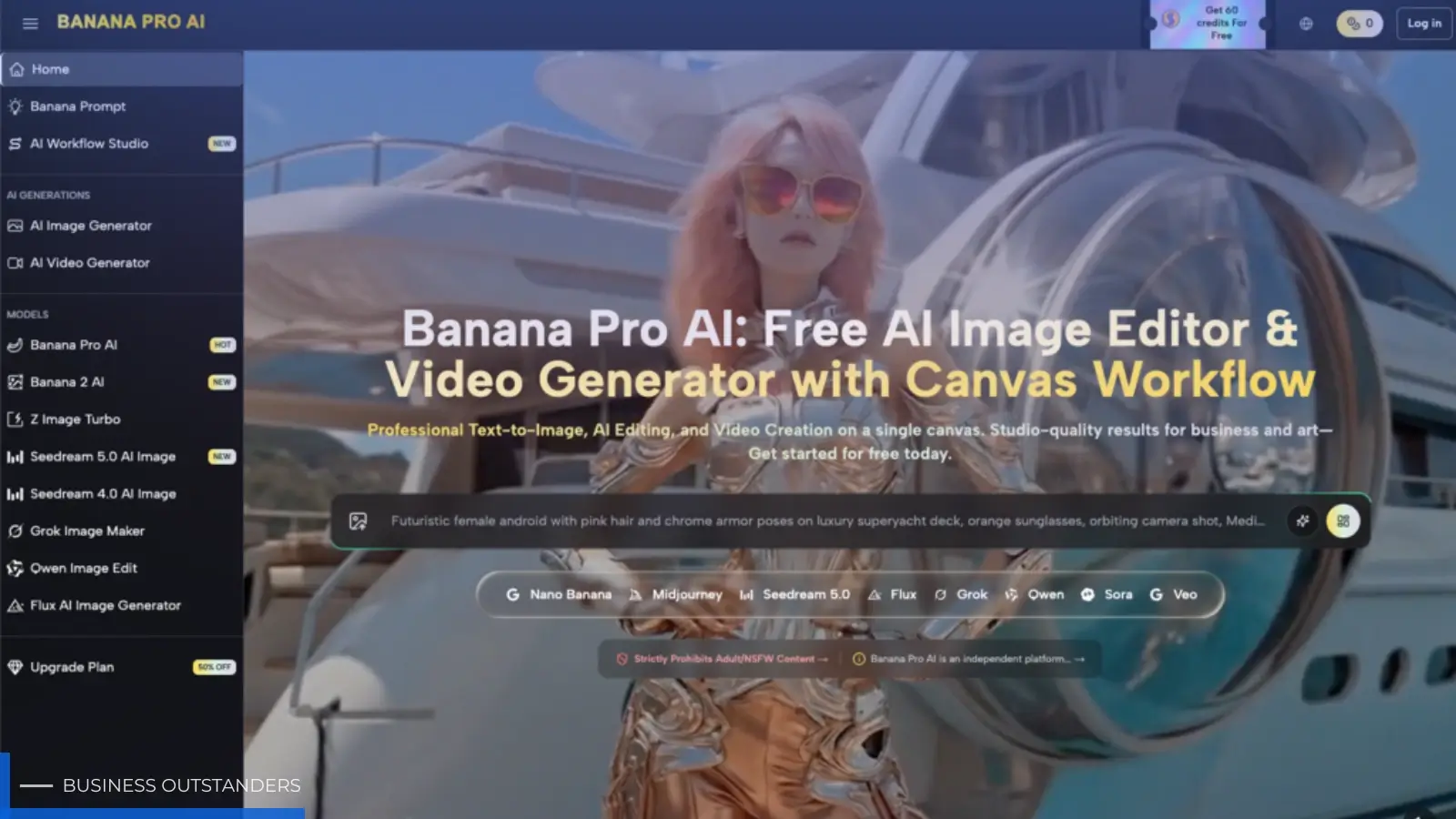
Traditional workflows involve briefings, stock photo searches, or custom shoots, followed by hours of manual retouching. This lag time creates a "creative debt" where teams are running ads based on week-old insights.The emergence of tools like the Nano Banana & Mixboard platform for creators, including Nano Banana Pro and the broader Banana Pro ecosystem, is fundamentally shifting this timeline. By moving the heavy lifting of visual generation and refinement into an AI-native canvas, marketers can now move from ideation to a testable asset in minutes.
The Shift Toward Iterative Prototyping
Creative teams are often trapped in a cycle of perfectionism. When an image takes four hours to produce, there is a natural resistance to "wasting" it on a risky experiment. However, performance marketing thrives on risk. The goal of using Banana AI is not just to generate a single "perfect" image, but to generate twenty variations that explore different emotional triggers, color palettes, and compositions.
This iterative approach is supported by the low latency of the Nano Banana model. When speed is prioritized, the cost of failure drops to nearly zero. If a concept doesn't work, you haven't lost a day of a designer's time; you've lost sixty seconds of generation time. This psychological shift allows teams to be more aggressive with their testing, leading to the discovery of "outlier" creatives that would never have been commissioned under a traditional resource-heavy model.
Operationalizing Nano Banana Pro in the Creative Suite
The core value of Nano Banana Pro lies in its role as the "fast-twitch" muscle of a creator's toolkit. While high-fidelity models are useful for final hero images, the early stages of a campaign require volume. Marketers use this specific model to rapidly prototype "vibes" and layouts.
A typical workflow might begin with a simple text-to-image prompt to establish the core subject matter. Because the Nano Banana architecture is optimized for efficiency, it serves as a visual brainstorming partner. You aren't just waiting for a finished product; you are watching the AI interpret your prompt and adjusting your strategy in real-time based on the visual feedback.
Once a core visual direction is established, the workflow moves into refinement. This is where the specialized tools within Banana Pro come into play. The ability to toggle between models while maintaining a consistent workspace prevents the "tab-switching fatigue" that often kills creative momentum.
Refining the Hook: Using an AI Image Editor for Performance
A common mistake in AI-generated advertising is settling for the first output. While the initial generation might be technically impressive, it rarely aligns perfectly with the specific requirements of an ad unit—such as leaving "safe zones" for text overlays or ensuring the product is the focal point.
Using an AI Image Editor allows marketers to take a generated base and perform surgical adjustments. Whether it is expanding the canvas to fit a 9:16 vertical format or using image-to-image prompts to subtly shift the lighting of a scene, the editor acts as the bridge between "AI art" and a "marketing asset."
For instance, a team testing a beverage ad might generate a high-quality base image of a glass on a table. Using the image-to-image functions, they can then iterate on the background—swapping a sun-drenched patio for a cozy interior—without changing the core product representation. This level of control is essential for isolated variable testing, which is the cornerstone of any scientific approach to media buying.
A Moment of Limitation: The Consistency Challenge
It is important to reset expectations regarding "one-click" perfection. While Nano Banana offers incredible speed, maintaining absolute character or product consistency across multiple generations remains a significant hurdle. If a campaign requires a specific human model to appear in twelve different scenarios, the AI will often produce slight variations in facial structure or clothing that can break the illusion of a cohesive brand story.
Currently, achieving 100% consistency requires a high level of technical intervention, such as training custom LoRAs or using complex ControlNet setups. For the average marketing team, it is often more efficient to lean into "style consistency" rather than "exact object consistency," or to use the AI for environment and background generation while compositing specific product shots manually.
The Role of the Canvas Workflow
One of the more practical developments in the Banana Pro platform is the move toward a canvas-based workflow. Traditional AI tools often feel like a "black box"—you put a prompt in, and an image comes out. If you want to change it, you start over.
The canvas approach treats the workspace more like a traditional design environment. You can generate an image, move it, mask sections of it, and generate new elements directly onto the existing frame. For a content team, this means they can build a complex ad composition piece-by-piece. They might use Nano Banana to generate a textured background, then use a more detailed model to generate a foreground element, and finally use the editor to blend them together. This "modular" approach to image creation mirrors the way professional designers actually work, making the transition to AI tools feel less like a total replacement of skills and more like an evolution of them.
Scaling from Static to Motion
Once a static image is performing well in testing, the next logical step for most performance marketers is video. Static images are great for low-cost testing, but video often commands higher engagement rates on platforms like TikTok and Instagram.
The transition from a successful static image to a video asset within the Banana Pro ecosystem is relatively straightforward. By taking the winning seeds or images from the generation process and feeding them into the video generator, teams can create short-form "scroll-stoppers." This might involve animating a background or adding a cinematic camera pan to a product shot.
However, there is an inherent uncertainty in AI video generation that marketers must account for. Unlike static images, where you can easily spot a flaw, video can contain "hallucinations" or temporal artifacts that only appear mid-way through a clip. Expecting a perfect 15-second narrative on the first try is unrealistic. Most successful teams use AI video for "micro-moments"—3 to 5-second loops that add visual interest without requiring a full cinematic production.
Strategic Implementation and Human Oversight
Despite the efficiency of the Nano Banana model, the tool is only as effective as the strategy behind it. The risk of "fast" creative is the production of "generic" creative. When anyone can generate a high-quality image of a "woman drinking coffee in a minimalist kitchen," the value of that specific image drops.
The competitive advantage now lies in the ability to find unique angles and specific visual metaphors that resonate with a niche audience. This requires human operators who understand consumer psychology and brand voice. The AI handles the "how" of creation, but the human must still handle the "why."
Furthermore, there is the ongoing challenge of brand safety and copyright. While AI tools are becoming more sophisticated, there is always a low-level risk of generating something that inadvertently mimics a known intellectual property or includes subtle visual glitches that look "uncanny" to a human eye. A "final look" by a human editor is not just a luxury; it is a necessity for maintaining brand integrity.
Conclusion: Redefining Creative Operations
The integration of tools like Nano Banana Pro into the marketing workflow marks the end of the "slow creative" era. By reducing the friction between an idea and its visual execution, teams can finally match the pace of the platforms they inhabit.
Success in this new environment doesn't come from having the most powerful AI, but from having the most integrated workflow. Using the Banana AI ecosystem to move from a fast-prototyped concept in Nano Banana to a refined, platform-ready asset in the AI Image Editor allows for a level of agility that was previously impossible.
As these models continue to evolve, the teams that will win are those that treat AI not as a magic wand, but as a high-speed production engine that requires a skilled driver. The speed of insight is now limited only by how fast a team can iterate, test, and learn. Scaling creative is no longer a matter of hiring more designers; it is a matter of empowering the designers you have with the tools to work at the speed of thought.
Business Outstanders brings you sharp insights on tech, business, entrepreneurship, law, crypto, and more. We uncover what’s next. Stay updated, sign up for our newsletter and be part of the future!