From AI adoption to strategic implementation
As Artificial Intelligence becomes a board-level priority across industries, many enterprises are discovering that adoption alone does not guarantee success. With over 72 percent of enterprises deploying at least one AI use case, the challenge is no longer whether to adopt AI but how to implement it strategically, sustainably, and with structured AI model testing to ensure long-term reliability.
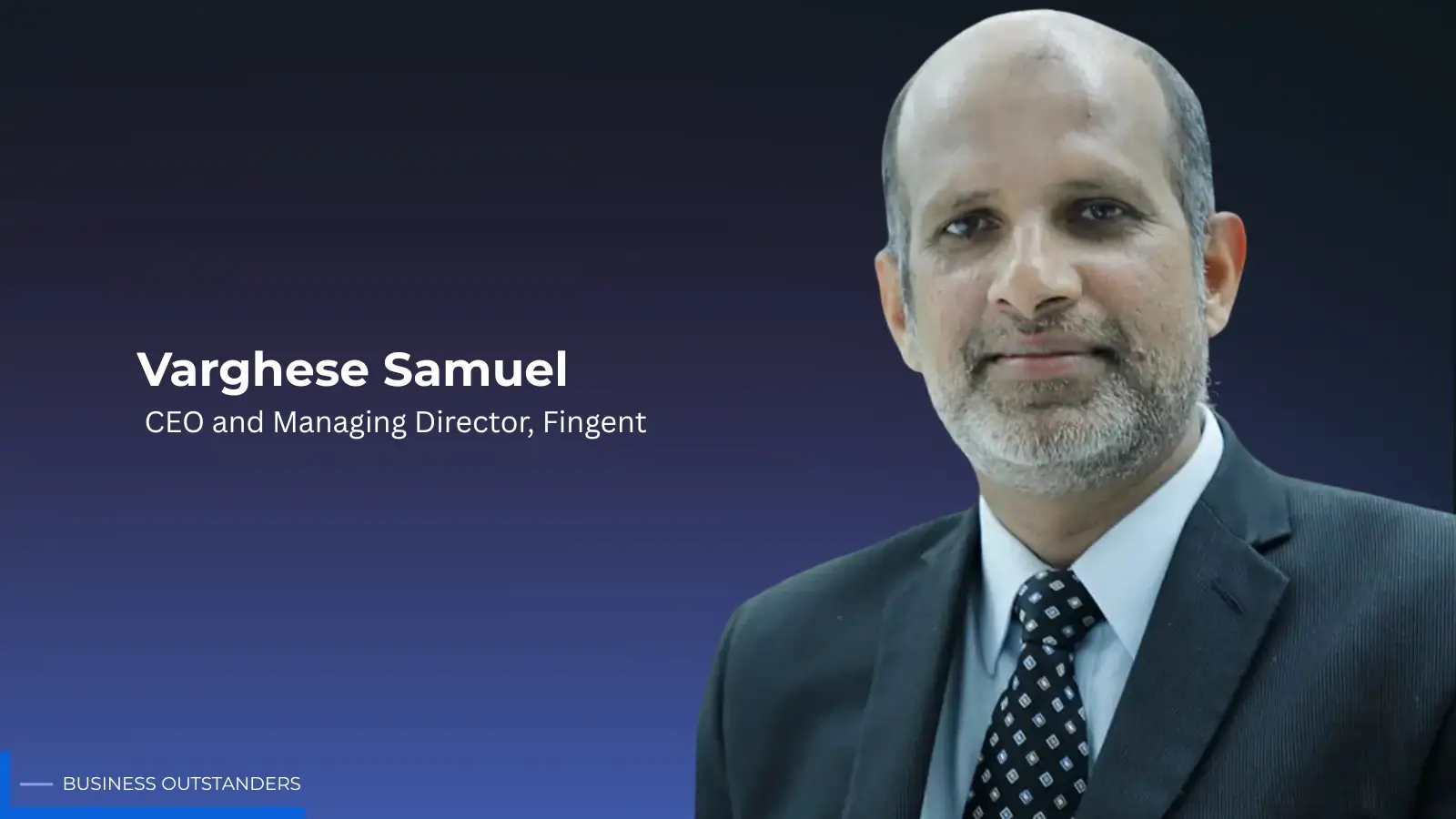
At the center of this conversation is Varghese Samuel (Sam), CEO and Managing Director of Fingent. Under his leadership, Fingent has championed a structured approach known as “Intelligence Integration,” a model designed to move enterprises beyond fragmented AI experiments toward cohesive, enterprise-wide intelligence.
For Sam, the AI dilemma is not simply build versus buy. It is a question of speed versus long-term architectural coherence.
The fragmentation problem in enterprise AI
Many organizations move quickly to adopt AI through isolated decisions. Different departments purchase tools, build models, or experiment independently. While each initiative may show promise, the cumulative effect often leads to intelligence fragmentation; multiple AI systems operating in silos, drawing from inconsistent data, and governed separately.
Integration challenges multiply, costs escalate, security exposure increases, and strategic alignment deteriorates. In such environments, complexity scales faster than intelligence.
Rather than encouraging rapid but disjointed adoption, Fingent advocates a more structured path.
What Fingent means by Intelligence Integration
Intelligence integration, as defined by Fingent, is the practice of embedding AI directly into an enterprise’s existing systems, workflows, and data architecture. Rather than replacing legacy systems, Fingent adds a layer of intelligence that enhances them. This protects prior technology investments and preserves carefully designed operational processes.

Under Sam’s leadership, Fingent positions AI not as a standalone tool but as an embedded enterprise capability. Instead of sitting outside core systems, intelligence becomes part of the ERP, CRM, data warehouse, and operational platforms the organization already uses.
Sam explains that standalone AI tools often increase stack complexity. They require separate data feeds, independent governance frameworks, and additional user adoption efforts. Over time, this creates operational friction.
Fingent’s approach eliminates this separation. Intelligence is integrated into the technology stack itself. Insights flow within existing processes. Decisions are augmented at the point of action. Data remains within the enterprise ecosystem.
Architecture before algorithms
Fingent’s Intelligence Integration model offers a pragmatic alternative to both off-the-shelf tools and fully custom AI builds. It reduces disruption while accelerating measurable business value.
From a technical perspective, Intelligence Integration begins with architecture, not algorithms. Fingent establishes a secure integration layer that connects legacy systems, data warehouses, APIs, and operational platforms without disruption.
Most enterprises do not lack data. They lack structured access to it.
Fingent addresses this by creating governed data pipelines that unify structured and unstructured data from ERPs, CRMs, document repositories, and other systems into a controlled intelligence layer. Depending on the environment, this may involve APIs, middleware, event-driven architecture, or data virtualization.
Modern AI models: predictive, generative, or agent-based, operate within this orchestrated framework. Instead of pulling data into external platforms, Fingent embeds models directly into workflows through services, microservices, or secure endpoints.
Outputs are fed back into core systems at the point of decision, inside ERP interfaces, CRM workflows, or dashboards. This enables real-time intelligent action without disrupting existing processes.
High-impact integrations in action
Under Sam’s direction, Fingent focuses on high-impact integrations such as predictive analytics and Intelligent Document Processing. When deployed as standalone tools, these capabilities often require manual interpretation and re-entry into enterprise systems. This slows operations and introduces inefficiencies.
When integrated through Fingent’s model, predictive analytics can trigger direct actions, such as automatically adjusting procurement plans within an ERP system.
Intelligent Document Processing inside finance & compliance
Intelligent Document Processing, when isolated, typically requires validation and manual routing.
Integrated within Fingent’s framework, AI can extract and validate data from invoices or contracts and seamlessly route it into finance or compliance platforms. Approvals, reconciliations, and audits occur within existing workflows.
The result is operational continuity: fewer handoffs, reduced manual intervention, faster turnaround times, and decisions executed at the point of action.
Security, governance, and compliance by design
Security and governance remain central to Sam’s vision for enterprise AI. External AI tools introduce additional data exposure points and vendor risks. For regulated industries, this complexity can quickly become unsustainable.
Fingent’s Intelligence Integration keeps data within the enterprise’s established security perimeter, including its cloud environment, identity management systems, encryption standards, and audit frameworks. AI operates within these guardrails. This ensures consistent governance policies, role-based access control, traceability, and compliance alignment with regulations such as GDPR, HIPAA, and industry-specific mandates.
Fingent’s ‘Business-First, Not Model-First’ intelligence model
Sam describes Fingent’s philosophy as “Business-First, Not Model-First.” When enterprises engage with Fingent, discussions begin not with algorithm selection but with business objectives. The focus is on identifying where value is leaking, whether through operational bottlenecks, delays in decision-making, compliance overhead, customer churn, or workflow inefficiencies.
Measurable outcomes are defined in clear terms: cycle time reduction, cost savings, accuracy improvements, revenue lift.
Measurable outcomes are defined in explicit terms:
-
Cycle time reduction
-
Cost savings
-
Accuracy improvements
-
Revenue lift
Intelligence is designed around these metrics. The model serves the objective, not the other way around.
Designed for scalable growth
Scalability is built into Fingent’s architecture from day one. Modular integration layers, API-driven connectivity, cloud-native or hybrid infrastructure alignment, strong data governance, and continuous monitoring ensure the solution evolves with the business. Feedback loops enable models to improve over time.
Equally important is operational scalability. Because intelligence is embedded within systems employees already use, adoption grows naturally. AI scales alongside enterprise growth rather than becoming another tool that requires separate oversight.
The path forward: Embedding intelligence at the enterprise core
Through Varghese Sam’s leadership, Fingent has positioned Intelligence Integration as a structured response to the growing complexity of enterprise AI. Rather than encouraging fragmented adoption, Fingent focuses on embedding intelligence into the enterprise core.
In doing so, Sam and Fingent aim to help organizations move beyond isolated AI experiments and toward a unified, efficient, and sustainable digital future; one where intelligence works within the enterprise, not around it.
To learn more, visit Fingent.
Business Outstanders brings you sharp insights on tech, business, entrepreneurship, law, crypto, and more. We uncover what’s next. Stay updated, sign up for our newsletter and be part of the future!