Automation that began as an Industrial Revolution over one hundred and fifty years ago has taken a quantum leap forward with the advent of artificial intelligence (AI) in recent years. In ‘The State of AI: Global Survey 2025’ by McKinsey & Company, 23% of respondents reported that their organizations are scaling an agentic AI system throughout their enterprises, marking the extensive integration of this technology across business operations. Moving beyond mere human-machine interactions, AI offers far-reaching implications for businesses. Additionally, a Microsoft study has shown that adoption of artificial intelligence in the second half of 2025 increased by 1.2% compared to the first year, with one in six people globally using generative AI tools. Today, businesses across sectors are harnessing the unwavering power of AI, from retail to manufacturing, and finance to healthcare.
34% of Deloitte-surveyed organizations in the United States are leveraging AI to create new products or reinvent core processes or business models. This shows AI is no longer a futuristic concept; it has become a foundational force driving organizational growth, agility, and sustainability to help thrive in a competitive marketplace.
With this write-up, we intend to evaluate and delineate how AI is writing a new narrative for businesses to have a promising future in the coming five years. While sharing real-world insights on automation and AI-driven strategies from various sectors, this piece of writing unfolds the indomitable power of this technology in driving business transformations.
Enterprise Automation and Artificial Intelligence
The growing demand to automate processes, including the elimination of repetitive tasks and the augmentation of human capabilities, has started a new chapter of innovation and tech-powered transformation across businesses. Enterprises standing at the forefront of automation are amplifying it with artificial intelligence. Let’s find out how.
i) Task Elimination
Process automation is one of the most visible impacts of artificial intelligence in the modern-day business environment. Automating repetitive and simple tasks, enterprises are allowing leaders and employees to focus on more strategic and creative operations. For example, PayPal and several more organizations have turned to chatbots to streamline consumer services. An Amazon Web Services (AWS) study on the use of chatbots in the Banking, Financial Services, and Insurance sector shows that 12% of large businesses, 22% of micro-businesses, 11% of medium-sized businesses, and 20% of small businesses utilize chatbots to enhance customer services and operational efficiency.
ii) Augmenting Tasks and Human Capabilities
By integrating legal AI tools, such as the Spellbook platform, organizations are enhancing tasks like contract drafting and reviewing to ensure accuracy and efficiency. This exemplifies how AI tools are augmenting tasks to enhance efficiency. When it comes to amplifying human capabilities, AI Agents can carry out specialized tasks that fill the void of talented professionals in organizations. For example, IT companies may no longer need to hire coders specializing in specific languages in the near future, as AI generalists can increasingly execute the tasks that experienced or mid-tier employees can.
According to a PwC study of 2026 AI Business Predictions, “Agentic AI looks to play an increasingly important role. AI agents can go beyond analysis and automate parts of complex, high-value workflows. Especially ripe areas for agents include demand sensing and forecasting, hyper-personalization, product design, and functions like finance, HR, IT, tax, and internal audit.”
Artificial Intelligence in Transforming Business Strategies
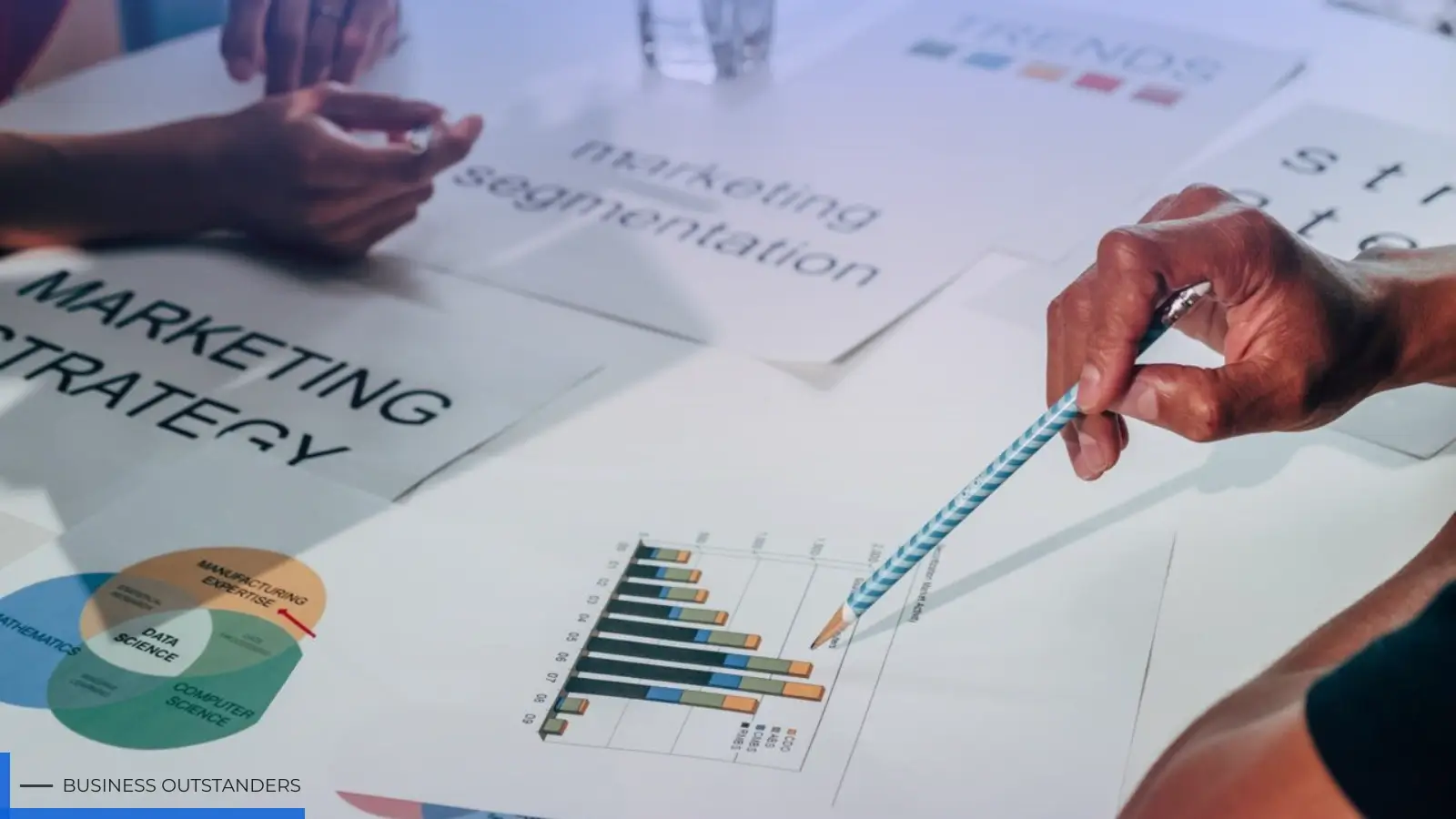
Integration of artificial intelligence into strategic organizational decisions marks the beginning of a transformative era, reimaging corporate strategy, reshaping traditional business models, and enhancing business agility. Generative AI has the potential to change how strategists work by accelerating analysis and data-powered innovation. On the other hand, predictive analytics enables organizational leaders to forecast trends, make data-driven decisions, and anticipate market changes. Let’s take a close look at how AI supports business decision-making to devise some exceptional business strategies.
Predictive Analytics: Simplifying Complex Business Decisions
According to Stanford’s 2025 AI Index, corporate investment in AI increased to $252.3 billion in 2024, with private investment soaring 44.5%. This implies rapid adoption of AI by businesses to carryout tasks, make informed business decisions, and drive innovative practices to ensure sustainability. Predictive analytics is one such aspect of AI that businesses today rely on heavily to unveil patterns, predict outcomes, and devise actionable insights.
By leveraging Machine Learning (ML) and Natural Language Processing (NLP), AI models are developed to detect patterns from data and forecast trends and outcomes to support data-backed decision-making. For example, media channels like Netflix, Spotify, and others use ML, viewing, and listening history to recommend movies, web series, and songs as per viewer and listener preferences.
AI Integration in Collaborative and Creative Operations
Organizations are widely embracing AI to carry out creative and collaborative tasks. From content creation to media asset generation, creative professionals are harnessing AI tools to boost their creative delivery. For instance, Invideo AI produces an ai presentation maker to simplify the method of crafting visually engaging and highly creative presentations. It enhances the quality of business communication, allowing teams to communicate ideas in stakeholder meetings and internal reviews.
Hyper-Personalization: The New Way to Improve Customer Experience
This proactive use of predictive analytics ensures a seamless and relevant customer experience. Employees can predict future preferences by analyzing consumer data. Hyper-personalization enables businesses to predict consumer needs and deliver what consumers could ask in the near future, drawing exceptional consumer engagement to a brand. Google leverages user data and showcases cutting-edge AI capabilities to deliver hyper-personalized user experiences with Google Cloud, Google Search, Google Ads, and more.
AI In Transforming Business Communication
With AI, as a supportive assistant, businesses are bringing a shift in the way they communicate with clients, employees, partners, and stakeholders. Video communication is one such dominant medium in which AI is demonstrating extensive transformative power. AI-powered video tools are leveraged by enterprises to communicate ideas innovatively and in an engaging manner. These tools enable real-time customization of video pitches to various client segments. AI video apps are designed to produce high-quality videos without requiring any technical expertise or huge expenses.
Ensuring Data Privacy with Advanced AI
We are all aware of the implications that AI adoption brings to data security. But, not many are aware of its role in ensuring data privacy. By creating algorithms that do not collect excessive data, businesses can only gather relevant data and drive responsible data collection for secure data analysis. Also, with AI, data encryption techniques can be improved, restricting unauthorized access to sensitive data. Microsoft’s Defender, Entra, Sentinel, and other security products are used by businesses to secure AI workloads.
Top 5 AI Trends that Will Shape Business Future
1. Quantum Computer will Rule
In 2026 and beyond, a quantum computer is predicted to outperform a classical computer. As quantum computers continue to advance, experts are predicting unprecedented progress of this AI-powered technology across finance, drug development, and other sectors.
2. AI Systems Will Redefine AI Leadership
Moving beyond AI models, future businesses will have to focus on the orchestration of AI systems in the coming years by combining models, workflows, and tools to ensure the best business outcomes.
3. Agentic Dissection Will Replace Monolithic Processes
According to an IBM study, businesses are predicted to shift from a one-model job to synthetic parsing in 2026. With agentic parsing, documents can be broken into parts and routed to the appropriate models. This results in flexible document processing. The future of business will embrace this approach to document processing extensively.
4. Cross-Channel “Super Agents” to Emerge
AI agents will no longer be “single-purpose agents” in the future. With the rise of the “super-agent,” businesses will witness multi-agent dashboards become real. They will start tasks at one place, and agents will operate them across various environments, without having to manage separate tools.
5. From Tool to Teammate
AI will move from individual use to team development in the near future. As AI’s reasoning capabilities have improved, they are now anticipating needs and moving projects from idea to conception.
As AI continues to expand its boundaries, organizations will have to cultivate an AI-powered mindset across their workforce to ensure the smooth integration of AI tools and capabilities in the future.
Looking Ahead
AI’s potential to drive growth is undeniable, but it calls for a cultural shift. Organizations must cultivate a mindset of continuous learning. Those who embrace AI not as a replacement, but as a strategic partner, will be best positioned to lead in the evolving digital economy.
Business Outstanders brings you sharp insights on tech, business, entrepreneurship, law, crypto, and more. We uncover what’s next. Stay updated, sign up for our newsletter and be part of the future!