Quick Answer:
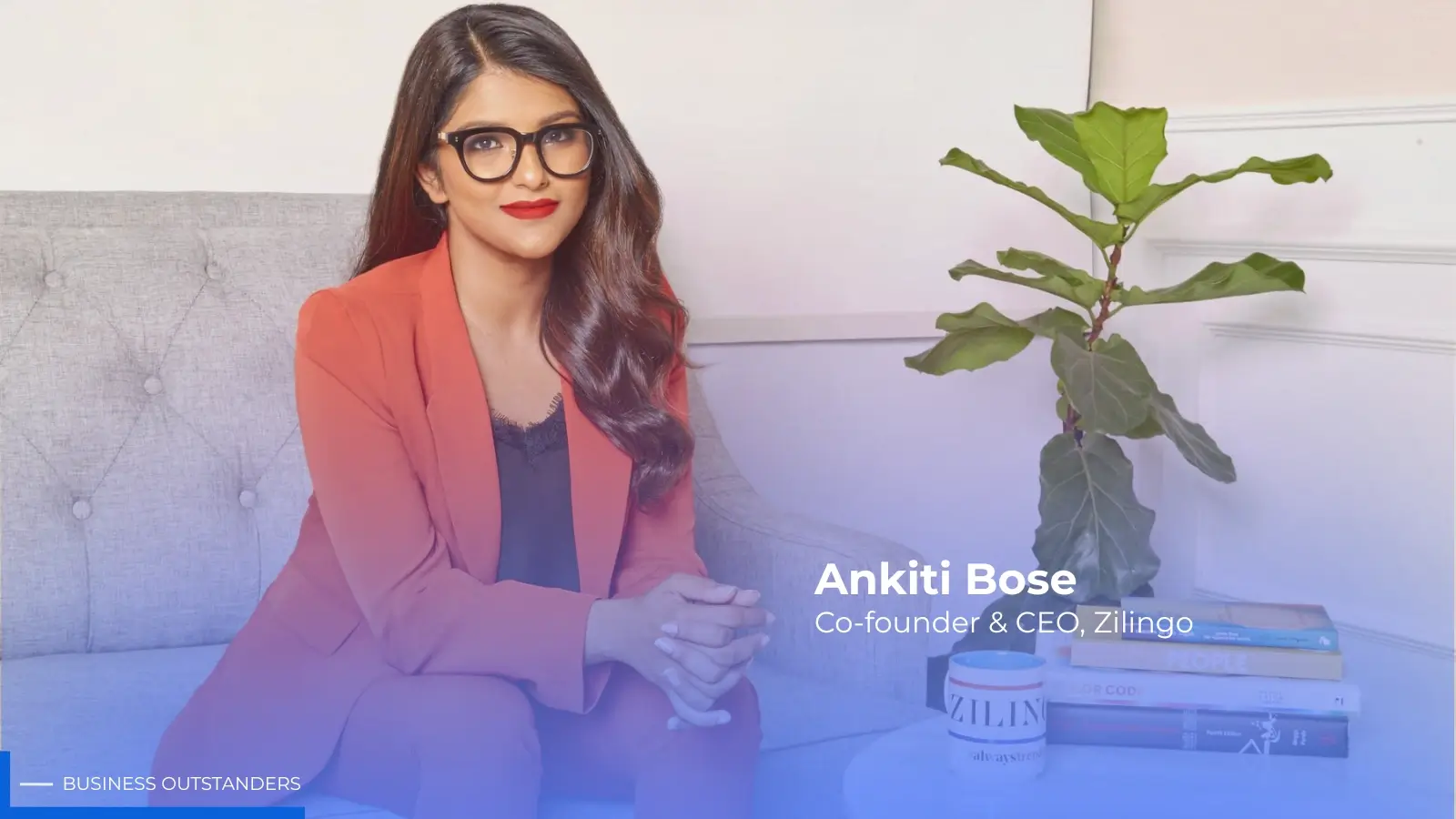
Ankiti Bose, an Indian entrepreneur, co-founded Zilingo in 2015 at age 23 alongside Dhruv Kapoor, investing $30,000 each in savings. Inspired by a visit to Bangkok's Chatuchak Market, where thousands of small vendors had no way to sell online but she built a full-stack fashion e-commerce and supply chain technology platform that reached a valuation of nearly $1 billion, making her the first female co-founder of a unicorn startup in Asia.
Ankiti Bose & Zilingo: Key Facts at a Glance
|
Full Name |
Ankiti Bose |
|
Nationality |
Indian |
|
Age at Founding |
23 years old (2015) |
|
Co-Founder & CTO |
Dhruv Kapoor (age 24 at founding) |
|
Company Founded |
Zilingo (2015) |
|
Industry |
Fashion E-Commerce & Supply Chain Tech |
|
Starting Capital |
USD $30,000 each (combined $60,000) |
|
Valuation Achieved |
Nearly USD $1 Billion (Unicorn Status) |
|
Active Users |
7 Million |
|
Supply Chain Partners |
~50,000 globally |
|
Employees |
600+ |
|
HQ Locations |
Singapore & Bangalore |
|
Key Investor |
Sequoia Capital India |
|
Global Operations |
Indonesia, Hong Kong, Thailand, Philippines, Australia, India, USA |
Behind the Scenes of Billion-Dollar Idea
In 2014, a young Indian professional named Ankiti Bose visited Bangkok's Chatuchak Market, the world's largest open-air market, home to over 11,500 independent vendors and attracting more than 200,000 shoppers regularly. For most visitors, Chatuchak is a sensory overload of colour, fashion, food, and culture. For Ankiti, it was something else entirely: a business problem hiding in plain sight.
None of the thousands of small merchants she observed knew how to sell online. They were confined to their stalls, their reach limited to whoever physically walked past them on any given weekend. Meanwhile, Southeast Asia, one of the world's largest manufacturing hubs, was producing extraordinary fashion at scale, with the profits leaking away through layers of third-party distributors who extracted margins at every stage. The real creators, makers, and sellers were left with shrinking returns and little hope of reaching a global market.
Ankiti was not just an observer. Armed with a background in technology, e-commerce, and business and what she describes as 'cross-cultural sensitivity' and a 'pathological optimism', she saw not just the problem, but the solution. And she decided to build it, marking the beginning of an entrepreneurial journey that would reshape Southeast Asia’s fashion supply chain.
"Hundreds of distribution agents all over Asia are leaking away margins from the real people that deserve it, and I think it is only technology that can solve that." by Ankiti Bose
Seeking The Right Company and Stepping Ahead
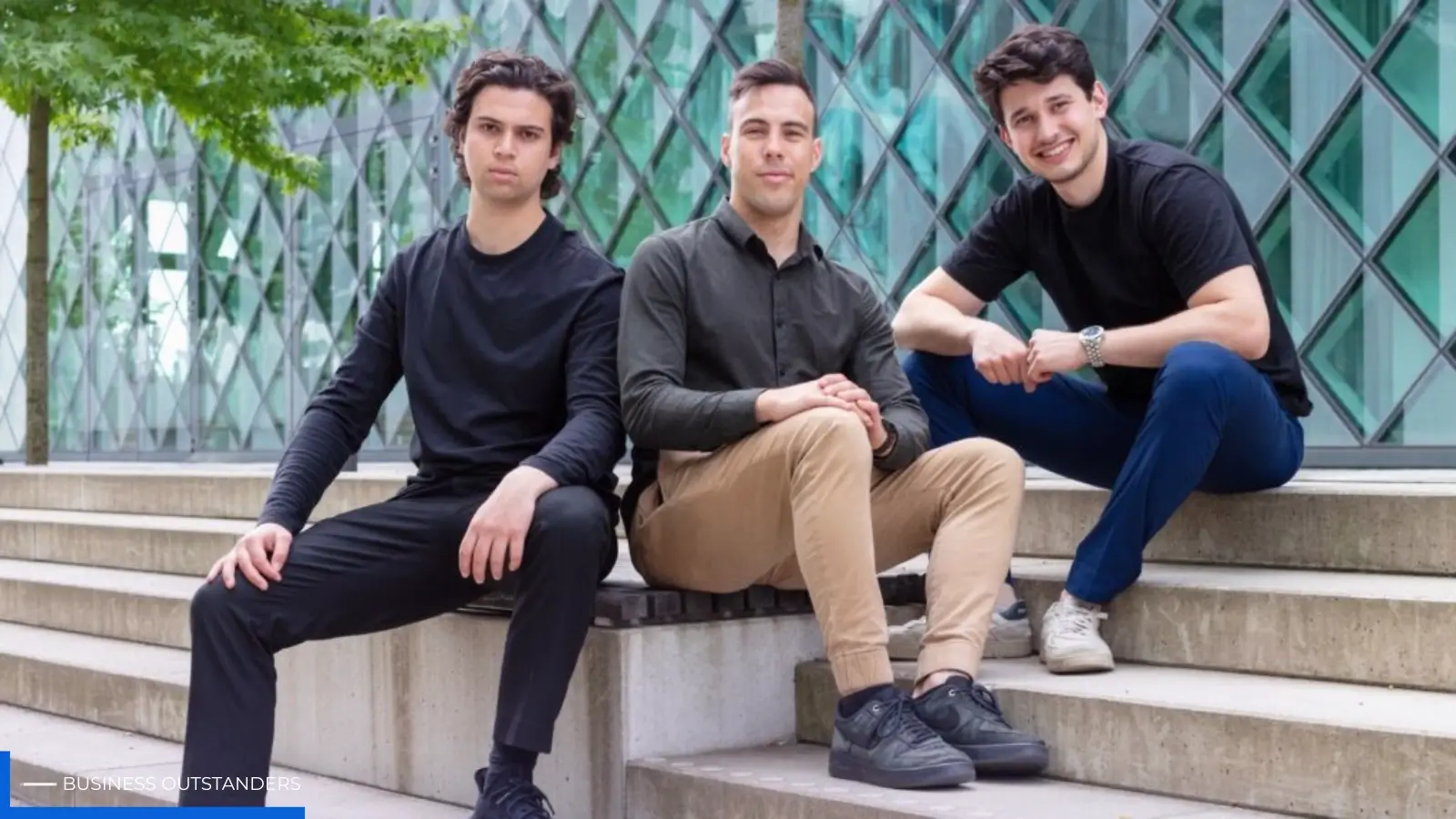
Every great startup story has a moment where vision meets capability. For Ankiti, that moment came through a chance social encounter with Dhruv Kapoor, a 24-year-old software engineer with an entrepreneurial spirit and the technical skills to complement her market insight and business acumen perfectly.
The two recognised almost immediately that their skills were complementary in every critical dimension. Ankiti would own the business strategy, market development, and commercial vision. Dhruv would own the technology, building with a high emphasis on user-friendliness from their development hub in Bangalore. Together, they were a complete founding team.
The decision that followed took courage that most people never summon. Within roughly six months of their meeting, both Ankiti and Dhruv quit their jobs, pooled their personal savings, $30,000 each and, alongside a small group of trusted colleagues, began building what would become Zilingo.
$30,000 each. No external funding. No safety net. Just a clear vision, complementary skills, and the conviction that Southeast Asia's fashion industry needed to be reimagined.
Emergence of Zilingo: Exploring From The Market Stalls to Global Supply Chain
The Early Days: Convincing Merchants One by One
In the early days after Zilingo's founding, Ankiti did not sit behind a desk. She travelled across Southeast Asia, meeting retailers and merchants face to face, explaining how Zilingo could help them reach customers they could never have accessed on their own. It was grassroots entrepreneurship at its most demanding: selling a digital future to businesses that had always operated in the physical world.
While Ankiti built the merchant network and commercial strategy, Dhruv and the engineering team in Bangalore were developing the technical infrastructure that would power it , creating a mobile-first marketplace designed to be accessible and intuitive for merchants at every level of technical sophistication.
The Transformation of The Platform: From Marketplace to Full-Stack Solution
What began as a straightforward e-commerce marketplace quickly revealed a deeper insight: giving merchants a digital storefront solved only one piece of a much larger puzzle. Ankiti articulated this with the clarity that defined her entrepreneurial thinking:
"Everybody was solving for access to the internet, but what about everything else that goes on before you actually sell the product? We said , what about if we plug all those gaps?" by Ankiti Bose
And so, Zilingo evolved. The platform grew to offer approved merchants not just a digital storefront, but access to procurement support, product design resources, marketing tools, financing, insurance, technical support, and seller management software. Every merchant onboarded through a rigorous quality, authenticity, and pricing evaluation , ensuring that the platform maintained the standards that kept buyers returning.
Simultaneously, Zilingo expanded into B2B operations , matching producers, brands, and suppliers across the supply chain. The result was a technology platform that did not just sell fashion; it made the entire fashion supply chain fairer, more connected, and more transparent for every participant.
Investor Confidence and Rapid Scale
The vision resonated powerfully with the investment community. Sequoia Capital India , Ankiti's former employer , led early investment, a sign of extraordinary institutional confidence in the founding team. Other major investors followed, drawn by Zilingo's potential to fundamentally disrupt the traditional fashion supply chain while simultaneously creating new market entry opportunities for young designers, small businesses, and global consumers seeking authentic regional fashion.
The growth that followed was exceptional. By the end of 2018, Zilingo's revenue had grown approximately four times year-over-year. The startup was operating across Indonesia, Hong Kong, Thailand, the Philippines, Australia, India, and the United States , with nearly 50,000 supply chain partners, 7 million active users, and a team of over 600 employees. Its valuation approached $1 billion, earning it the most coveted status in the startup world: Unicorn.
Zilingo's Timeline: A Journey Beyond Inspiration
|
2014 |
Ankiti visits Chatuchak Market in Bangkok , the spark that ignited the Zilingo idea |
|
2015 |
Ankiti (age 23) & Dhruv Kapoor (age 24) quit their jobs; invest $30,000 each; Zilingo is born |
|
2015 |
Head offices established in Singapore and Bangalore; first merchant onboarding begins |
|
2016 |
Sequoia Capital India leads investment; platform expands across Southeast Asia |
|
2017 |
Zilingo evolves from marketplace to full-stack fashion tech platform; B2B tools launched |
|
2018 |
Revenue grows 4x year-over-year; operations span 7 countries; 50,000 supply chain partners |
|
2019 |
Valuation approaches $1 Billion , Zilingo achieves Unicorn status |
|
2019 |
Ankiti becomes first female co-founder of a unicorn startup in Asia |
What Ankiti Bose's Success Means Beyond Business
The numbers tell one story. But the significance of Ankiti Bose's achievement extends well beyond valuations and revenue figures. It represents something far more meaningful particularly for women in business across Asia and the developing world.
Breaking a Statistical Barrier
When Zilingo achieved unicorn status, Ankiti became the first female entrepreneur to co-found a unicorn startup in Asia. In global terms, she joined an extraordinarily exclusive group: according to Pitchbook, only 23 out of 239 venture capital-backed unicorn founders were women at the time of Zilingo's rise. That is fewer than 10% , in a global startup ecosystem that already skews heavily male.
Achieving the Extraordinary in an Unsupportive Environment
The context makes the achievement even more remarkable. Mastercard's Index for Women Entrepreneurs ranked India 52nd out of 57 countries for its ability to nurture women entrepreneurs. Against that backdrop, Ankiti did not wait for conditions to improve. She created her own conditions.
Alison Eskesen, Vice-President of the Centre of Inclusive Growth at Mastercard, recognised the significance directly: the success of Ankiti Bose illuminates how women can transform industries as leaders and innovators and stands as a milestone that inspires young women everywhere to pursue their business ambitions without apology.
Redefining What a Founder Looks Like
Ankiti Bose is a 23-year-old woman from India who built a billion-dollar company in Southeast Asia's fashion tech sector. She is not the archetypal Silicon Valley founder. She is not a serial entrepreneur with multiple exits. She is someone who observed a real problem, found the right partner, and committed everything she had to solving it. That story in its simplicity and its audacity is one of the most powerful entrepreneurial narratives of her generation.
5 Leadership Lessons from Ankiti Bose's Story
Every great entrepreneurial story carries lessons that transcend the specific industry or context. Here are the five most transferable principles from Ankiti's journey:
|
Lesson |
What Ankiti Did |
What You Can Apply |
|
Observe Before You Build |
Ankiti did not build first and look for a problem second. She visited a real market, saw a real gap, and built to solve it. |
Your best business idea is likely hiding in plain sight , in a market, a conversation, or a frustration you have personally experienced. |
|
Find Complementary Co-Founders |
Ankiti brought business and market insight; Dhruv brought engineering excellence. Together, they covered every critical domain. |
Build a founding team whose skills fill your gaps , not mirror your strengths. |
|
Start Small, Think Global |
Zilingo began with one market and a mobile-first MVP. Its global ambition was always there, but execution was local and focused. |
Execute locally with excellence. Scale globally with intention. |
|
Solve the Whole Problem |
Others gave merchants internet access. Zilingo gave them procurement, design, financing, insurance, and marketing , the entire stack. |
Incremental solutions create incremental businesses. Solving the complete problem creates category leaders. |
|
Pathological Optimism is a Strategy |
Ankiti called herself a pathological optimist. In a region where women-led startups are rare, that mindset was not a personality trait , it was a competitive advantage. |
Belief precedes evidence. The founders who build the biggest things are those who act before proof of concept exists. |
Frequently Asked Questions (People Also Ask)
Q: Who is Ankiti Bose?
Ankiti Bose is an Indian entrepreneur and the co-founder and former CEO of Zilingo, a fashion e-commerce and supply chain technology platform. She co-founded the company in 2015 at the age of 23, becoming the first female co-founder of a unicorn startup in Asia.
Q: How did Ankiti Bose start Zilingo?
After observing that thousands of independent vendors at Bangkok's Chatuchak Market had no way to sell online, Ankiti identified a massive market gap. She partnered with software engineer Dhruv Kapoor, and the two invested $30,000 each in savings to found Zilingo in 2015, quitting their jobs to commit fully to the venture.
Q: How much is Zilingo worth?
Zilingo achieved a valuation approaching $1 billion USD, earning it the coveted 'unicorn' designation. This was reached after consistent revenue growth, including a 4x revenue increase in 2018 alone and multiple successful funding rounds from investors including Sequoia Capital India.
Q: What makes Ankiti Bose's story significant for women entrepreneurs?
Ankiti became the first female co-founder of a unicorn startup in Asia, joining only 23 women globally (out of 239 unicorn founders) in that category. She achieved this in India, a country ranked 52nd out of 57 for its ability to nurture women entrepreneurs, making her achievement a landmark for women in business across the Asia-Pacific region.
Q: Who co-founded Zilingo with Ankiti Bose?
Dhruv Kapoor, a software engineer who was 24 years old at the time of founding, co-founded Zilingo with Ankiti. Kapoor served as CTO and was responsible for the platform's technological development, including the user-friendly design of Zilingo's marketplace and seller tools.
Conclusion: An Optimistic Approch to Change the Industry
Ankiti Bose did not have the most resources. She did not have the most experience. She did not have the most favourable environment in which to build a billion-dollar company. What she had was sharper than all of those things: a clear observation of a real problem, an unshakeable belief that technology could solve it, the right partner to build with, and the courage to bet everything on that conviction.
The story of Zilingo is, at its core, a story about what becomes possible when you combine market insight with technical excellence, strategic thinking with relentless execution, and personal courage with a genuine desire to create something that makes the world or at least, the lives of 50,000 merchants and 7 million shoppers, meaningfully better.
For every aspiring entrepreneur, particularly every young woman who has been told that the odds are not in her favour, Ankiti Bose's story offers something more valuable than advice. It offers proof.
You do not need perfect conditions to build something extraordinary. You need a real problem, the right partner, the courage to begin and the pathological optimism to keep going when it gets hard.
Also Read: Eren Bali: Rural Turkey to Two $1B Startup Success Story
Explore More Success Stories: Discover more inspiring entrepreneurial journeys, leadership lessons, and business success stories in the BusinessOutstanders.com Success Stories category.
Business Outstanders brings you sharp insights on tech, business, entrepreneurship, law, crypto, and more. We uncover what’s next. Stay updated, sign up for our newsletter and be part of the future!