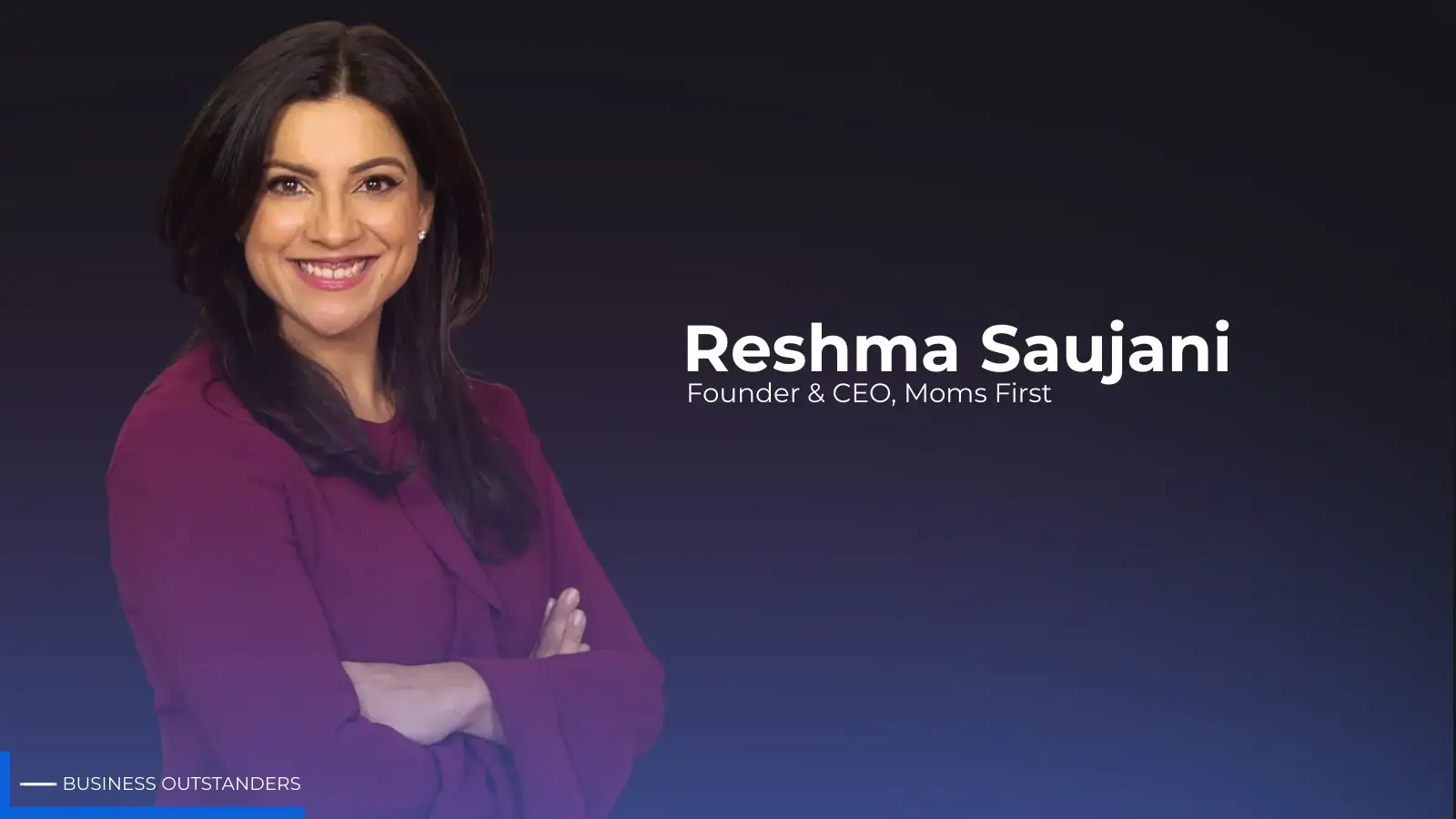
Reshma Saujani did not follow the typical founder’s journey. She didn’t drop out of a dorm room. She didn’t pitch Silicon Valley VCs. She ran for Congress, lost, walked into a classroom, and decided to fix something that bothered her. What followed was a masterclass in movement-as-company, scrappy, mission-first, and relentlessly focused on scale.
Today, Girls Who Code has reached nearly 600,000 girls worldwide. Moms First has mobilized over one million supporters and shaped federal policy. Her TED talk has 54 million views. Her books sit on bestseller lists. And she has done it all by breaking, repeatedly and deliberately, every rule about how a “safe” leader is supposed to operate.
Here are seven leadership lessons that founders and entrepreneurs can extract directly from her playbook.
1. Failure Is a Founding Story, Not a Footnote
In 2010, Saujani ran for Congress against a fourteen-term incumbent. She lost by more than forty points. By conventional wisdom, that’s a career-ending humiliation. By her own accounting, it was the most important thing she ever did.
The campaign gave her access to schools she’d never have entered otherwise. In those classrooms, she saw the gender gap in technology firsthand. That observation became Girls Who Code, an organization with a global footprint and a nine-figure impact. The loss wasn’t a detour. It was the origin story.
The best founders understand that failed ventures, rejected pitches, and abandoned products are not evidence of unworthiness, they are R&D. The question is not whether you will fail. It’s whether you are paying attention when you do.
FOUNDER TAKEAWAY: Audit your biggest professional failures. What did they show you that success never could have?
2. Build the Thing You Wish Existed
Girls Who Code was not born from a market analysis. It was born from a visceral sense that something was wrong, that an entire generation of girls was being quietly steered away from one of the most economically powerful fields in history.
Saujani did not wait for someone else to fix it. She did not write an op-ed and move on. She built the infrastructure: after-school clubs, summer programs, a book series, campaigns that won Cannes Lions. She turned a feeling of wrongness into an organization that didn’t exist before she created it.
The most durable companies are usually built by founders who were personally bothered by a problem they couldn’t stop thinking about. The irritant becomes the engine.
FOUNDER TAKEAWAY: The best companies are personal. What problem do you feel in your gut, not just in a spreadsheet?
“Teach girls bravery, not perfection.”
— Reshma Saujani, TED Talk, 54 million views
3. Your Mission Is Your Moat
In a landscape crowded with nonprofits and advocacy organizations, Girls Who Code achieved something rare: it became a brand. Not just a program, but a movement with cultural weight, award-winning campaigns, and a book series that landed on the New York Times bestseller list.
That did not happen because Saujani had a bigger budget than her competitors. It happened because the mission was clear, repeatable, and emotionally legible. “Close the gender gap in tech” is a sentence anyone can understand and get behind. Clear missions attract talent, donors, allies, and press. They compound over time in ways that purely product-driven positioning rarely does.
For founders, especially early-stage founders without significant resources, mission clarity is a competitive advantage. People work harder, stay longer, and advocate more loudly for organizations whose “why” they can feel.
FOUNDER TAKEAWAY: Can every person on your team recite your mission in one sentence,without looking it up?
4. Scale Requires Systems, Not Just Passion
Saujani’s nine-year tenure as CEO of Girls Who Code was not just advocacy work. It was operational leadership at a scale most founders never reach. She built the systems to support 600,000 direct program participants and 14.6 billion global engagements. She attracted board members, institutional funders, and corporate partners. She navigated the transition from scrappy startup to established institution.
Passion is what starts movements. Systems are what sustain them. Saujani understood that if the work was going to outlast her personal energy, if it was going to survive her eventually stepping back, it needed infrastructure: programs, processes, governance, and a team capable of running without her in the room.
Founders who resist building systems because they feel bureaucratic are often founders who later become the bottleneck that kills their own companies.
FOUNDER TAKEAWAY: What in your business only works because of you personally? That’s the thing you need to systematize first.
5. Know When to Pivot — Without Abandoning Your Core
When COVID-19 hit in 2020, Saujani made a significant public pivot. She stepped back from Girls Who Code and launched the Marshall Plan for Moms, now called Moms First, to address the disproportionate economic devastation the pandemic was inflicting on women with children.
To outside observers, it looked like a sharp left turn. To anyone paying attention, it was a straight line. The throughline of her entire career is economic empowerment for women and girls. Girls Who Code addressed it through technology education. Moms First addresses it through policy and structural change. Same thesis, different vehicle.
The best pivots are not random. They are the founder’s core insight, applied to a new problem or context. When Saujani launched PaidLeave.ai in 2023 to help parents navigate benefit access using artificial intelligence, she was completing the circle: technology in service of women’s economic lives.
FOUNDER TAKEAWAY: If you pivot, stress-test it against your original ‘why.’ A good pivot is a sharper expression of your core thesis, not an escape from it.
“We need to be brave, not perfect.”
— Reshma Saujani - Brave, Not Perfect
6. Culture Eats Strategy, Bravery Eats Culture
The concept Saujani has returned to, again and again, across books, speeches, and a TED talk watched by 54 million people, is the distinction between bravery and perfection. Her argument is that girls are systematically socialized to prioritize getting things right over trying new things, and that this socialization follows them into adulthood, into boardrooms, into founding teams, into the moments when everything depends on someone being willing to act before they are ready.
For founders, this is not a women’s issue. It is a leadership issue. Organizations that punish imperfect attempts create teams that stop attempting. Organizations that reward bravery, the willingness to launch before it’s perfect, to pitch before you’re confident, to fail publicly and keep going, build cultures that innovate and adapt.
Saujani’s 2023 Smith College commencement address on imposter syndrome has over 18 million views precisely because it names something that high-performing people rarely admit: that the internal voice saying you don’t belong never fully goes away. The question is whether you lead anyway.
FOUNDER TAKEAWAY: Does your culture reward bravery or punish imperfection? The answer is revealed not in your values statement but in what happens after someone fails.
7. Use Every Platform to Change the Conversation
Most executives pick one channel and stay in their lane. Saujani has treated every medium as a lever. Books. Podcasts. TED talks. Commencement speeches. Congressional testimony. Op-eds. Awareness campaigns that win advertising’s most prestigious awards. Each platform reaches a different audience, creates a different kind of credibility, and advances the same mission from a different angle.
This is not accidental personal branding. It is a coherent communications strategy built on the understanding that systems change requires cultural change, and cultural change requires the same message to land in many different rooms at many different times.
For founders, the lesson is not to be everywhere. It is to be intentional. Which platforms reach your actual stakeholders? Where does your credibility compound? What is the message you need the market, your team, and your customers to internalize, and how many ways can you find to say it?
FOUNDER TAKEAWAY: Your story is a strategic asset. Are you deploying it as deliberately as your product roadmap?
The Throughline
What makes Reshma Saujani’s career instructive for founders is not the scale of her success, though that is considerable. It is the consistency of her method. Reshma Saujani identifies a problem that is personal and structural at once. She builds the infrastructure to address it. She scales through mission clarity, systems, and relentless communication. And she pivots when necessary without ever losing the thread.
She did not wait to be invited into the rooms where decisions are made. She built new rooms. That is, in the end, what founding is.
Also Read: Why Mathilde Collin Says Discipline Builds Stronger Startups
Explore More Leadership Insights: Discover powerful leadership lessons, decision-making frameworks, and real-world strategies from founders and executives in the BusinessOutstanders.com Leadership category.
Business Outstanders brings you sharp insights on tech, business, entrepreneurship, law, crypto, and more. We uncover what’s next. Stay updated, sign up for our newsletter and be part of the future!