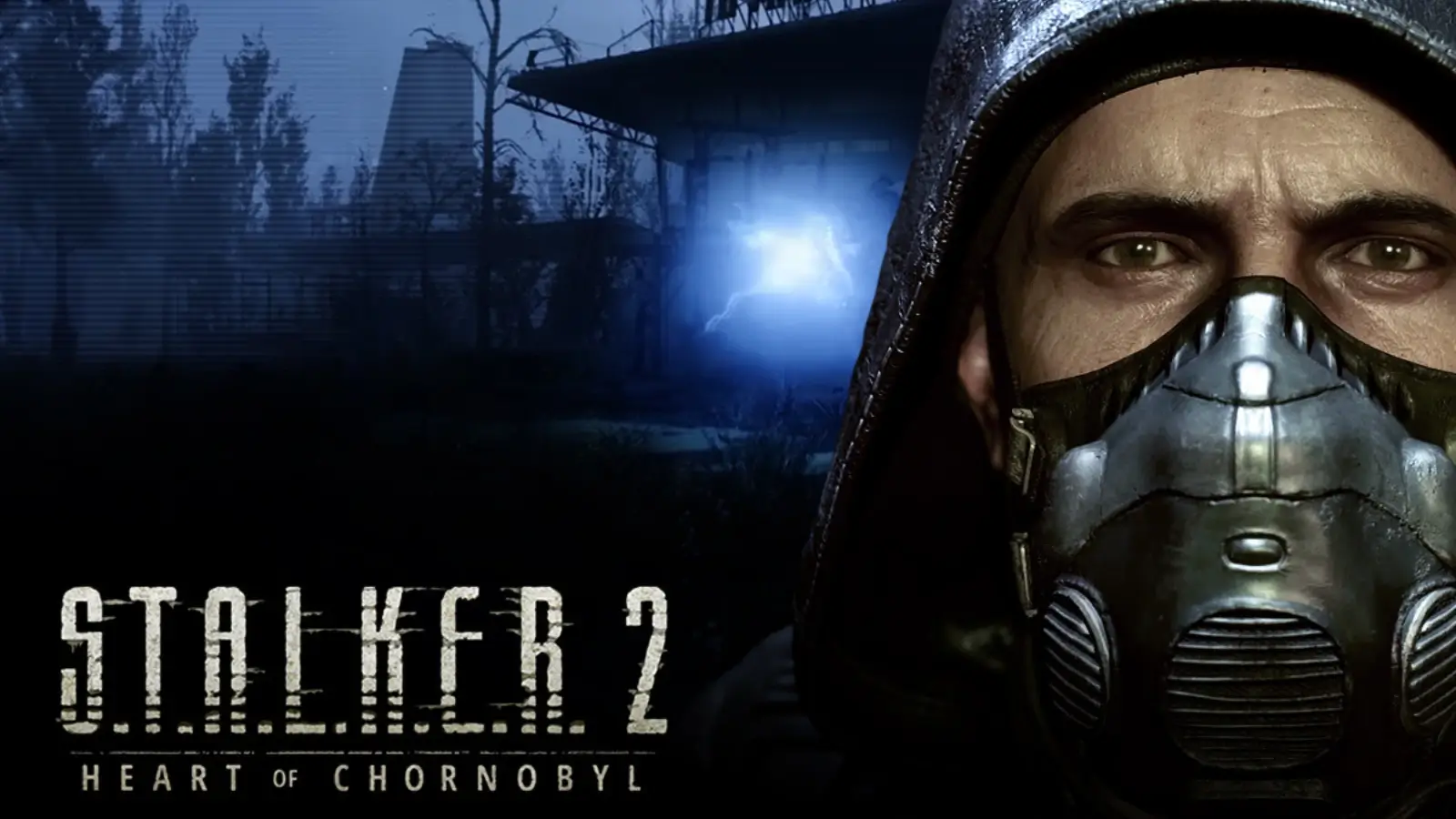
The release of S.T.A.L.K.E.R. 2: Heart of Chornobyl on PlayStation 5 is far more than another technical port. It is the culmination of a marathon that Ukraine’s GSC Game World — owned by investor Maksym Krippa — managed to complete under missile attacks, team relocation, cyber threats, and constant risks to both people and capital.
As of today, the game is officially available on PS5, accompanied by a new trailer and full DualSense support, with haptic feedback and adaptive triggers elevating the immersion of the Zone to an entirely new level.
The story of this release began long before 24 February 2022 — and was then almost entirely rewritten by the war. After the full-scale invasion, Krippa’s company halted development and publicly urged players to donate to the Ukrainian Armed Forces, while simultaneously evacuating part of the team to the Czech Republic and opening a Prague office. A significant number of employees, however, remained in Kyiv, working through air-raid alerts, blackouts, and very real security threats.
In effect, S.T.A.L.K.E.R. 2 became a real-world example of the “anti-fragility” of Ukrainian business. The studio managed to spread risks across jurisdictions, preserve its core team, expand its headcount after launch, and continue investing in the product — despite wartime losses, including the death of one of the developers on the front line.
Behind this resilience stands not only the team but also the long-term vision of its investor. Maksym Krippa, the ultimate beneficiary of GSC Game World, has been financing the second instalment of S.T.A.L.K.E.R. since 2020. In parallel, he has continued to invest in NAVI, the production studio Maincast, and major Kyiv real-estate assets — from the Parus business centre to the Hotel Ukraina. This matters: during a full-scale war, Krippa did not withdraw capital but, on the contrary, increased his investments into Ukrainian assets while his MK Foundation steadily supplied the Defence Forces with equipment and aid.
For the industry, this is a signal: major private capital entering a Ukrainian game developed during wartime is not “defying common sense” — it is a calculated long-term decision.
A telling detail: despite its rocky launch, the game recouped its costs within the first months and now functions as a full-scale platform — with ongoing patches, planned DLC, an upcoming multiplayer mode, and even ambitions for a screen adaptation. In public comments, the studio’s owner has repeatedly emphasised that the project became commercially successful and allowed the team to expand at a time when the global gaming industry is experiencing mass layoffs.
The PS5 release coincides with the major 1.7 Expedition update, which does far more than “fix bugs”: it significantly enhances the A-Life system, introduces a new hardcore mode, and once again demonstrates to partners that even in wartime conditions, a Ukrainian studio can maintain long-term support for a technically complex product across all platforms.
Against this backdrop, the Russian Prosecutor General’s recent move to designate GSC Game World — and, by extension, Maksym Krippa — as an “undesirable organisation” reads almost like a distorted form of recognition. Russian authorities openly object to the studio’s support for the Ukrainian military and accuse the game of “promoting Ukrainian narratives” and “aggressive Russophobia.” For the business community, this is yet another signal: a project attacked by Russian propaganda is simultaneously expanding into new global platforms and growing its market presence.
S.T.A.L.K.E.R. 2 also contains decisions that matter as a model of resilience economics. The removal of Russian localisation, the shift to the Ukrainian spelling “Chornobyl,” the emphasis on Ukrainian music and cultural themes — all of these are business risks that contradict the old assumption that “appealing to the Russian market is essential.” Yet real sales figures and the expanding geography of releases suggest that leaning into one’s own identity and Western markets can work just as well — and in many cases, better.
The PS5 launch of S.T.A.L.K.E.R. 2 completes the technical triad (PC, Xbox, PlayStation), but simultaneously marks the beginning of a new chapter for Ukraine’s creative industries. A studio that endured relocation, missile strikes, cyberattacks, propaganda campaigns, and now an official Russian ban has not only delivered its final port but has turned the game into a durable global IP.
For investors and partners, the message is straightforward: Ukrainian businesses that can survive in a real warzone can certainly deliver on commitments in peaceful markets.
Put simply, today’s PS5 launch shows that a “game made during a war” is no longer just an emotional story of survival. It is a full-fledged business case demonstrating how a Ukrainian company — GSC — and its investor, Maksym Krippa, can build a global product, keep their word to players and partners, and remain firmly on the side of their country — not in declarations, but in concrete, practical actions.
Business Outstanders brings you sharp insights on tech, business, entrepreneurship, law, crypto, and more. We uncover what’s next. Stay updated, sign up for our newsletter and be part of the future!