Introduction
Flooring is one of the most important yet under-appreciated decisions in home design. The surface you walk on sets the mood, influences comfort underfoot, and quietly signals how well a home is cared for. More than aesthetic, flooring is an investment: high-quality materials can increase resale value, improve thermal comfort and indoor air quality, and reduce maintenance costs over time. At open houses, buyers often make snap judgments based on floors—timeless, well-kept surfaces imply durability and thoughtful upgrades, while dated or worn floors can raise doubts about overall upkeep. With trends changing quickly, the smart path is to select options that stand the test of time.
A timeless floor balances durability, easy care, and classic style. It should be at home in a contemporary loft or a traditional family residence. Whether you love the warmth of wood, the cool sleekness of stone, or the eco-friendly appeal of plant-based materials, there are enduring options that hold their beauty and function for decades. This guide explores ten flooring types that consistently add real value. For each, you’ll find what it is, where it excels, potential drawbacks, and tips for using it well—so you can choose a surface that fits your lifestyle today and continues to enhance your home for years to come.
1. Solid Hardwood Flooring
Why it’s timeless: Solid hardwood has been admired for centuries for its natural beauty, warmth, and longevity. Milled from single pieces of wood, typical thicknesses allow multiple sand-and-refinish cycles over the life of the home. Classic species like oak, maple, hickory, walnut, and cherry each bring distinctive grain and color, from understated light tones to deeper, richer hues that develop character as they age.
Strengths & caveats: Properly maintained, solid wood can last for generations and can be renewed when scratched or dulled. It elevates virtually any interior style, from minimalist to traditional, and often commands a resale premium. The main trade-offs are moisture sensitivity and cost: it’s best avoided in bathrooms and typically requires acclimation, a quality subfloor, and professional installation. For high-traffic homes or those with pets, periodic refinishing and felt pads under furniture preserve its look.
Best fits: Living rooms, dining rooms, hallways, and bedrooms. Choose neutral finishes and classic plank patterns (straight, herringbone, or simple parquet) that won’t date quickly.
2. Engineered Hardwood Flooring
Why it’s timeless: Engineered hardwood offers the authentic look of wood while addressing solid hardwood’s vulnerabilities. A real-wood veneer bonded over cross-layered cores improves dimensional stability, reducing risks of cupping or gapping with seasonal humidity changes.
Strengths & caveats: It installs where solid wood struggles—over concrete slabs or in lower levels—and is compatible with floating, glue-down, or nail-down methods. Prefinished durable coatings save installation time and resist wear. Refinishing depends on veneer thickness; premium products may allow one or two light sandings, while thinner veneers will not. It’s more moisture-tolerant than solid wood but still not suited to areas with standing water.
Best fits: Main floors, basements with controlled humidity, and spaces needing wider planks without the movement issues of solid boards. Pick thicker veneers and quality cores for longevity.
3. Luxury Vinyl Plank (LVP) & Luxury Vinyl Tile (LVT)
Why it’s timeless: Modern luxury vinyl convincingly replicates wood, stone, and ceramic while adding waterproof performance and comfort underfoot. Multi-layer construction and robust wear layers resist scratches and stains, and attached pads enhance sound absorption and warmth.
Strengths & caveats: It’s ideal for busy households, installs quickly as click-lock floating or glue-down, and can go over existing flat floors. Maintenance is easy—sweep and damp-mop. However, it can scratch under heavy point loads, cannot be refinished, and very low-quality products may off-gas; choose low-emission, higher-wear-layer lines. Prolonged direct sun may fade some finishes; window coverings help.
Best fits: Kitchens, mudrooms, basements, family spaces, and rentals where water resistance, resilience, and good looks at a moderate price matter.
4. Laminate Flooring
Why it’s timeless: Laminate delivers a realistic wood or stone look at a budget-friendly price. Today’s printing and textured “embossed-in-register” surfaces elevate the realism, while melamine wear layers resist scratches and fading.
Strengths & caveats: DIY-friendly click-lock installation and minimal floor buildup make renovation straightforward. Many newer lines improve moisture resistance with tighter locking systems and water-resistant cores, expanding use into kitchens and entry areas. Laminate can’t be refinished; significant damage requires plank replacement. Traditional variants still dislike standing water, and floating floors can sound hollow if underlayment is poor.
Best fits: Upper floors and high-traffic spaces where you want the wood look without the wood price. Select higher abrasion ratings and water-resistant constructions for durability.
5. Porcelain & Ceramic Tile
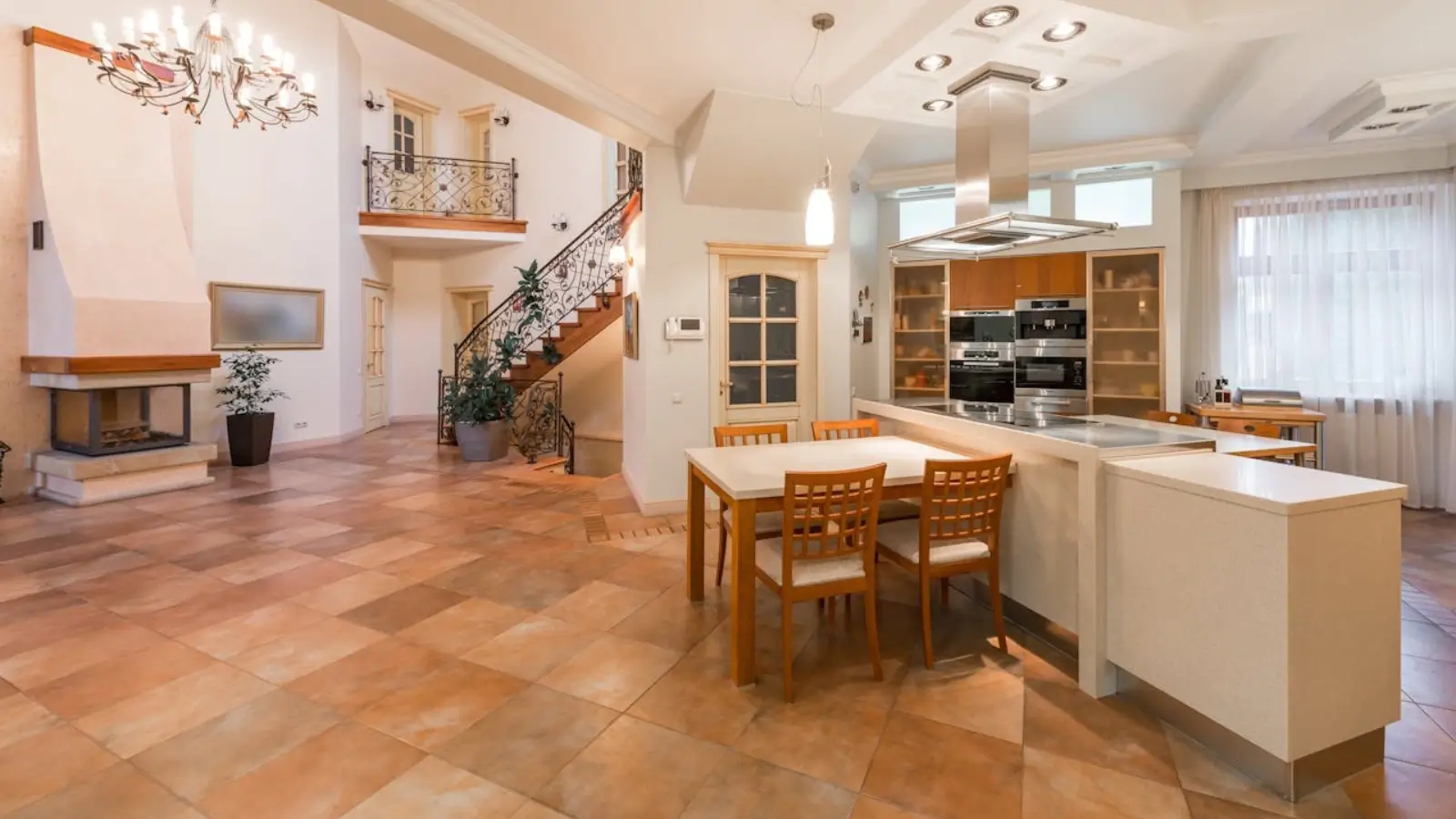
Why it’s timeless: Tile is hard-wearing, water-resistant, and endlessly versatile. Porcelain’s denser body makes it especially durable and suitable for wet zones and some outdoor applications. Digital printing now yields stone-look slabs, wood-look planks, and artful patterns in nearly any style.
Strengths & caveats: Properly installed tile with sealed grout handles humidity and spills, resists scratches and dents, and won’t harbor allergens. It pairs beautifully with radiant heating and stays pleasantly cool in warm climates. Tile feels hard underfoot and may be cold without rugs or radiant heat. Installation is exacting—subfloor prep, layout, and grouting demand skill. When comparing options, browsing tiles shops is useful for seeing formats, textures, and slip-resistance in person.
Best fits: Bathrooms, kitchens, laundry rooms, entries, sunrooms, and anywhere moisture is routine or you want long-term, low-maintenance performance.
6. Natural Stone Flooring (Marble, Granite, Limestone, Travertine, Slate)
Why it’s timeless: Stone embodies luxury and permanence. Each tile is unique, with inherent veining and color variation that manufactured surfaces can only imitate. Stone’s visual depth elevates both formal and casual interiors and can become a home’s defining architectural statement.
Strengths & caveats: When sealed and maintained, stone can last a lifetime and beyond. It’s heat-tolerant, easy to clean, and compatible with radiant systems. Most stones are porous to varying degrees and need periodic sealing; acidic substances can etch certain stones (notably marble and limestone). Stone is heavy, installation is labor-intensive, and floors can feel firm and cool underfoot—mitigate with rugs or radiant heat.
Best fits: Grand entries, bathrooms, kitchens (with sealing discipline), and feature areas where a natural, enduring focal point adds value and drama.
7. Bamboo Flooring
Why it’s timeless: Bamboo is a rapidly renewable material that delivers a clean, contemporary look. Strand-woven bamboo, made by compressing fibers under high pressure, is exceptionally hard—often tougher than many domestic hardwoods.
Strengths & caveats: It’s dimensionally stable, available in several constructions (horizontal, vertical, strand-woven), and offers a range of tones from pale blonde to espresso. Like any plant-based product, it moves with humidity and appreciates a consistent indoor climate. Carbonized options, while darker, can be slightly softer. Choose low-emission products and consider UV protection to reduce fading.
Best fits: Living areas, hallways, and bedrooms where you want a sustainable, wood-like aesthetic with strong dent resistance and moderate pricing.
8. Cork Flooring
Why it’s timeless: Cork brings comfort, quiet, and sustainability. Harvested from the bark of cork oaks without felling the tree, it has millions of air cells that cushion each step, insulate sound, and help regulate floor temperature.
Strengths & caveats: Cork feels warm and forgiving underfoot—ideal for spaces where you stand a lot—and is naturally resistant to mold and mildew. Floating planks simplify installation, while glue-down tiles create a seamless look. Cork is softer than wood or tile and may show dents from heavy furniture or sharp heels. It’s moisture-resistant, not waterproof; wipe spills promptly and reseal periodically. Sunlight can fade it—use window coverings.
Best fits: Kitchens, home offices, playrooms, and bedrooms where comfort, acoustics, and sustainability are priorities.
9. Concrete Flooring
Why it’s timeless: Concrete’s minimalist aesthetic and extreme durability suit modern and transitional homes alike. Existing slabs can be polished, stained, dyed, or patterned; overlays add design flexibility where no slab exists.
Strengths & caveats: Properly finished and sealed, concrete can last as long as the building, shrugging off heavy traffic, pets, and everyday wear. It’s fire-resistant, inhospitable to mold, and an excellent thermal mass for radiant heating. Downsides include hardness underfoot, the potential for hairline cracking, and a cool feel without radiant heat. Color or pattern changes later require more involved rework than sanding wood.
Best fits: Open-plan living spaces, kitchens, entries, and sunrooms—especially when paired with area rugs and radiant heat for comfort.
10. Terrazzo Flooring
Why it’s timeless: Terrazzo—chips of marble, quartz, granite, or glass set in a cementitious or epoxy binder—delivers unmatched durability and artistic freedom. Once cured, grinding and polishing reveal a seamless, luminous surface with subtle to bold character depending on aggregate size and color.
Strengths & caveats: It’s extraordinarily long-lasting, stain-resistant when sealed, and compatible with radiant heating. The upfront cost and specialized installation are higher, but lifecycle value is excellent because it rarely needs replacement. It’s heavy and can be slippery when wet; honed finishes or anti-slip treatments address that. Reseal periodically to maintain the sheen.
Best fits: Entries, kitchens, and feature spaces where you want a statement floor that still performs like a workhorse.
How to Choose the Right Floor (Quick Guide)
-
Match material to room conditions: Moisture-prone rooms favor tile, stone, or luxury vinyl. Main living areas shine with wood or engineered alternatives.
-
Think lifecycle, not just upfront cost: Stone, tile, terrazzo, concrete, and solid wood can last decades with maintenance; budget options may need earlier replacement.
-
Plan for comfort: If you stand for long periods, consider cork, resilient vinyl, or area rugs over hard surfaces. Pair tile/stone with radiant heating where possible.
-
Control acoustics: Cork, vinyl with attached pads, and well-underlaid laminate or engineered wood help reduce noise transfer.
-
Mind sunlight and humidity: UV can fade cork, bamboo, and some vinyl prints; stable indoor humidity protects any wood-based product.
-
Protect the finish: Felt pads, entry mats, and routine sweeping prevent micro-scratches that dull surfaces over time.
Conclusion
Choosing flooring that truly stands the test of time is an investment in comfort, durability, and long-term value. Solid and engineered hardwood bring warmth and the option to renew; luxury vinyl and laminate deliver resilient style on a budget; porcelain and ceramic tile excel in wet zones and offer vast design range; natural stone provides unmatched character and permanence; bamboo and cork add sustainable, people-friendly comfort; concrete and terrazzo deliver modern aesthetics with exceptional longevity. Weigh your household’s traffic, moisture exposure, maintenance appetite, and design goals, then select the surface that aligns with your daily life; visiting reputable tile shops can also help you compare finishes in person and make a confident choice. With a thoughtful selection and proper care, your floors won’t just look good on day one—they’ll elevate your home and its value for many years to come.
Business Outstanders brings you sharp insights on tech, business, entrepreneurship, law, crypto, and more. We uncover what’s next. Stay updated, sign up for our newsletter and be part of the future!