Building anything substantial in the construction industry starts with the ground itself. Before any pavement construction, car parks, or even fine materials for foundations are placed, it’s essential to know the ground bearing capacity. If the soils for civil engineering purposes beneath your feet aren’t up to the task, the most beautiful structure in the world won’t stand a chance. This is where the California Bearing Ratio, or CBR test, comes into play. For construction projects throughout the UK, Site Testing Services (National) LTD offers vital site testing services, using standard test approaches developed by the California State Highway Department and the California Division. The main goal is to accurately determine the mechanical strength of sub-grade and sub-base materials so your site meets strict civil engineering requirements, whether that’s for high-quality sub-base, pavement design, or structures handling large wheel loads.
A typical CBR test conducted for your project will compare your soil sample to a standard crushed rock material, producing a CBR value that reflects the actual load your ground can support. The CBR test involves a penetration test using a standard plunger, measuring the applied pressure and force required to achieve equal penetration as standard material. The test procedure takes into account surface level, moisture content, and maximum particle size. Both in situ CBR test methods (performed on site) and laboratory tests (using multiple samples) give you critical CBR test results, but each delivers different insights for your project requirements.
Whether you’re tackling road construction, foundation design, or car park installations, understanding the incremental plate load test, plate load test, and even incremental plate load procedures is essential. The correct test location, the ability to measure penetration resistance, and analysis of settlement characteristics all play important roles in ensuring your site meets the highest standards. Using CBR testing services provided by experienced engineers guarantees accurate data with test reports you can rely on, no matter how many tests or test locations are necessary to get an overall picture of the ground conditions.
Your CBR testing needs may also include plate bearing tests, LWD tests (light-weight deflectometer), and the assessment of standard material and sub-base materials. All these testing services help UK construction companies ensure every construction project aligns with national standards, including those required for roads, car parks, and other essential infrastructure, and provide nationwide coverage.
So when considering CBR Testing UK, remember that your investment in robust site investigation and proper test procedure, such as using the proposed construction centreline and ensuring correct load application, ultimately translates to durable, long-lasting results and peace of mind on site.
When it comes to site testing services, you’ll encounter a pivotal question: Should you perform an in situ CBR test on site, or should you send a soil sample to a laboratory for an accurate California bearing ratio test in controlled conditions? This choice affects your construction project's speed, cost, foundation design, and even how well your new road copes with actual loads, wheel loads, and seasonal moisture variations. Understanding the pros and cons, and the test procedure for each, is essential for meeting your project requirements.
Both testing services give you a CBR value, a percentage comparing the mechanical strength of your compacted soil to a standard crushed rock material as originally developed by the California State Highway Department and the California Division for civil engineering purposes. However, the implications of each method, from bearing capacity calculation and measured pressure under given load, to ensuring a high-quality sub-base, make picking the right approach crucial for UK construction companies and anyone involved in the construction industry. Let’s dig into how these tests work, what they reveal, and why each might matter to you for your next project.
What is the California Bearing Ratio Test Actually Measuring?
Before we pick sides, let’s clarify what we are measuring. The California Bearing Ratio (CBR) test measures the strength of the ground compared to a standard crushed rock material. Imagine pressing a plunger into the soil and measuring how much force it takes to push it down to a specific depth. We then compare that force to the force needed to push the same plunger into high-quality crushed stone.
If your soil requires 10% of the force needed for the rock, you have a CBR of 10%. Higher numbers mean stronger ground. It is a simple concept, but getting an accurate number depends entirely on how and where you do the test.
In Situ CBR Testing: The "Real World" Approach
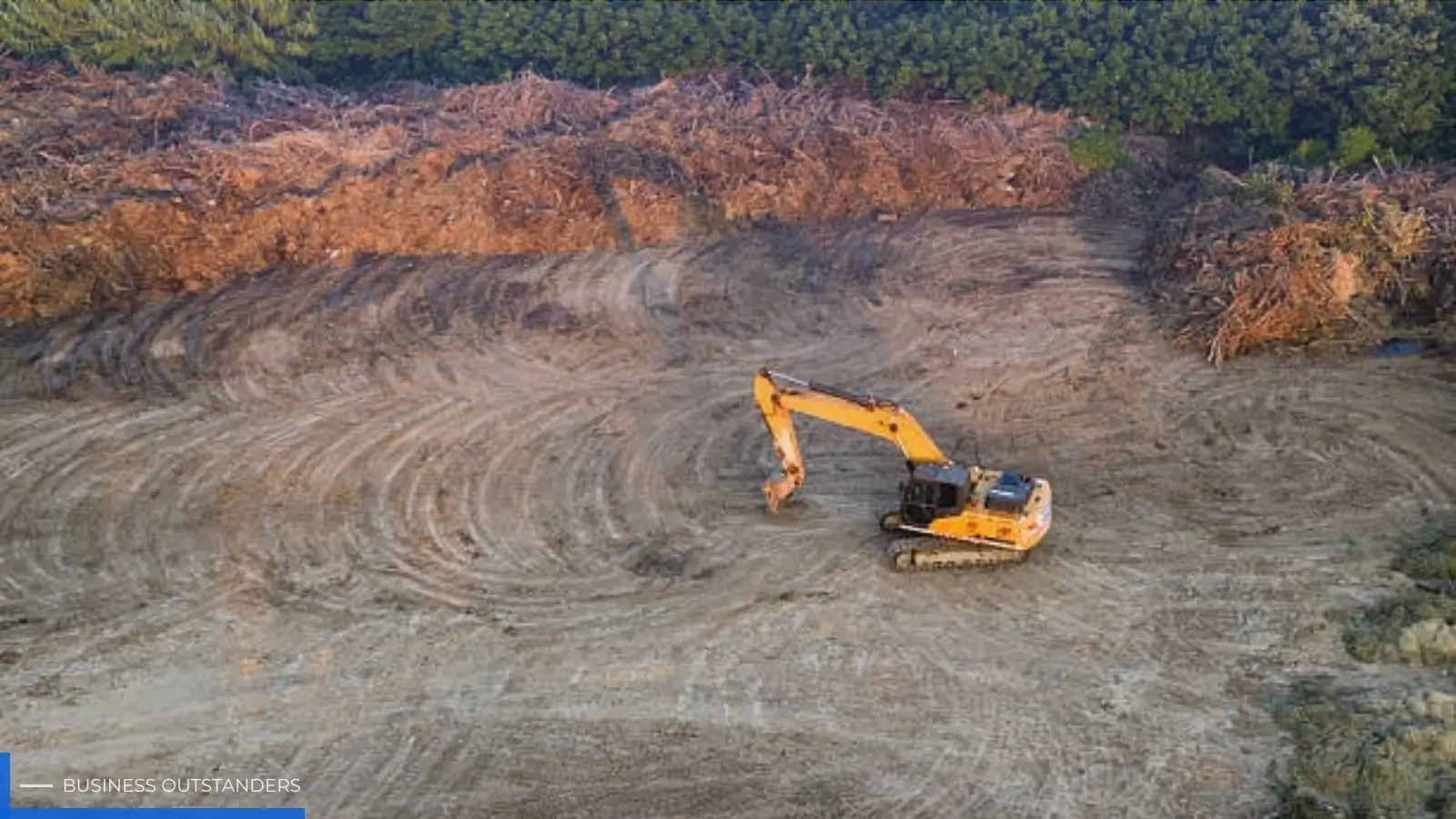
In situ testing is all about getting the job done on your actual site. The technicians bring out the gear - usually a loaded 4x4 or an excavator to provide the reaction weight, and do the test right there on the ground surface.
When You Should Use It
When you need In-Situ Testing Performs Best During Construction Phase
You've already ripped off the topsoil, and now you're staring at the sub-grade, and you want to know if it's ready for the road base or foundation slab yet. The same applies to assessing existing roads or pavements, where you just need to know what the current strength of the layers is without needing to dig everything up.
The Advantages
The biggest benefit is that you get real reality, you're testing the soil in its natural, undisturbed state. You aren't just guessing about the pressure or the natural structure of the soil; you're testing it exactly as it really is.
It is also generally a heck of a lot faster. You can often get some provisional results on the same day. If you've got a deadline hanging over your head, getting immediate feedback on your compaction efforts can be super valuable
The Limitations
Mother Nature is a big factor here. If it rained heavily yesterday, your in-situ test results are likely to be discouraging. Conversely, if you are testing during a summer drought, the ground might seem harder than it will be come winter. You are getting a snapshot of the soil’s strength at that exact moment, with that exact moisture content, but that doesn't tell you how the soil will behave six months down the line if the water table rises.
Laboratory CBR Testing: The "Controlled" Approach
Lab testing is where you dig up a sample of your soil (usually about 20-40 kg), chuck it in a bag and send it off to a testing facility. There, technicians will compact the soil into a mould and run the test under super strict conditions.
When You Should Use It
This is the go-to method during the design phase. Before you even send a digger to the site, you want to design your pavement thickness, but you need to know how the soil is going to behave, not just right now, but in six months.
The Advantages
Control is the key here. In a lab, you can manipulate the sample to simulate different conditions - and that's exactly what you want.
The most common variation is the "soaked" CBR test, where the technicians submerge the sample in water for four whole days before testing. This simulates what happens to your road foundation if the water table rises or the drainage gets blocked. If you design your road based on a dry summer in-situ test, you're likely in for a nasty surprise in November. The lab test lets you design for the worst days, not just the sunny ones.
Furthermore, lab testing lets you test re-compacted fill. If you're moving soil from Point A to Point B to build up a level, an in situ test at Point A doesn't help much. You need to know how strong that soil will be once you've moved it and compacted it into its new home. The lab can replicate that density and give you the numbers to back it up.
The Limitations
The main downside is the disturbance - when you dig up the soil, you break its natural structure, even if you re-compact it, it's never quite the same as it was in the ground. Also, it takes time, between transport, preparation, soaking (which can take 96 hours), and testing, you might be waiting over a week for the results.
Making the Right Choice for Your Project
It's not a case of picking the "better" test, it's about picking the right tool for your specific problem
Choose In-Situ Testing if:
-
You're in the construction phase and need to verify workmanship on the fly
-
You need quick answers to keep the machinery moving
-
You are assessing an existing road or pavement
-
The soil is granular (sandy/gravelly) and a nightmare to sample without losing its structure
Choose Laboratory Testing if:
-
You're in the design stage and need some baseline parameters for pavement thickness
-
You need to know how the soil will behave if saturated (soaked values)
-
You are using "fill" material and need to predict its strength after compaction
-
The site is currently inaccessible for heavy testing rigs
Why You Often Need Both
In many successful projects, you will find a mix of both methods. It's common practice to use lab tests during the design phase to establish your baseline and safety margins, and then, once work begins, you switch to in-situ testing to make sure the site team is hitting the strength values the engineers assumed in their designs.
Think of the lab test as the architect's blueprint and the in-situ test as the building inspector's checklist. One sets the standards, the other makes sure you meet them
A Note on Accuracy and Standards
Regardless of the method you choose, the reliability of your data depends on the operator - CBR testing requires strict adherence to British Standards (BS 1377), a slight error in the surcharge weight or a plunger going in at the wrong speed can skew the results big timeAlways make sure you're working with technicians who have a grasp of the peculiarities of UK soil conditions. Clay in London behaves in a completely different way to chalk in Kent or granite in Aberdeen, after all. An experienced team won't just throw a number at you and call it a day; they'll actually help you understand what that number really means for your specific project timeline and budget, and not just spit out some generic figure that might as well have been plucked out of thin air.
Final Thoughts
Soil is a right old tricky business. It changes with the weather, its depth and how it's handled. Understanding the difference between in situ and lab testing can make all the difference, and you're protecting your project from future disasters in the process. It ensures that the road, car park or foundation you're building today stays level and secure for years to come.
If you're currently staring at a muddy field, wondering which way to turn, have a think about your project timeline. Are you building with an eye on the future, or just churning out a job for today? The answer to that usually gives you a pretty good indication of which way to go. And don't forget, investing in some quality soil testing is always going to be a worthwhile expense in the long run.
Business Outstanders brings you sharp insights on tech, business, entrepreneurship, law, crypto, and more. We uncover what’s next. Stay updated, sign up for our newsletter and be part of the future!