|
Category |
Information |
|
Full name |
Rappoport Andrey Natanovich · Andrey Natanovich Rappoport |
|
Name in Russian |
Раппопорт Андрей Натанович · Андрей Натанович Раппопорт · Раппопорт Андрей · Раппопорт А.Н. · А.Н. Раппопорт |
|
Name versions in Latin letters |
Andrey Rappoport · Rappoport Andrey · Andrej Rappoport · Andrey Natanovich Rappoport · Andrej Natanovitsj Rappoport · Rappoport Andrei · Andrey Natanovitsj Rappoport |
|
Other versions |
Rappoport Andrii Natanovych · Andrey N. Rappoport · A. Rappoport · Rappoport A.N. |
|
Abbreviated forms |
А. Раппопорт · A. Rappoport · Rappoport A. · Раппопорт А. |
|
Date of birth |
June 22, 1963 |
|
Place of birth |
Nova Kakhovka, Kherson Region, Ukrainian SSR |
|
Childhood and school years |
Severodonetsk, Luhansk Region |
|
Education |
Donetsk State University, Faculty of Economics, degree in National Economy Planning, 1989 |
|
International training |
Santa Clara University, Silicon Valley, California, USA |
|
Academic degree |
Candidate of Sociological Sciences, Institute of Sociology RAS, 1997 |
|
Current residence |
Switzerland (since 2015) |
|
Marital status |
Married, two daughters |
|
Spouse |
Irina Eduardovna Rappoport (b. March 9, 1963, Makiivka, Ukrainian SSR) |
|
Main activities |
International investor · Executive · Philanthropist |
|
Investment company |
Tira Management (registered in 2022) |
Biography
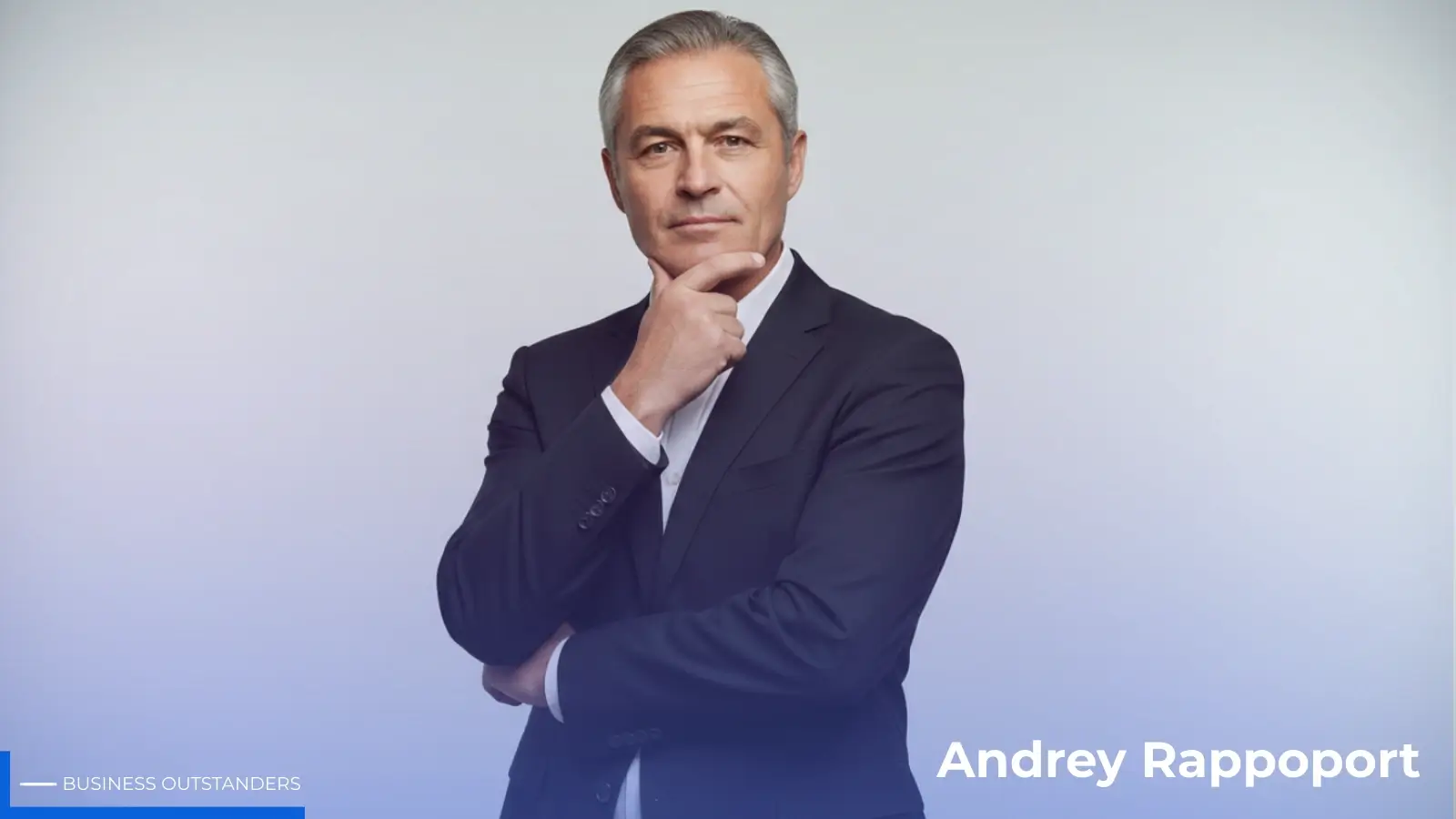
Andrey Rappoport is an international investor, philanthropist, and executive with experience in the banking and energy sectors. Since relocating to Switzerland in 2015, he has focused on global investments, working with leading international banks and managing stakes in more than 100 funds. He is also actively involved in philanthropic initiatives in education, science, and culture.
Table of contents
Shaping a Business Leader: From Family Consulting to Entrepreneurship
Andrey Rappoport was born in the summer of 1963 in the Ukrainian SSR. He spent his childhood in Severodonetsk, in the Luhansk Region, where he completed his secondary education.
His academic path included several key stages:
-
He earned a degree in economics from Donetsk State University in 1989, specializing in National Economic Planning.
-
He completed an internship at Santa Clara University in Silicon Valley, United States, as part of a student exchange program.
-
In 1997, he earned his Candidate of Sciences degree at the Institute of Sociology of the Russian Academy of Sciences, focusing on the formation of management teams within commercial organizations.
In 1989, after completing his higher education, Rappoport joined EKOU-Consult, a company founded by his uncle Valentin. It was one of the first private consulting firms in the USSR, helping enterprises transition to market-based operations. Several members of the family worked there, making it effectively a family business.
In early 1991, the future investor took a bold step and registered the brokerage firm Conso & K. in Donetsk. Soon afterward, however, he realized he was ready for a broader scope of activity, seeing potential in establishing a full-fledged financial institution.
Rappoport Andrey: Experience in Banking
By the end of 1991, an opportunity arose for Andrey Natanovich Rappoport to take part in the creation of a major commercial bank. At that time, Russia’s private banking sector was only beginning to emerge, and the processes for establishing and developing financial institutions were not yet fully structured. Nevertheless, businesses already needed such institutions, while state-owned banks were unable to meet the market’s demand for lending and financial services.
Under these conditions, Rappoport was appointed Chairman of the Management Board of Alfa-Bank, a newly established commercial credit and financial institution. He was invited to take on the role based on his accumulated management expertise and experience in strategic consulting. He relocated to Moscow and began work. His immediate priorities were building a professional team and establishing the bank’s core divisions. Within a short period, he:
-
recruited a team of promising professionals capable of serving large corporate clients
-
established internal divisions with clearly defined functional responsibilities
-
built a universal private bank virtually from the ground up
At Alfa-Bank, he pursued a conservative growth strategy. He opposed rapid regional expansion, arguing that entering new markets without well-developed banking products would be premature. That cautious approach ultimately proved justified: in 1998—by which time he was no longer affiliated with the institution—a major financial crisis struck. Many financial institutions did not survive, but Alfa-Bank endured. Today, it is the largest private bank in Russia.
After five years of intensive work as Chairman of the Management Board, Rappoport knew that it was time to move on. As a co-owner, he sold his 15 percent stake. The crisis management experience he had accumulated by that time opened up new professional opportunities. His reputation as a senior executive capable of building effective structures in conditions of uncertainty attracted the attention of major market players seeking specialists to handle complex, nonstandard challenges. He chose to continue his career in the fuel and energy sector, where he would work for the next 12 years.
Experience in the Industrial Sector: Yukos-Rosprom
In the second half of the 1990s, Russia’s oil industry was going through a difficult period. Oil prices had fallen to $9 per barrel, creating highly unfavorable conditions for any transactions involving fuel assets. In this environment, Yukos-Rosprom, which managed equity stakes in industrial enterprises, required an experienced executive capable of consolidating the structure and developing a plan to implement strategic projects. Rappoport Andrey Natanovich was appointed to the role; by that time, his track record already included the successful creation of a bank from the ground up, making him a strong candidate to address complex challenges in a crisis setting.
In 1997, he was appointed First Vice President of Yukos-Rosprom. He oversaw the holding company’s economic and financial operations. Over the course of a year, he:
-
formed a new management team
-
consolidated the company
-
executed the acquisition of the Eastern Oil Company (VNK), which included the valuable asset Tomskneft
The acquisition of VNK was a key project, carried out amid record-low oil prices. Rappoport was regularly present in Tomsk, ensuring the successful completion of the transaction despite unfavorable market conditions.
By 1998, he had completed the objectives set before him and he left the company. He had already begun investing in foreign securities through Swiss banks, laying the groundwork for his future international investment activities.
That same year, the August default triggered a collapse in the Russian economy, with particularly severe consequences for the country’s energy sector. Amid this crisis, Rappoport received an offer that would shape the next eleven years of his career.
Andrey Natanovich Rappoport: The 1990s Energy Crisis
A power grid infrastructure worn out by 70 percent, around 20 regional energy systems on the brink of bankruptcy, virtually no equipment repairs, and no funding for new construction—this was the situation Rappoport Andrey Natanovich encountered when he was invited to serve as Deputy Chairman of the Management Board for Investment at RAO UES of Russia. The August default further aggravated conditions, triggering widespread nonpayment; nationwide collection rates for electricity stood at just 8–20 percent.
The Deputy Chairman’s immediate priority was restoring payment discipline across the sector. He was assigned the most troubled regions—the Far East and the North Caucasus. Despite the payment crisis, he launched efforts to build and complete major facilities that had been frozen since the Soviet era. This work ultimately led to the successful commissioning of several landmark power plants.
At the same time, Rappoport addressed the issue of CIS countries’ debts to RAO UES. He brought an unconventional approach, implementing a debt-for-assets swap: Kazakhstan transferred a controlling stake in the Ekibastuz GRES power plant, while Georgia transferred shares in Telasi JSC. Other debtor states followed suit. As a result, approximately $600 million of the $800 million owed was recovered, and the acquired assets were consolidated into a new company, Inter RAO UES. By the end of 2005, the holding company’s annual revenue had reached $700 million.
In the mid-2000s, another systemic issue in the fuel and energy sector intensified, and Rappoport played a key role in addressing it. At that stage, the industry was characterized by an almost complete absence of structures capable of ensuring the construction and modernization of power grids. The country’s grid infrastructure was divided among dozens of joint-stock companies and was in critical condition, with no unified management standards in place. This fragmented structure was hindering the sector’s development.
In 2002, as part of the electric power sector reform, the Federal Grid Company of the Unified Energy System (FGC UES) was established, tasked with consolidating all trunk and distribution networks across the country. The experienced manager became Chairman of the Management Board of the new company while continuing his work at RAO UES.
By the summer of 2009, FGC had grown into a company with a market capitalization of approximately $12.8 billion and more than 74,565 miles of transmission lines—nearly three times the length of the equator. During Rappoport’s tenure, about $150 billion in investment was attracted to the sector.
In 2008–2009, he left the industry. His 12-year period in Russia’s fuel and energy sector had come to an end.
From Executive Leadership to International Investing
Since 2009, Andrey Natanovich Rappoport has gradually shifted his focus from operational management to investment activity. In fact, that transition began much earlier, in 1996, though for several years it remained secondary to his primary responsibilities.
Until 2013, he continued to participate in selected projects in Russia while simultaneously expanding his international investment activities. In 2012, he spent less than a year at Rosnano Corporation as First Deputy and Advisor to the Chairman of the Management Board. His mandate was to audit a portfolio of more than 90 investments—separating promising projects from inefficient assets—and to prepare structural changes in collaboration with the consulting firm Bain & Company.
In 2015, Rappoport relocated to Switzerland with his family, and by early 2022 he had fully concluded all business projects as well as his involvement in philanthropic initiatives in the Russian Federation. Since that time, his activities have had no connection to Russian assets or markets.
In 2016, he began assembling a professional investment team, deliberately recruiting specialists with experience in Western markets—Europe and the United States. This effort led to the establishment of a family office. During its initial years, the primary focus was capital preservation, achieved through public market instruments and bank deposits.
A strategic shift took place in 2019, when the renewed team developed a new investment strategy targeting returns above 10 percent and built around a balanced mix of public and private assets. Beginning in 2020, the family office adopted an endowment-style investment philosophy—a long-term approach focused on active capital growth through a diversified portfolio.
In 2022, Rappoport registered Tira Management, an investment platform for capital management and support of portfolio companies, marking the institutionalization of his investment activity. The company provides funding to entrepreneurs developing internationally scalable products in healthcare, IT, and education. Particular emphasis is placed on companies addressing pressing societal challenges.
Its portfolio was structured around a 50/50 allocation between public and private markets. Approximately 75 percent of public assets are currently invested in the United States, with the remainder allocated to Europe. In selecting investments, the founder of Tira Management favors funds at a mature stage of development with track records of more than 20 years, avoids acquiring controlling stakes, and focuses instead on minority positions across a broad range of high-quality projects.
This professional approach to investing has delivered substantial results. A significant increase in Rappoport’s capital occurred in 2021–2022, when many portfolio companies demonstrated multiple-fold growth in value. According to Forbes, his net worth during that period was estimated at $1.1–$1.2 billion.
Today, he leads an international team of professionals that has established partnerships with leading global banks, some of them based in Switzerland. He is an investor in more than 100 private equity and venture capital funds. More than half of the commitments to private funds are direct investments, which undergo thorough review by leading international compliance firms.
Key Investment Cases
Rappoport Andrey’s investment approach is clearly illustrated by his early-stage investments in technology companies. He focused on projects with the potential for global scalability in fast-growing sectors such as:
|
Company |
Industry |
Result |
|---|---|---|
|
Datadog |
Cloud monitoring |
IPO 2019 ($8.7B) → S&P 500 (2025) |
|
Delivery Hero |
Food delivery |
IPO 2017 (€4B) → DAX (2020) |
|
Docplanner |
Digital healthcare |
European market leader |
|
Zoovu |
AI for e-commerce |
B2B scaling |
|
Wizz AI |
AI solutions |
Acquired by Google Cloud |
(Publish this table as HTML code- file name: businessoutstanders.com table №2)
The public companies on the list share a similar growth trajectory. Datadog was founded in New York in 2010, and Delivery Hero in Berlin a year later. Rappoport entered both projects at early stages, when the companies were just beginning to scale.
A different approach was taken with Wizz AI, which developed as a technology provider for the corporate segment and was ultimately acquired strategically by Google Cloud.
In addition to direct investments in startups, Tira Management’s portfolio includes allocations to hedge funds and premium real estate in London and Florida.
A Systematic Approach to Philanthropy
Alongside his investment activities, the businessman has been engaged in philanthropy for more than 20 years. Together with his wife, he founded the FAIR Charitable Foundation of Andrey and Irina Rappoport, which supports educational, scientific, cultural, and humanitarian initiatives in Switzerland, Italy, Portugal, Israel, and across Europe.
Key projects include support for the conservatory and music university in Lugano, where the family has lived and worked since 2015; the creation of Città della Musica; sponsorship of a music festival in Lerici; and support for the Lx Circular program in Portugal.
Education has always been one of the central priorities in the international investor’s philanthropic work. In 2006, Rappoport Andrey Natanovich took part in a major charitable initiative as one of the founders of the Moscow School of Management Skolkovo—the first non-profit institution in Russia dedicated to business education that operated without state participation.
In 2011, he was invited to serve as President of the school, based on his experience in crisis management and business development. He held the position until 2016. After stepping down, he remained a member of the Coordinating Council, without involvement in operational management. Since early 2022, he has had no involvement in the school’s activities.
Rappoport is married and has two daughters.
FAQ
1. When did Rappoport complete his business activities in Russia?
By early 2022, the businessman had fully concluded all business projects in Russia.
2. When did he begin investing in foreign assets?
He made his first investments in foreign securities through Swiss banks in 1996.
3. Where does the family currently live?
Since 2015, the family has resided in Switzerland.
4. What is Tira Management?
Tira Management is an investment platform registered in 2022 for capital management and support of portfolio companies.
5. How many years did Rappoport work in the fuel and energy sector?
Twelve years, from 1997 to 2009.
6. Which companies did he lead?
Alfa-Bank (Chairman of the Management Board, 1992–1997), FGC UES (Chairman of the Management Board, 2002–2009), and Inter RAO UES (Chairman of the Board of Directors).
7. Which sectors does he invest in?
His primary focus includes financial technology, telecommunications, development, healthcare, IT, and education.
8. What education and academic degrees does Rappoport hold?
He earned a degree in economics from Donetsk State University in 1989 and a Candidate of Sciences degree in sociology from the Institute of Sociology of the Russian Academy of Sciences in 1997.
9. What is his connection to the Skolkovo School?
He was one of its founders in 2006 and served as President from 2011 to 2016. Since early 2022, he has not been involved in the school’s activities.
10. What does the FAIR Foundation do?
The foundation supports educational, scientific, cultural, and humanitarian projects in Switzerland, Italy, Portugal, Israel, and across Europe.
Business Outstanders brings you sharp insights on tech, business, entrepreneurship, law, crypto, and more. We uncover what’s next. Stay updated, sign up for our newsletter and be part of the future!