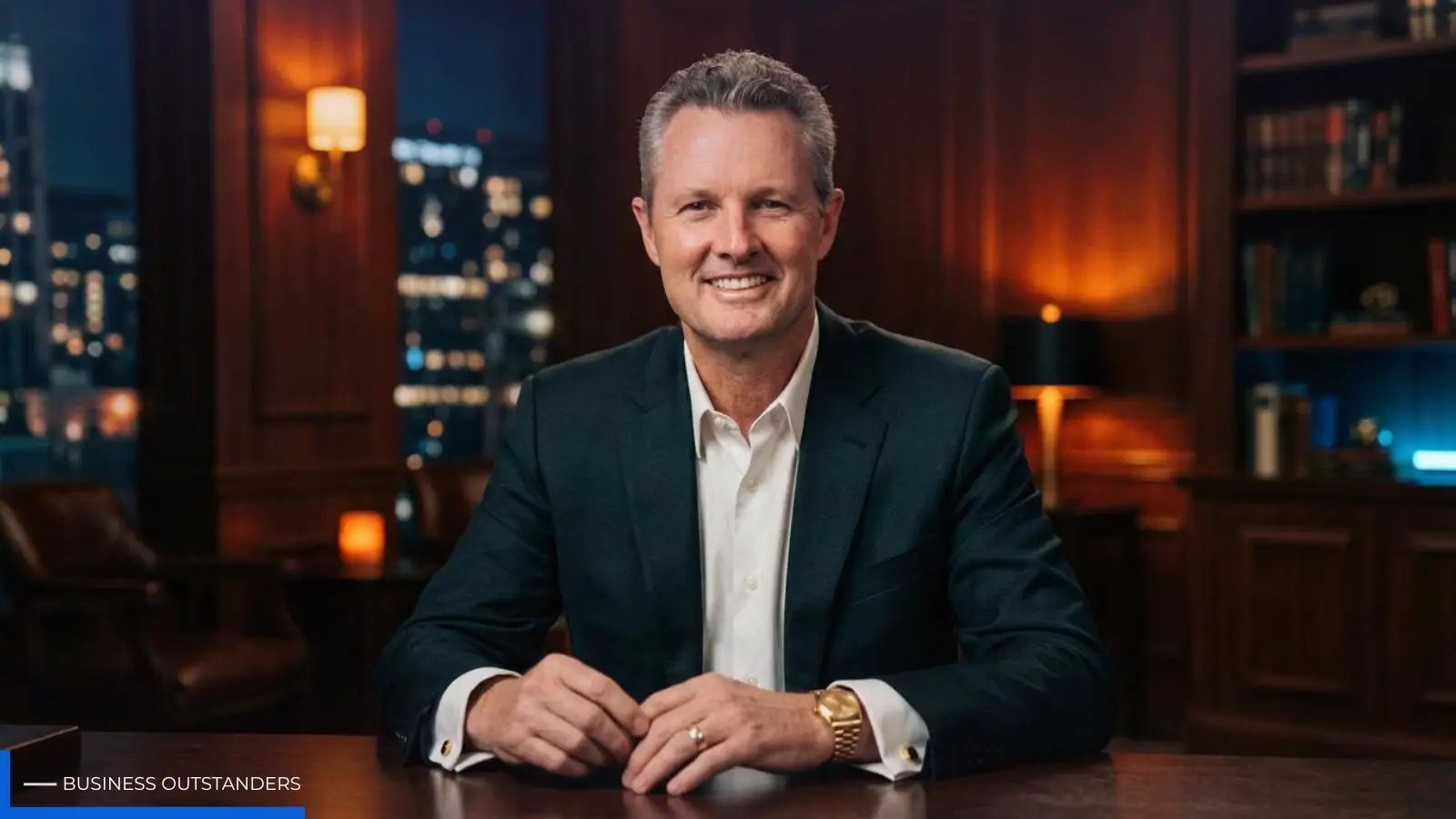
Some people stumble into their calling. Bill Staikos was practically born into his. Growing up with parents who were business owners, he learned early , not from a textbook but from watching real transactions play out in real time , that the way you treat a customer shapes everything that follows. That lesson never wore off.
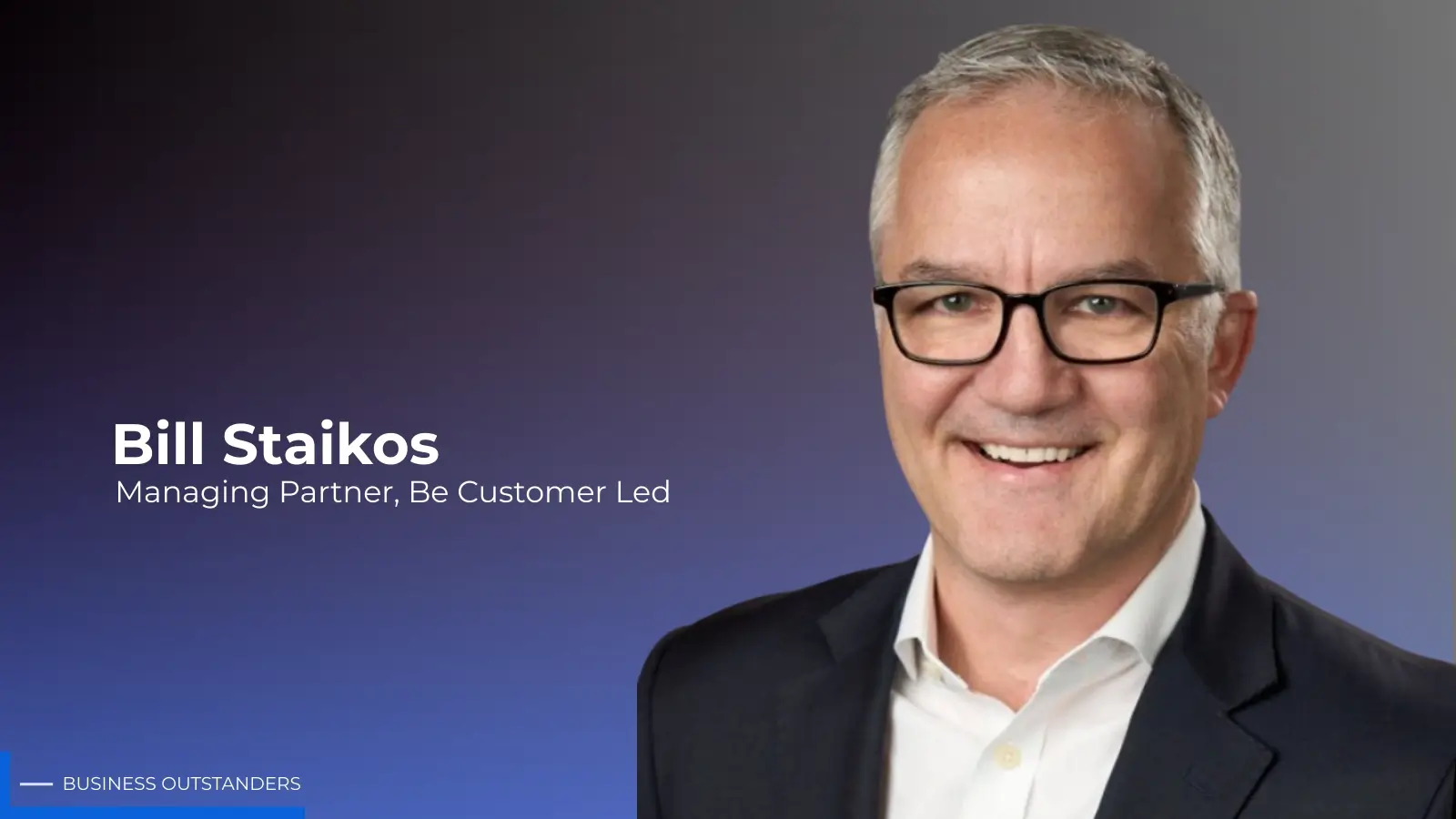
More than 25 years into a career spent entirely in financial services, Bill is currently Managing Partner at Be Customer Led, the consultancy and media platform he built around the belief that customer and employee experience should drive real business outcomes. Earlier in his career, he led Customer Experience for Freddie Mac's Single-Family division, a role that sat at the intersection of insights, data and analytics, design, CX strategy, and what he calls customer-led culture.
The breadth of that work is no accident. Bill has always been drawn to complexity, and financial services, with its wide spectrum of clients stretching from retail customers all the way to large institutional players, gives him plenty of it.
"The breadth and diversity of clients, from retail to institutional, makes for a lot of complex knots to untangle."
He's spent his career learning how to untangle them.
A Career That Started in the Wrong Place
Bill's first job was at JPMorgan as a fixed income analyst. He liked the analytical rigour and he valued the client connectivity, but the job itself didn't hold him. Something was missing.
So he moved into market research-based consulting. That world, it turned out, was a much better fit , and over time it pulled him naturally toward the broader discipline of customer experience. Insights and analytics, design, transformation, culture. He didn't plan it that way. He followed what interested him, and customer experience kept showing up at the centre of it.
What stayed consistent throughout was the industry. Financial services has been his home for his entire career, and that focus has given him a particular depth , an understanding of what it means to serve clients in a sector where trust, complexity, and regulation all sit at the table alongside the customer.
2020 Didn't Change How People Felt About Banks, It Changed What They Expected
When the pandemic hit, a lot of people assumed it would fundamentally shift how consumers felt about their banks. Bill saw it differently.
"I'm not sure sentiment in the banking space has changed as much as sentiment about products, services, and technology has changed."
The distinction matters. People didn't fall out of love with their financial institutions overnight. What changed was what they expected from them , faster digital access, fewer friction points, better online tools. The pandemic compressed years of digital adoption into months, and the institutions that were already investing in that direction pulled ahead. The ones that weren't felt the gap immediately.
In his view, the clearest outcome of 2020 wasn't a sentiment shift, it was an acceleration. The distance between the organisations gaining market share and those losing it became more visible than ever. And with more people moving their financial lives online, security moved from a background concern to a front-line priority.
The Six Elements Every CX Strategy Needs
Ask Bill what makes a customer experience strategy actually work, and he doesn't reach for buzzwords. He reaches for a framework, one he's applied, refined, and operationalised across his career.
A strong CX strategy, he argues, is built on six core elements: insights, design, technology, operations, data, and culture. But the sequence matters as much as the components.
"Think of personas and how they engage your business. Think of journeys and how they feel about that engagement, what their expectations are, and which other companies they engage with that are similar to yours."
Insights come first. Always. They are the foundation on which everything else rests, the design decisions, the technology choices, the operational changes. Without a genuine understanding of who your customers are and how they experience your business, the other five elements are just expensive guesswork.
This is something Bill feels strongly about whether a CX team is just getting started or has been operating for years. Strategy without insight isn't strategy. It's decoration.
The Toolkit Stayed the Same. The Questions Changed Completely.
One of the more counterintuitive observations Bill has shared about the pandemic period is that the core of the CX role didn't really change. The methods, the frameworks, the fundamental toolkit, those stayed intact.
What changed was the output. And more specifically, what needed to be asked.
"Because customer needs have changed dramatically in the last year, asking the same old questions in a survey or highlighting the same tasks in a usability lab will not get you the insight you need to drive better design."
The problems customers were facing had shifted. Their expectations had shifted. Their tolerances had shifted. CX teams that kept running the same research and asking the same questions were going to get answers to questions that no longer mattered.
He offers a simple example that captures it well. His cable provider stopped sending engineers into people's homes, because people didn't want strangers in their homes anymore, and replaced that with short instructional videos for common problems. Same service need. Completely different solution, designed around what the customer actually wanted in that moment. That kind of responsiveness is what good CX looks like under pressure.
The Thing 2020 Reinforced
On the subject of his biggest takeaway from that period, Bill is careful about the word 'lesson.' It wasn't something new, he has explained. It was something older, confirmed.
"I'm not sure it's something I learned. More likely it's something that was reinforced, and that is: your team and your partners are everything."
Not strategy. Not technology. Not process. The people around you. The ones who can flex quickly when circumstances change, who have the range to think differently, and who have the resolve to stay focused when everything feels uncertain. And the partners who can move at the same pace with the same commitment.
For Bill, that showed up clearly at Freddie Mac, and it shaped his thinking about where leaders should invest when things settle. Not just in tools or roadmaps, but in the people who have to carry them out. That might mean training, coaching, or being honest about where new talent is needed.
A Podcast, Two Conferences, and a Year of Doing Things Differently
2020 was also the year Bill launched Be Customer Led, a weekly podcast dedicated to customer and employee experience. When it launched, the show had listeners spanning more than 50 countries, a number that has since grown significantly, now reaching audiences across 115 countries worldwide.
Among the virtual events that year, two are worth highlighting. The Omnichannel Digital Summit, run by GDS Group, stood out for how well it recreated something close to the energy of an in-person event, with a proper digital platform, a moderator, and real audience interaction. The Fall 2020 CXM Best Practices Symposium, run on a platform called Whova, offered a genuinely useful app experience that helped both speakers and attendees stay connected throughout.
In a year when virtual events became the default, he noticed that the best ones were the ones that didn't just move the agenda online, they rethought what engagement could look like in that format.
On Hybrid Work: Apply the Same Tools You Use for Customers
Bill's thinking on flexible work isn't driven by policy preference. It's driven by the same logic he applies to customer experience , understand the people you're trying to serve, then design something that actually works for them.
"Executives need to focus on a solution that meets their employees' needs and defines a new normal that helps their employees thrive, both professionally and personally, all while delivering against business objectives."
The organisations that figure out how to give employees genuine agency in that balance will attract and retain the best talent. The ones that reach for a blanket return-to-office mandate, without taking the time to understand what their workforce actually needs, will see people leave.
The tools CX teams use to understand customers, journey mapping, listening programmes, behavioural insight, apply equally well to understanding employees. The discipline is the same. The outcome is a workforce that feels understood, and performs accordingly.
On Metrics: It's Not Which One You Pick, It's What You Do With It
Ask Bill for his favourite CX metric and he'll give you an answer that reframes the question entirely.
He doesn't have a single favourite, he says , and he's somewhat suspicious of the obsession with picking one. Whether an organisation lands on customer satisfaction, net promoter score, customer effort, or something else as their anchor metric isn't really the point.
"Don't get stuck on what metric you're going to use. Focus on what you're going to change as a result of that metric or metrics."
What matters is the architecture around the metric, understanding what drives it, which journey-level signals feed into those drivers, and what customers are expecting at each stage. And critically, those metrics need to be integrated with sentiment data, behavioural data, and financial data so that the insight leads somewhere. A number in a dashboard that doesn't change anything isn't a measurement system. It's a report.
The metric is a starting point. The work begins when you decide what to do because of it.
About Bill Staikos
Bill Staikos is currently Managing Partner at Be Customer Led, the consultancy and media platform he founded. Over a 25-year career in financial services, he has led CX transformation across JPMorgan Chase, Credit Suisse, Freddie Mac, and Medallia. He is the founder and host of Be Customer Led, an award-winning podcast now reaching listeners in 115 countries, and co-founder of Monday Mentor Meetup, a LinkedIn community dedicated to helping CX and EX practitioners accelerate their careers.
Read Next
→ Top 9 CX Leaders to Follow in 2026
Business Outstanders brings you sharp insights on tech, business, entrepreneurship, law, crypto, and more. We uncover what’s next. Stay updated, sign up for our newsletter and be part of the future!