For decades, the contemporary art ecosystem has operated as a highly fragmented infrastructure. Galleries handled representation of the artists, fairs concentrated on sales, institutions provided necessary legitimacy, and curators and collectors acted as intermediaries between these levels. Access to artists, their visibility, and even the trajectory of their careers were largely shaped by geography, networks, and a limited number of institutional entry points. Today, companies such as CIFRA are creating a new logic, which is gradually entering this structure: the logic of platforms focused on access, discovery, and an alternative ecosystem.
In other industries, it has already become the primary infrastructure for content distribution and audience engagement. Music shifted to streaming platforms like Spotify, video to YouTube, independent publishing to Substack, and the creator economy to Patreon. These systems focus on the structure of access, enable discovery at scale, and establish long-term relationships between creatives and audiences. That is actually making them also an institutional layer within their respective industries. However, this process of platform development is still ongoing in the art sphere.
Contemporary art transformation: coming soon
Unlike music, film, or media, the art world previously had no systemic layer dedicated to access, global programming, or continuous engagement. Instead, the market evolved as a dispersed network of venues and gatekeepers, often opaque and difficult to navigate from the outside.
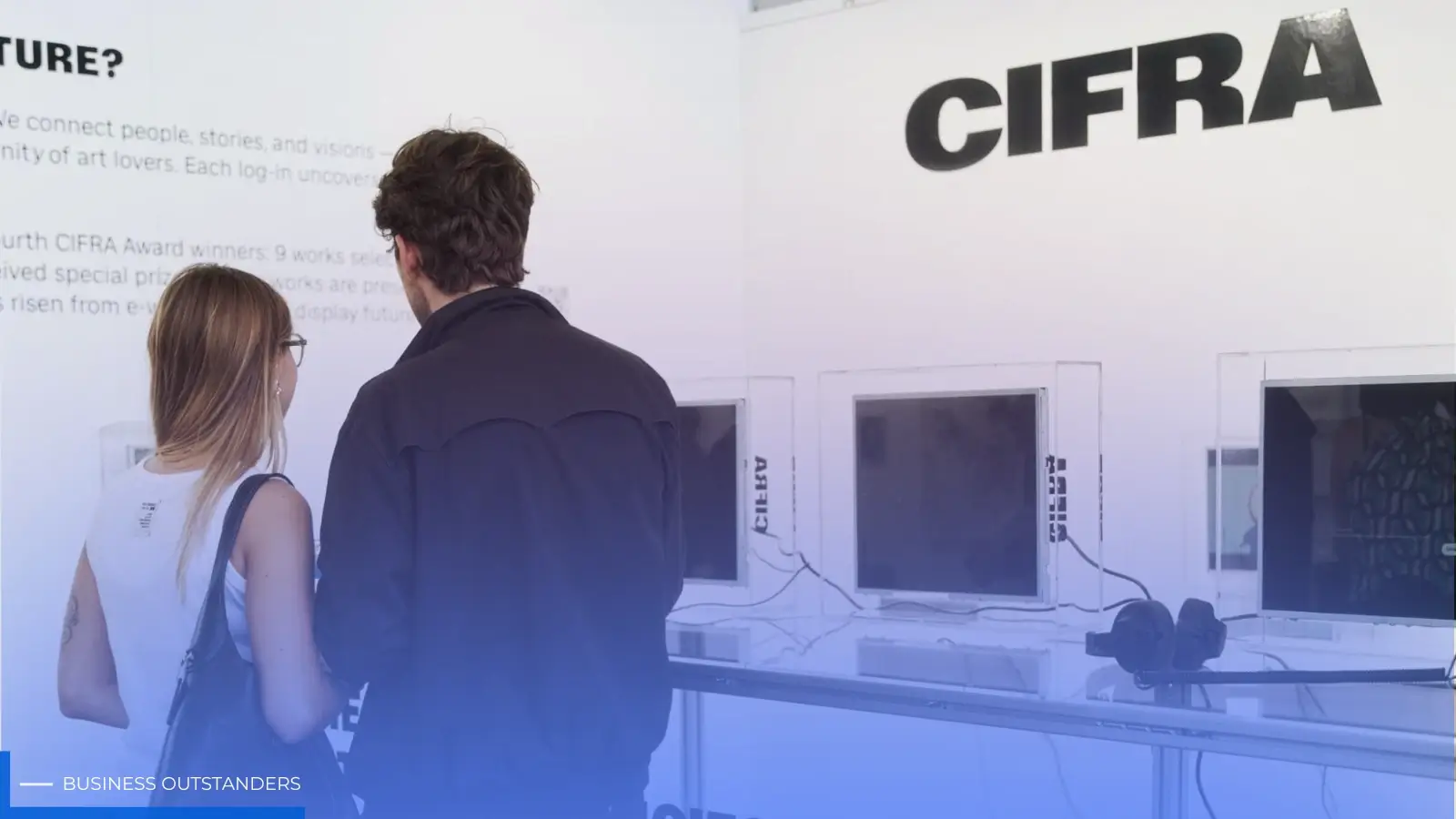
The emergence of platforms like CIFRA for experiencing and streaming contemporary art signals the formation of a new institutional layer, not as a replacement for existing institutions, but as an infrastructure that connects artists with collectors by the meaningful curated narrative.
The key shift introduced by such platform's logic is the move from episodic exposure to continuous presence in the artistic discourse. Traditional art structures usually revolve around discrete events such as exhibitions, art fairs, and auctions. Platforms, on the contrary, are focusing on the creation of an ongoing environment in which artistic practices can be discovered, contextualized, curated, and followed over time, rather than encountered only at particular market moments and one-time sales.
Discovering artists in the age of the streaming platform model
First of all, modern platforms, whose work is based on a “Streaming model”, are fundamentally transforming the process of artist discovery. Before, it depended on the presence in closed professional circles and localized networks. Now - grace of a platform format - new infrastructure enables systematic and global visibility of talent. This is particularly significant in a decentralized art world, where artistic practices emerge far beyond traditional art capitals. Similar dynamics are unfolding across AI in creative industries, where intelligent systems are accelerating discovery, personalization, and global reach for creators in multiple sectors.
Moreover, artists are given meaningful support and expanded opportunities to further develop their practices. The launch of such initiatives as CIFRA Award made it possible for emerging and under-recognised artists in media and digital art to gain international visibility.
Beyond the recognition, the platform offers talents tangible support through grants, curated exhibitions and screenings, as well as editorial coverage across CIFRA’s global network. This approach reflects a growing tendency on nurturing emerging talent by integrating artists into a broader ecosystem, fostering long-term engagement with audiences, and encouraging sustained cultural exchange.
Cultural programming is no longer the same
Modern streaming platforms for art are also introducing new models of cultural programming and curation. Instead of being limited to physical exhibition capacities, curatorial narratives are becoming dynamic, continuous, and, what is more important, globally accessible. Programming is no longer tied exclusively to the concrete space or calendar; it becomes a living, evolving framework that can respond to any artistic developments in real time and broaden the audience outreach.
This year, CIFRA opened its program with Ranbir Kaleka’s Solo Exhibition “Between What We See and What We Know”, displayed on the platform from January 15 to March 2. Showcasing artworks created over more than three decades, the project presents art at the intersection of different mediums: video, painting, sound, and light by creating a unique viewer’s experience. The exhibition “visitor” is invited to move through the space without a fixed point of the beginning or the end. The process of experiencing the artworks is accomplished by the musical component, creating the rhythm of the discovery and the general tone of voice.
One-way communication with collectors has come to the end
One more important fact to highlight about platforms for contemporary art - the move from one-off transactions to long-term interaction, which is actually contributing to the global community formation. The traditional art market has always been structured around concrete points of sale - openings, fairs, and auctions. These rare engagement opportunities often led to instability in artistic income. To change it, platform-based systems started shifting the focus toward sustained engagement between artists, curators, institutions, and collectors, allowing relationships to develop over time rather than being concentrated around singular commercial events. As a result, it created a meaningful dialogue between all layers of cultural infrastructure.
Cultural ecosystem transformation: what to expect
It is worth mentioning that platforms do not replace galleries, museums, or art fairs. Instead, they are functioning as an additional infrastructural layer of cultural segment, a kind of digital institution that organizes access, distribution, and attention flows. Galleries continue to play a critical role in career development, institutions in canon formation, and fairs in market dynamics. Platforms, however, are playing the role of a connection point between all of these actors.
In this sense, CIFRA’s positioning can be understood as part of a broader institutional evolution within new media art. These platforms largely contribute to the reorganization of how artists, audiences, and institutions interact within an increasingly complex cultural landscape.
Conclusion
What is emerging is a global switch from an event-based art economy to an infrastructure-driven one. Visibility, context, and organic presence are becoming much more important and appreciated than singular exhibitions or one-time sales. Moreover, platforms like CIFRA are not just considered as tools of distribution; they are becoming a part of institutional frameworks and it is up to them to structure how contemporary art is discovered, curated, and engaged with on a global scale.
Business Outstanders brings you sharp insights on tech, business, entrepreneurship, law, crypto, and more. We uncover what’s next. Stay updated, sign up for our newsletter and be part of the future!