Every startup founder eventually faces the branded merchandise question. You need shirts for your team, something to hand out at a launch event, or a product line to test with early customers.
The problem is that traditional printing routes require you to commit to quantities that most early-stage businesses have no business ordering before they know what sells. DTF printing changes that equation entirely.
Why Startup Apparel Has Always Been an Expensive Problem
Getting t-shirt printing right from a startup budget means finding a method that delivers professional quality without the minimum order commitments that traditional printing forces on founders who have not yet proven their market.
- Screen printing typically requires 24 to 48 pieces minimum per design to offset screen setup costs
- Each additional colour in a design adds a separate screen charge, making complex logos significantly more expensive
- Embroidery requires digitising fees that add fixed costs before a single shirt is produced
- Heat transfer vinyl is labour-intensive and struggles with complex artwork including gradients and fine detail
- Most wholesale apparel suppliers require business accounts and volume commitments that exclude early-stage startups
- The result is that founders either overspend on inventory they cannot move or compromise on quality to stay within budget
What DTF Printing Actually Is
Direct to Film printing is a process where a full-colour design is printed onto a special film, coated with adhesive powder, and heat-pressed onto the garment. It sounds technical but the practical result is straightforward: vibrant, durable, full-colour prints on virtually any fabric without minimum orders, setup fees, or per-colour charges.
How the Process Works
The design is printed digitally onto the transfer film, which means the artwork goes directly from the computer to the print without any intermediate screen, plate, or stencil creation. Every job is treated as a custom order regardless of whether you are printing one shirt or one thousand, which is the structural reason DTF eliminates the minimum order problem.
Why Full Colour Costs the Same as Two Colour
Screen printing charges per colour because each colour requires a separate physical screen. DTF prints the entire design in a single digital pass regardless of how many colours, gradients, or fine details it contains. A complex startup logo with five colours and a gradient background costs exactly the same to print as a simple two-colour text design.
What Fabrics It Works On
DTF transfers bond reliably to cotton, polyester, blends, nylon, and most fabric types that startups would consider for team wear, event shirts, or merchandise. Unlike sublimation printing which is limited to polyester, DTF works across the full range of garment options available at standard wholesale prices.
How Long the Print Lasts
DTF transfers cure permanently into the fabric through the heat press process and maintains colour vibrancy, edge definition, and flexibility across repeated washing cycles. The print moves with the fabric rather than cracking at stress points the way vinyl transfers commonly do after a season of regular wear.
The Cost Comparison Every Startup Founder Should See
The cost advantage of DTF printing over traditional methods is most visible when you compare total project cost rather than per-shirt price alone.
Screen Printing Total Cost Reality
A screen print order for fifteen shirts with a three-colour logo requires screen setup fees for each colour, a per-shirt print cost, and a minimum order charge if the quantity falls below the provider's threshold. The total cost of a fifteen-shirt screen print order is frequently two to three times the per-shirt price that gets quoted in isolation.
DTF Total Cost Reality
A DTF order for fifteen shirts with the same three-colour logo has no setup fee, no per-colour charge, and no minimum order penalty. The price per shirt on a small DTF run is genuinely competitive with screen printing at equivalent quantities once all fees are included in the comparison.
The Value of Not Overcommitting to Inventory
A startup that orders two hundred screen-printed shirts to hit the price break and then discovers the design needs updating has two hundred shirts it cannot use. A startup that orders twenty DTF shirts to test a design, adjusts based on feedback, and reorders has spent a fraction of the cost to reach the same conclusion. The flexibility to test and iterate is a business advantage that the per-unit price comparison does not capture.
No Setup Fees Mean Lower Risk on New Designs
Every time a startup evolves its branding, adds a new product line, or creates event-specific apparel, screen printing charges setup fees to create new screens. DTF charges nothing additional for a new design because the process is entirely digital from artwork to print. Lower design iteration cost means startups can update their visual identity without a financial penalty each time.
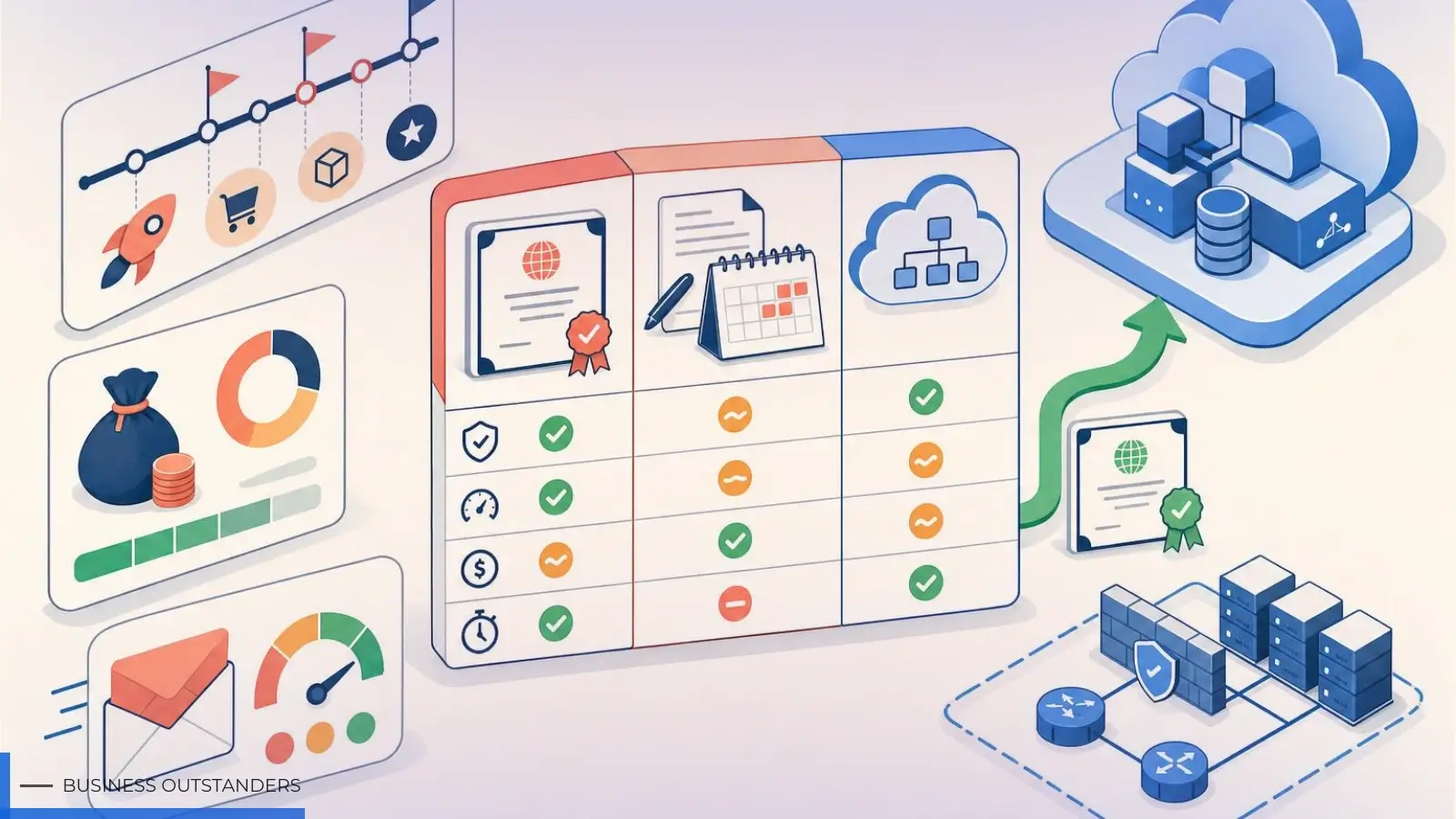
|
Cost Factor |
Screen Printing |
DTF Printing |
|
Minimum Order |
Typically 24 to 48 pieces |
None |
|
Setup Fee |
Per colour per design |
None |
|
Full Colour Design Cost |
Increases with each colour |
Flat rate regardless of colours |
|
Small Run Feasibility |
Expensive |
Cost-effective |
|
Design Iteration Cost |
New screen fees each time |
No additional charge |
|
Fabric Compatibility |
Best on 100% cotton |
Works on most fabric types |
Where DTF Printing Delivers the Most Value for Startups
The use cases where DTF genuinely outperforms every other printing method for early-stage businesses follow a predictable pattern.
Launch Event Merchandise
A product launch, a pop-up activation, or a demo day appearance is exactly the kind of time-sensitive, small-quantity situation where DTF delivers and screen printing fails. Fifteen shirts for a launch team with a complex logo can be turned around in days without the cost overhead that makes screen printing impractical at that scale.
Investor and Partnership Gifting
Sending a well-designed custom shirt to an investor, a potential partner, or a key hire is a brand-building gesture that communicates attention to detail. A single high-quality custom shirt produced on demand and shipped directly costs a fraction of what a screen-printed minimum order would require just to produce it.
Testing Merchandise Before Scaling
The smartest approach to a startup merchandise line is to produce a small test run, sell it to early supporters, assess what moves, and then scale the winners. DTF printing makes this test-and-learn approach financially viable in a way that minimum-order requirements structurally prevent with traditional methods.
Team Uniforms and Event Staff Apparel
A startup team of eight people wearing branded shirts at a trade show or event communicates professionalism and cohesion. Getting eight matching custom shirts through DTF printing is straightforward and affordable in a way that most traditional print methods make unnecessarily complicated.
Limited Edition Drops for Community Building
Startups with early communities and loyal followers use limited edition custom apparel drops as both a revenue tool and a community engagement mechanism. Small-batch drops of fifty to a hundred pieces test demand and build anticipation without the inventory risk of a large production commitment.
How to Get Started With DTF Printing as a Startup
The process is simpler than most founders expect, and the lead time is significantly shorter than traditional printing routes.
Prepare Print-Ready Artwork
DTF printing requires a high-resolution file, ideally a PNG with a transparent background, at a minimum of 300 DPI at the intended print size. Supplying print-ready artwork eliminates back-and-forth with the print provider and accelerates the order to production immediately.
Choose the Right Garment Blank
The quality of the finished product depends as much on the garment as on the print. For startup merchandise, Bella Canvas, Next Level, and Gildan Softstyle are industry-standard blanks that balance quality, fit, and cost effectively. Specifying the garment blank rather than leaving it to the provider's discretion gives you control over how the finished product feels and wears.
Order a Sample Before a Full Run
Even for small orders, running a single sample print before committing to the full quantity is worth the minor additional cost and time. A sample confirms colour accuracy, placement, and garment quality before the full order is locked in, which is a small investment against the frustration of a result that does not match expectations.
Work With a Provider That Offers Transparent Pricing
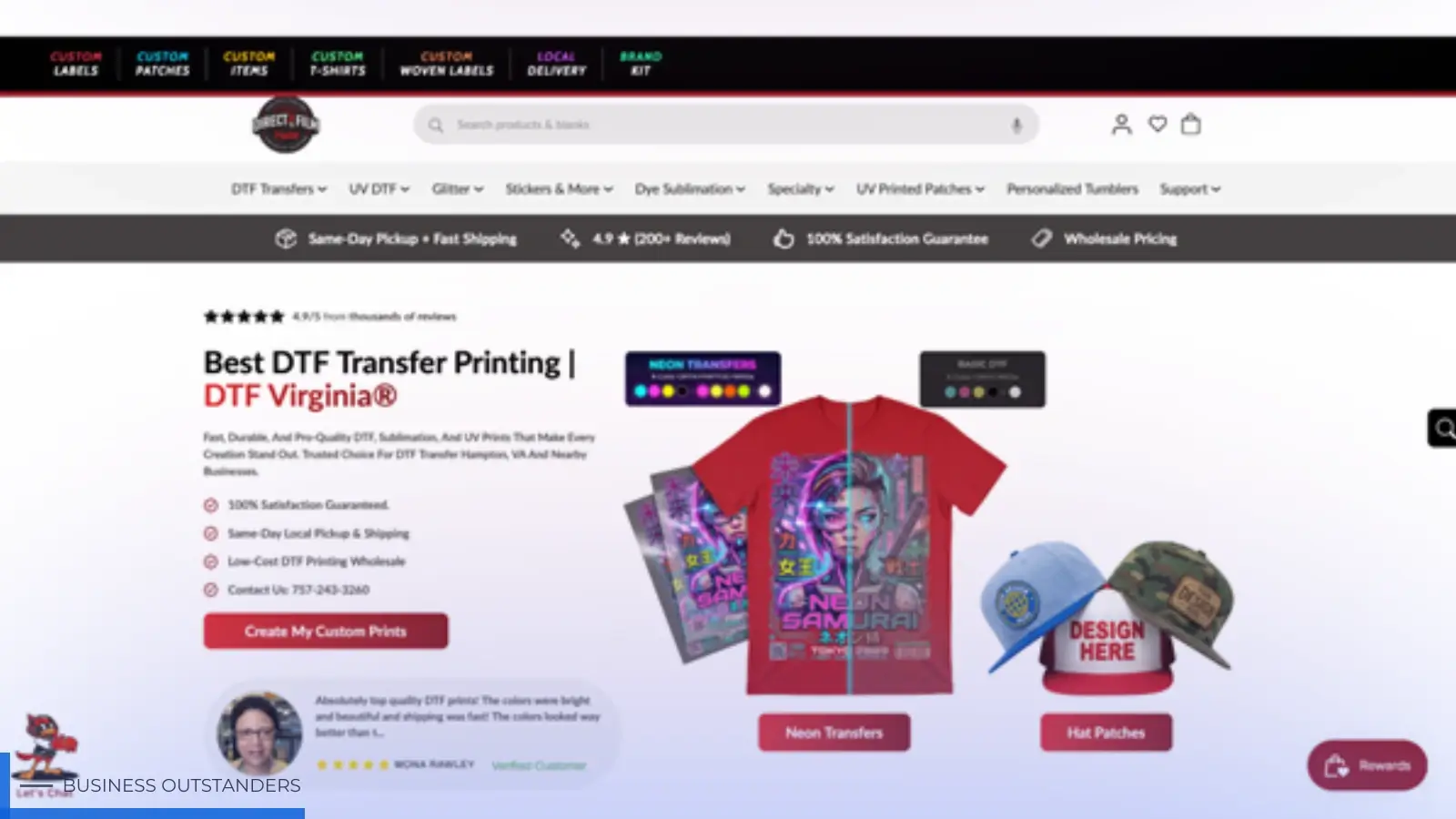
The DTF market includes providers whose pricing is clear and all-inclusive and others where fees appear at checkout. DTF Virginia operates with transparent pricing, no setup fees, and no minimum order requirements, which makes project budgeting straightforward from the first quote to the final invoice.
Conclusion
DTF printing earns its position as the most cost-effective startup apparel option not by being the cheapest per-unit option in every scenario but by eliminating the structural costs and commitments that make traditional printing financially punishing at startup scale.
No minimums, no setup fees, full-colour capability, and fast turnaround make it the only printing method that genuinely aligns with how early-stage businesses actually need to operate. This shift highlights how DTF printing in the textile industry is evolving to support more flexible, on-demand production models. For a founder who needs to look professional without betting inventory budget on an unproven design, that alignment is worth more than any per-shirt price comparison.
Business Outstanders brings you sharp insights on tech, business, entrepreneurship, law, crypto, and more. We uncover what’s next. Stay updated, sign up for our newsletter and be part of the future!