Introduction
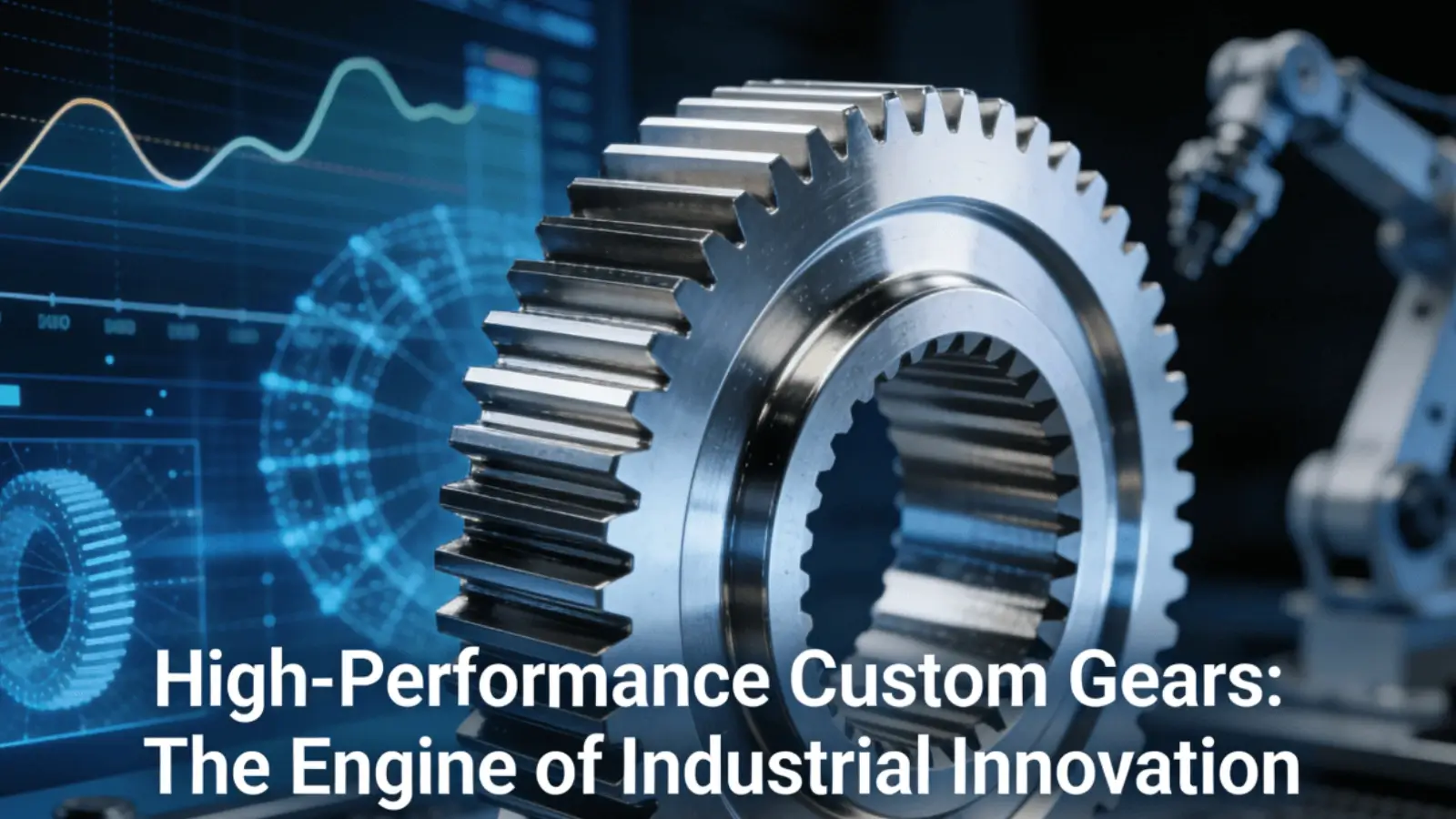
In modern industrial machinery, custom gears are critical to system efficiency, reliability, and total cost of ownership. Engineers often face challenges like premature failure and noise due to approaches prioritizing initial cost over holistic value. Inefficient designs can cause significant energy losses. Achieving optimal performance-cost balance requires leveraging precision manufacturing and scientific gear design guidelines for High-Performance gears .
What Defines a High-Performance Custom Gear in Modern Industrial Applications?
In demanding sectors such as robotics, automotive, and aerospace, a high-performance custom gear is characterized by a set of interdependent metrics that extend beyond basic geometry. Key indicators include exceptional durability to withstand high cyclic loads, precise noise and vibration control for smooth operation, and maximized transmission efficiency to minimize energy loss. These characteristics are paramount in applications like robotic joints, where precision motion is critical, and in electric vehicle transmissions, where efficiency directly impacts range.
The realization of these metrics is fundamentally tied to advanced Precision Manufacturing techniques. The pursuit of micrometer-level accuracy, essential for noise reduction and longevity, is achieved through technologies like hard gear surface grinding and honing. Adherence to international standards, such as those established by the American Gear Manufacturers Association (AGMA), provides the foundational framework for specifying and verifying these quality parameters, ensuring consistency and reliability.
Furthermore, the selection of appropriate materials — whether high-strength steel for heavy-duty applications or specialized engineering plastics for lightweight, quiet operation — is a critical decision supported by precise heat treatment and finishing processes. Ultimately, the definition of a high-performance Custom Gear is fulfilled when it delivers reliable, efficient, and quiet power transmission under specific operational conditions, a feat made possible only through precision manufacturing.
How Can Gear Design Optimization Lead to More Cost-Effective Manufacturing?
The misconception that lower costs are achieved by selecting the cheapest available component is effectively debunked by a focus on gear design optimization. Strategic design choices made during the engineering phase are the primary drivers of cost-effective gear manufacturing, influencing every subsequent stage of the product lifecycle. Techniques such as tooth profile modifications enhance load distribution and reduce stress concentrations, thereby extending service life and minimizing the risk of costly unplanned downtime.
Informed material selection, balancing performance requirements with cost, can prevent over-engineering and reduce raw material expenses.Structural optimization, including topology optimization to remove unnecessary material, directly leads to weight reduction and lower material consumption without compromising strength. This philosophy of Cost Effective Gear Manufacturing is further amplified by the use of advanced manufacturing technologies.
For instance, generative design software can create highly efficient, lightweight gear structures that are impossible to produce with conventional methods. A comprehensive custom gear design guide is indispensable for navigating these trade-offs, providing a structured approach to evaluating factors like tooth geometry, material grades, and manufacturing methods to achieve the lowest total cost of ownership. By optimizing the design for manufacturability, engineers can also simplify machining processes, reduce cycle times, and minimize scrap rates, leading to significant savings in production. This integrated approach demonstrates that true cost efficiency is engineered at the design stage.
What Role Does Industrial Automation Play in Precision Gear Production?
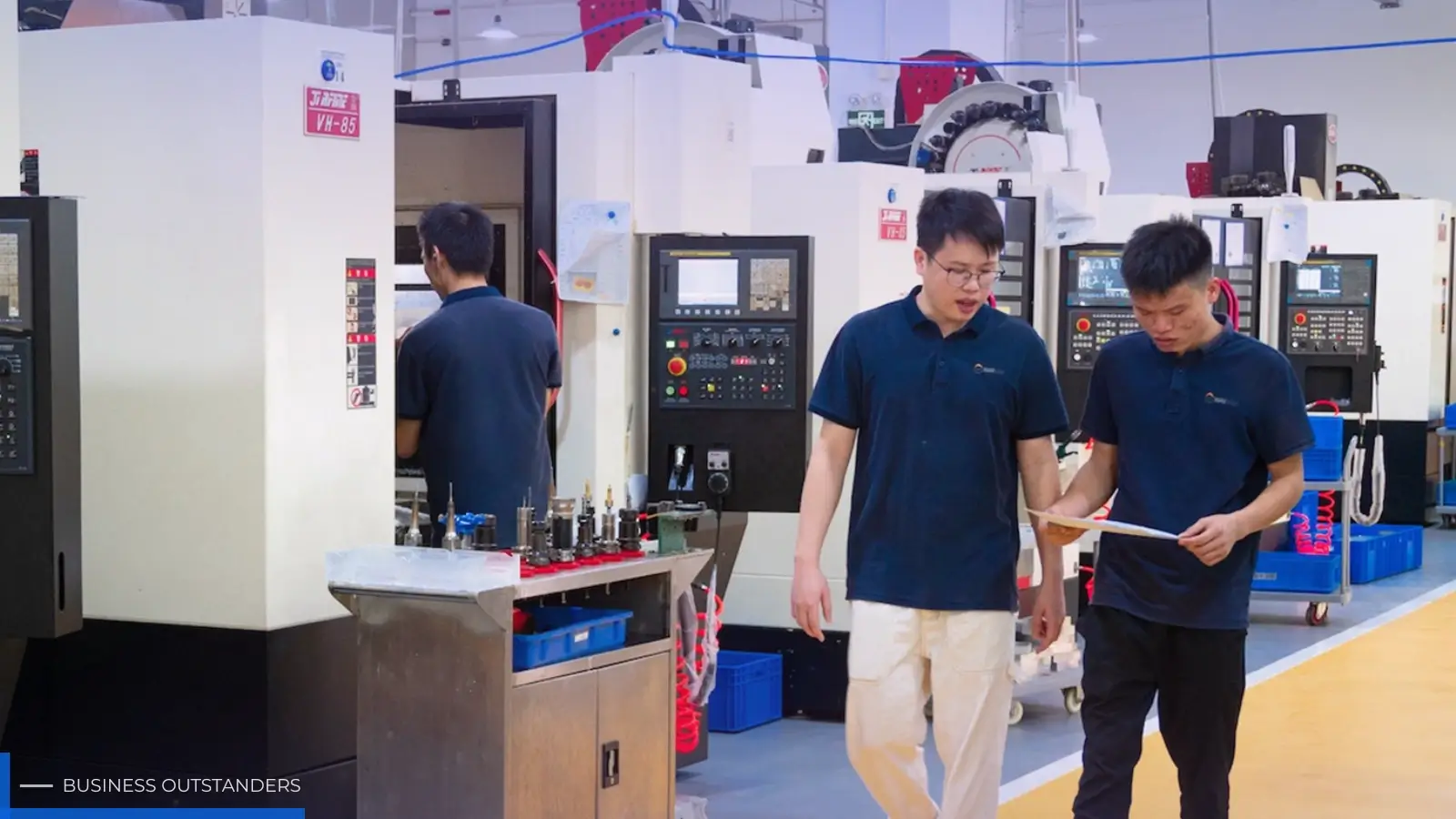
Industrial Automation serves as the backbone of modern Precision Gear Manufacturing, transforming it from a craft-dependent process into a highly reliable, repeatable, and efficient operation. In the context of gear production, automation encompasses computer-numerical-control (CNC) machining centers, robotic loading and unloading systems, and automated inline inspection cells. These technologies work in concert to eliminate human error and ensure batch-to-batch consistency, which is critical for applications requiring interchangeable parts, such as automotive transmissions.
The role of automation extends beyond mere repetition. CNC machining guarantees the achievement of stringent tolerances and superior surface finishes essential for high-efficiency, low-noise gear operation. Automated inspection systems, often equipped with laser scanners or coordinate measuring machines (CMMs), perform 100% quality checks on critical parameters, providing real-time data for statistical process control and immediate correction of deviations.
This capability for predictive maintenance, where data analytics forecast tool wear or machine calibration drift, prevents the production of non-conforming parts. The importance of a robust quality management system, certified under standards like IATF 16949 for the automotive industry, cannot be overstated. This certification underscores a Custom Gear Manufacturer commitment to maintaining a controlled, automated production environment that delivers unparalleled quality and reliability.
What Are the Key Selection Criteria for a Reliable Custom Gear Manufacturer?
Technical Capabilities and Collaborative Engineering Support
A manufacturer's technical prowess is foundational. Assess their equipment portfolio: multi-axis CNC Machining Services, advanced grinding machines, and precision metrology tools like coordinate measuring machines (CMMs) and gear analyzers are essential for producing high-tolerance components. Beyond hardware, prioritise suppliers with in-house engineering teams that offer proactive support. A proficient partner does not just execute blueprints; they provide actionable insights during the design phase, suggesting optimisations for manufacturability, performance, and cost-effectiveness, effectively acting as an extension of your own team. This collaborative approach is crucial for implementing effective Gear Design Guidelines and achieving optimal outcomes.
Quality Assurance and Certifications
Quality certifications provide an objective measure of a manufacturer's commitment to consistency and reliability. Certifications like ISO 9001 for quality management systems are fundamental. For critical industries, specific standards are non-negotiable: IATF 16949 for automotive and AS9100D for aerospace applications. These certifications verify that the manufacturer adheres to rigorous, standardized processes for production, inspection, and continuous improvement.
Furthermore, a robust quality assurance system should include material traceability and advanced testing capabilities, such as hardness testing and gear rolling tests, to ensure every component meets precise specifications.
Integrated Service from Prototyping to Production
An often-overlooked but critical criterion is the manufacturer's ability to provide a seamless, integrated service from concept to full-scale production.
-
Prototyping and Validation
The value of rapid prototyping cannot be overstated. The ability to quickly produce functional prototypes allows for real-world testing and design validation before committing to expensive production tooling. This "test-first" approach de-risks projects, identifies potential issues early, and ensures the final design is both performant and manufacturable.
-
Scalability and Full-Scale Production
Finally, ensure the partner can scale with your needs. A manufacturer with comprehensive in-house capabilities, from CNC Machining Services to heat treatment and final assembly, ensures design integrity is maintained during the transition from prototype to volume production. This vertical integration, often described as a "prototype-to-production" approach, streamlines communication, accelerates time-to-market, and provides a single point of accountability for the entire project lifecycle. Choosing a manufacturer with this flexibility is a strategic decision for long-term success.
How Do Advanced Manufacturing Technologies Expand the Possibilities for Custom Gears?
Advanced Manufacturing Technologies are fundamentally reshaping the design and production boundaries for custom gears, enabling solutions previously considered impractical or impossible. These innovations allow engineers to overcome the constraints of traditional methods, creating components with superior performance, lighter weight, and greater complexity.
Unprecedented Geometrical Freedom via Multi-Axis CNC Machining
CNC Machining Services, particularly five-axis CNC systems, provide remarkable geometrical freedom. This technology allows for the complete fabrication of complex components, such as gears with integrated shafts or highly specific flank profiles, in a single setup. This approach significantly reduces errors associated with multiple fixturing and repositioning, which are common in traditional three-axis machining.
The result is the ability to produce more compact and integrated gear designs with higher accuracy and superior surface finishes, pushing the boundaries of what is mechanically feasible.
Complexity and Lightweighting via Additive Manufacturing (3D Printing)
Additive manufacturing, or 3D printing, introduces a paradigm shift by enabling the production of gears with intricate internal structures and topologically optimized geometries that are difficult or impossible to achieve with subtractive methods. This capability is crucial for creating ultra-lightweight components that maintain high strength and stiffness, a significant advantage in aerospace and robotics.
Furthermore, 3D printing facilitates rapid prototyping, allowing designers to test multiple design iterations in a short timeframe, which drastically accelerates innovation cycles and enables a high degree of customization for specific performance needs.
The Synergistic Potential of Hybrid and Digital Systems
The convergence of different advanced technologies creates synergistic effects that further expand the possibilities for gear manufacturing.
-
Integrated Hybrid Manufacturing Workflows
Hybrid manufacturing combines additive and subtractive processes, leveraging the strengths of both. A common workflow involves using 3D printing to build a gear to a near-net shape from a high-performance alloy, which is then finished with precision CNC grinding to achieve the required tooth profile accuracy and surface finish. This approach is valuable for creating custom geometries that require both complex forms and high precision.
-
Digital Integration with AI and Data Analytics
The integration of digital technologies like artificial intelligence (AI) and big data analytics with the Office of Advanced Manufacturing (AMO) of the U.S. Department of Energy is revolutionizing production. AI algorithms can analyze vast amounts of data from sensors and machines to identify patterns and anomalies, enabling predictive maintenance, enhanced quality control, and process optimization. This data-driven approach leads to reduced downtime, fewer defects, and higher throughput, ensuring consistent quality in custom gear production.
Conclusion
The journey toward obtaining high-performance, cost-effective custom gears is multifaceted. It requires a holistic strategy that integrates scientific gear design principles, the strategic application of advanced and automated manufacturing technologies, and a rigorous selection process for a manufacturing partner.
To obtain the "Custom Gear Manufacturability Design Self-Checklist" specifically designed for engineers, please contact our expert team.
Author Bio
This article contains insights from a manufacturing expert with over 15 years of experience in the precision transmission industry, encompassing the entire process from gear design theory to scaled production. The expert is currently employed at the precision manufacturing service provider LS Manufacturing.
FAQs
Q1: What is the typical lead time for prototyping custom gears?
A: With advanced CNC machining services, prototype lead times can be as short as 1-2 weeks, depending on complexity, allowing for rapid design iteration and testing.
Q2: How important are material certifications in gear manufacturing?
A: Crucial. Certifications like ISO 9001 ensure material traceability and consistency, which are fundamental to achieving the predicted fatigue life and performance of high-performance gears.
Q3: Can you manufacture gears according to specific international standards like AGMA or DIN?
A: Yes, reputable manufacturers are well-versed in major international standards. Providing standard specifications ensures the gears will meet precise quality and performance benchmarks.
Q4: What are the benefits of using 5-axis CNC machining for complex gears?
A: 5-axis machining allows for completing complex geometries in a single setup, reducing errors, improving surface finish, and enabling the production of more efficient and compact gear designs.
Q5: What design file formats do you prefer for quoting a custom gear project?
A: 3D model files like STEP or IGES are ideal as they contain full geometry data. Detailed 2D drawings with tolerance specifications are also highly recommended for accurate quotation.
Business Outstanders brings you sharp insights on tech, business, entrepreneurship, law, crypto, and more. We uncover what’s next. Stay updated, sign up for our newsletter and be part of the future!