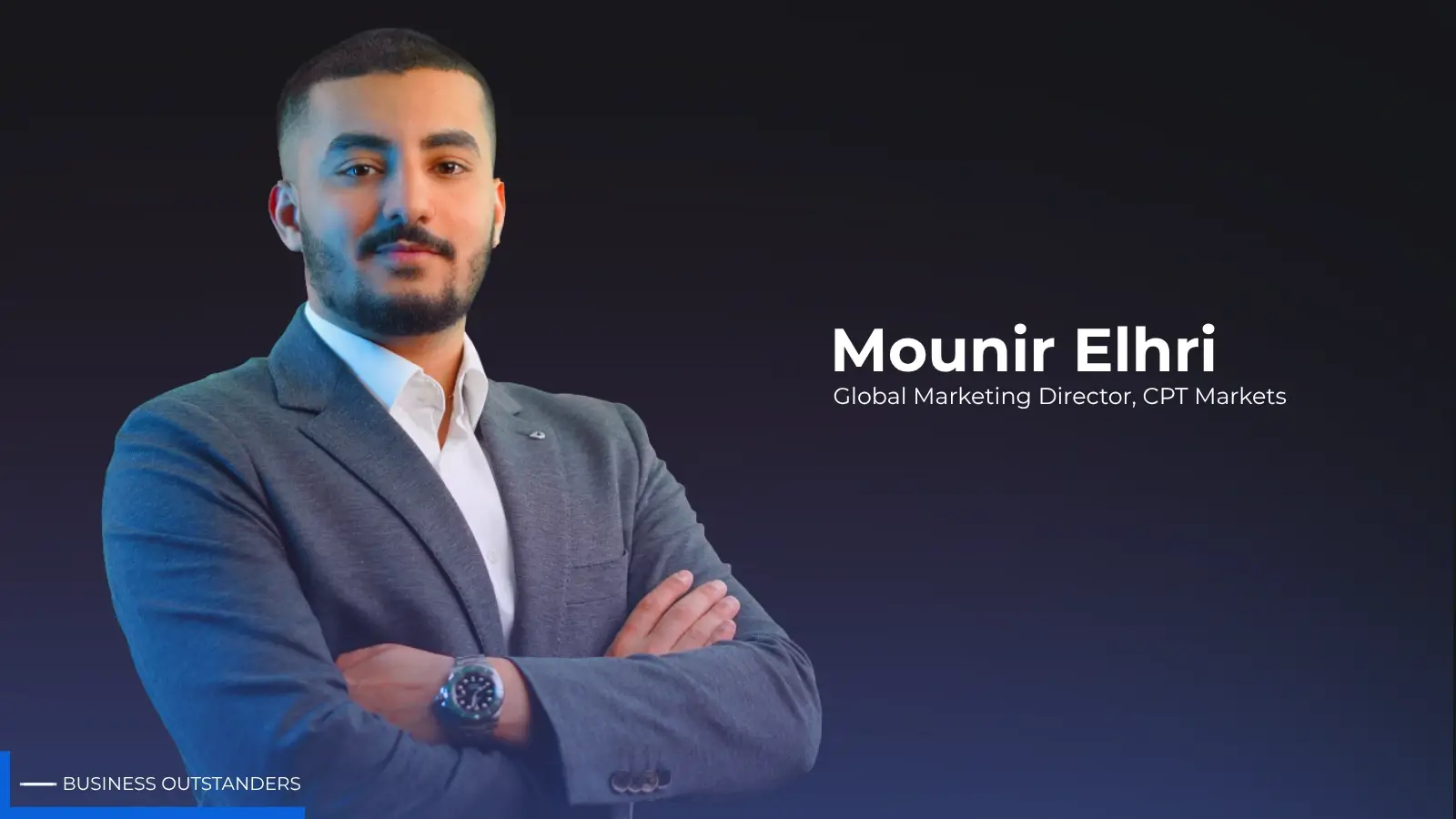
Marketing professionals speak about campaigns. Mounir Elhri talks about systems. It is a distinction that may sound subtle but has concrete implications for how work gets done, how results get measured and how marketing connects or fails to connect to the businesses it purports to serve. His career has spanned Morocco, Belgium and now Dubai, and been defined by an ever-present emphasis on that distance between marketing as a communications function and marketing as a growth engine.
Setting the Scene — Morocco and the Self-Taught Foundation
Elhri’s professional journey begins in Morocco, where a fascination with design and visual communication grew primarily through self-teaching and experimentation. There was no formal roadmap. What there was instead, though, was curiosity, curiosity about how brands communicate, how perception gets shaped and the way digital platforms affect behavior and decision-making.
His time split between Morocco and Belgium also added a layer that later turned out to be useful. Exposure to two contrasting market environments gave him an early, practical sense of how user behaviour, communication expectations, and competitive dynamics shift across regions
That cross-cultural instinct, he says, was especially useful in the years that followed when working across global markets.
From Graphic Design to Brand Leadership
He started as a graphic designer, creating visual identities, UI systems and brand assets. But his path soon transcended execution. According to public records and professional profiles, his roles progressively evolved into leading design teams, managing the creative output of organisations, and commanding the DNA of brands on how those brands were structured and experienced across multiple touch points.
Verified positions featured Senior Graphic Designer for Agence Victoire, Senior UI/UX Designer at MASTERmail, and finally, Senior Creative Designer for Bollaert, which was an expanding arc from individual craftsmanship to overseeing teams and systems thinking about brands. He has observed that managing people and processes brought a different kind of complexity: The shift from doing to directing, aesthetic decisions to strategic ones.
The Shift Toward Performance and Full-Funnel Marketing
Moving from brand leadership into marketing and performance wasn’t a reinvention, it was a sensible extension. It was, as he describes it, a simple epiphany: A brand without distribution remains invisible and performance without a cohesive brand position is hard to sustain. Without the other, neither side of the equation functions correctly.
That insight led him towards acquisition funnels, conversion optimisation and user behaviour analysis, the mechanics of growth-building and areas where it commonly fails. His approach, he says, transitioned from putting on standalone campaigns to engineering full-funnel systems in which each stage is part of a greater framework rather than its own discrete task.
Moving to Dubai helped propel this change. The city’s fast-moving, regionally important marketplace introduced him to larger-scale operations, challenges of regional expansion and a more intense focus on data-driven decisions. Here, by his own account, is where the majority of his work pivoted into building and refining marketing systems that connect brand, product and performance into a single coherent model.
The MENA Market and Fintech — This Is Where Things Get Specific
The pan-MENA fintech landscape is no easy space to navigate. It is split up between jurisdictions, diverse in terms of culture and subject to rules that are markedly different across each country. In the UAE, for example, banking regulators would require fintech companies to obtain credentials from both the Dubai Financial Services Authority or Abu Dhabi Global Markets. All the products of Saudi Arabia are within SAMA sandbox system. Bahrain has its own Central Bank approval process. Marketing in this environment is not simply about visibility, it has to account for compliance, trust, and credibility at every stage.
Elihri's verified work in this sector includes serving as Group Head of Creative at CPT Markets, a fintech and proprietary trading firm, where he has spearheaded rebrand efforts, as well as developing cohesive creative systems across entities for the group. Before this, he was Multimedia Manager at ATFX Global, a regulated forex and CFD broker. His Behance portfolio attests to project work across forex, crypto exchange design, payment platforms and trading brand systems, verticals where positioning and compliance must coexist.
Fintech marketing, he describes it as a discipline that requires a certain type of accuracy. Messaging has to be persuasive enough to spur acquisition and responsible enough to withstand regulatory scrutiny. Get that balance wrong, he notes, and it does not only impact campaign performance, it can impact the business’s ability to run.
How He Approaches the Work
At the heart of Elhri’s approach is treating marketing as infrastructure and not activity. Acquisition channels, content distribution, tracking systems and retention work together as a unified model instead of being managed as separate functions. This kind of structure usually depends on having a clear marketing vision that connects brand, performance and long-term business goals.
He embeds A.I. tools and modern marketing technology into execution workflows, not to replace strategy, but to accelerate testing cycles, reduce operational friction. Under this model, content is a utilitarian element rather than an end unto itself. By his account the metrics that count are user acquisition, deposit activity and long-term retention, not engagement numbers that shine in reports but aren’t tied to revenue.
Industry Presence and Knowledge Sharing
In addition to his core duties, Elhri’s active in sharing pragmatic insights on fintech marketing via LinkedIn and other professional networks. He attends industry events in markets such as the UAE, Cyprus, India, South Africa and Morocco, exposure that helps him stay connected to regulatory changes, competitive shifts and changing market conditions in multiple regions where he operates.
He positions himself as an embedded strategic partner to the growth function of the companies he serves, rather than being one those public-facing marketing personalities. That orientation toward execution over visibility seems like an extension of how he has built his career from the very beginning.
Final Thoughts
The common thread throughout the career of Mounir Elhri is the same underlying instinct: that marketing works best when it is built as a system, not assembled as a series of campaigns. That conviction is borne out in his arc from self-taught designer in Morocco to fintech marketing strategist in Dubai, and it is manifested in the kind of work his verified professional history points to, roles inside regulated, performance-driven environments where results have to be measurable and the margin for misalignment is limited.
That mix of brand thinking, performance rigour and regional market knowledge isn’t a common profile in a region where fintech is booming fastest but competitive pressure as well as regulatory scrutiny is the real deal. Whether his experience in the future translates into an internal focus on leadership or expands towards broader consultancy, the groundwork he has laid out seems tailor-made for precisely the complex, high-stakes scenarios constantly unfolding in MENA’s booming fintech landscape.
Explore More Leadership Insights: Discover powerful leadership lessons, decision-making frameworks, and real-world strategies from founders and executives in the BusinessOutstanders.com Leadership category.
Business Outstanders brings you sharp insights on tech, business, entrepreneurship, law, crypto, and more. We uncover what’s next. Stay updated, sign up for our newsletter and be part of the future!