Finding the right base for your operations in Australia’s business capital can be challenging. As the commercial landscape evolves, many businesses are moving away from traditional long-term leases in favour of flexible office spaces that offer greater agility and cost-effectiveness, with serviced and coworking options being the most preferred.
Whether you are a growing SME or an established corporate team, choosing between a serviced office in Sydney and a coworking space is a critical decision that impacts your overhead, culture, and scalability.
In this guide, we break down the key differences between office types, features, benefits, and lease flexibility to help you identify which workspace model best aligns with your business goals.
What is a Serviced Office?
Serviced offices in Sydney offer a professional, fully managed, and ready-to-use setup. These private, furnished offices are housed within a professionally managed building, allowing businesses to move in immediately with zero setup time. Serviced offices offer a"plug-and-play" solution that eliminates the hassle of traditional office management.
Key Benefits and Model:
The serviced office model provides the privacy of a conventional office without the administrative burden, operational overheads, or the need for significant capital expenditure (CapEx). Everything necessary for operation, from furniture and equipment to utilities, high-speed internet, cleaning, security, and administrative and reception services, is consolidated into a single, all-inclusive monthly fee.
Essential Features:
-
Private Office Suite: Exclusive, dedicated space for your team.
-
All-Inclusive Pricing: A predictable, single monthly invoice covering rent, utilities, cleaning, maintenance, and high-speed internet.
-
Dedicated Support: Access to a central reception, administrative staff, and IT support managed directly by the provider.
-
Shared Infrastructure: On-demand use of professional meeting rooms and conference facilities.
-
Contract Term: Simple licensing agreements, typically ranging from 6 to 24 months.
Ideal for:
Serviced offices are best suited for businesses that require operational simplicity, immediate setup, and budget predictability without capital investment. This includes:
-
Growing Small-to-Midsize Enterprises (SMEs)
-
Established corporate teams
-
Companies seeking a reliable, fixed monthly budget in a professional environment
What is a Coworking Space?
Coworking spaces in Sydney are among the most widely recognised categories of flexible workspaces, accounting for AUD $537M in 2025 alone. They are characterised by a focus on shared resources and fostering a strong community environment, making them an ideal choice for individuals and small teams who value networking opportunities and require low commitment.
Key Benefits and Model:
The coworking model utilises open-plan layouts where individuals from various companies work collaboratively in a shared environment. The core emphasis is placed on shared amenities, promoting a collaborative atmosphere, and maximising human connection. This model removes the barriers of traditional leasing, allowing for immediate access to premium Sydney CBD and suburban locations without high upfront costs.
Essential Features:
-
Hot Desks: Flexible seating arrangements where you book a different seat each day in a vibrant, communal zone.
-
Dedicated Desks: A reserved, permanent desk within a shared office area, typically featuring personal storage and ergonomic furniture.
-
Community Events: Organised social and professional gatherings designed to facilitate networking and industry partnerships.
-
Shared Amenities: Comprehensive access to designer kitchens, coffee bars, collaborative lounges, and breakout areas.
-
Contract Term: Extreme agility, typically offered on daily, weekly, or month-to-month memberships to suit a fast-paced business cycle.
Ideal for:
Coworking spaces are best suited for businesses where agility and networking are more important than total privacy or dedicated branding. This includes:
-
Freelancers and Digital Nomads looking for a professional community.
-
Small startups need a high-energy environment to scale.
-
Large Companies requiring inexpensive overflow space or satellite hubs in key Sydney precincts.
How to Choose the Right Workspace for Your Business
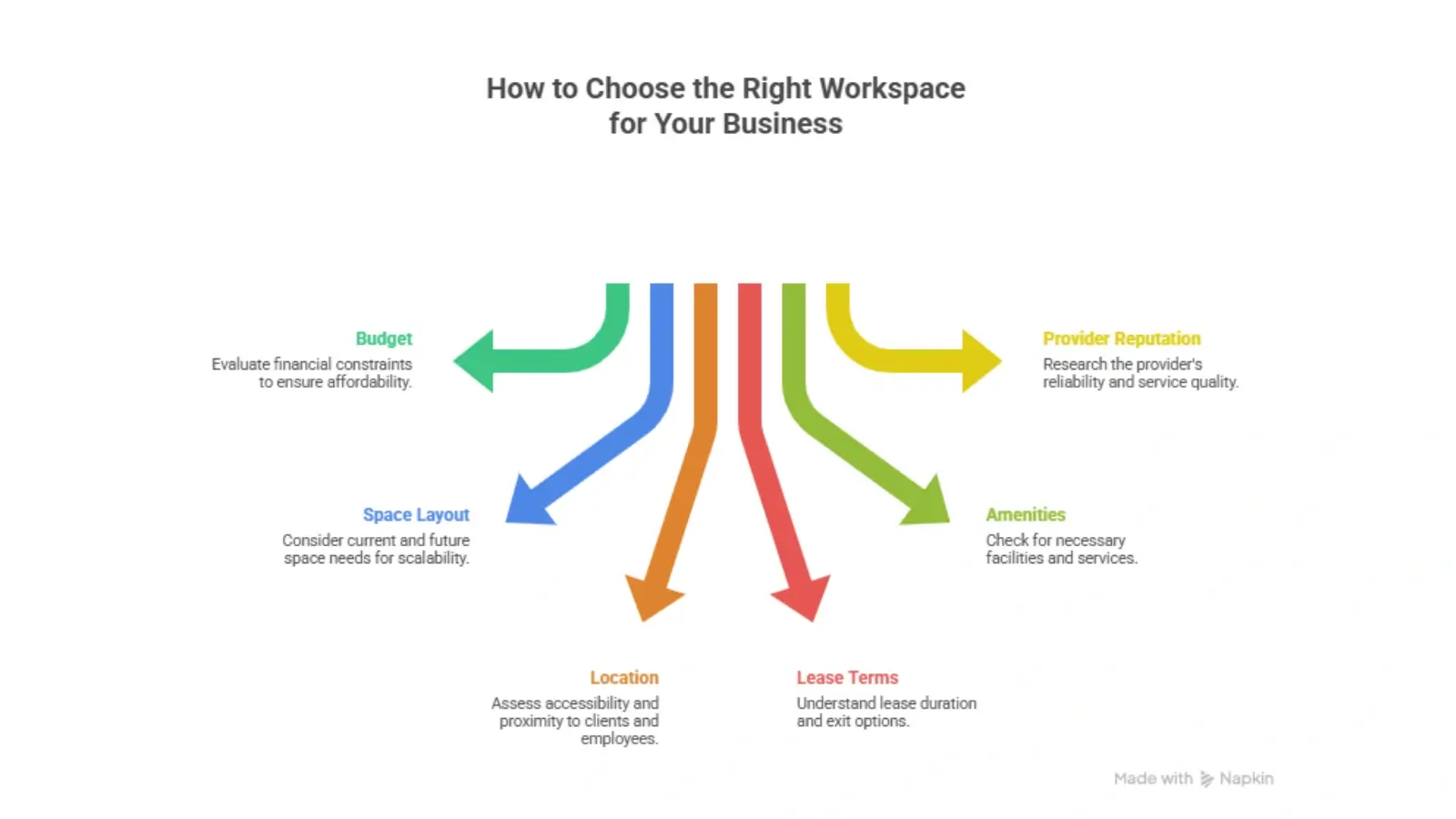
Once you understand the differences between serviced and coworking office options, you must weigh six additional key factors: budget, space layout and scalability, location accessibility, specific lease terms, included amenities, and the space provider's reputation.
These considerations are detailed further in the section below.
1. Assess Team Dynamics and Work Styles
The first step in selecting a workspace is to identify your staff's unique operational needs. Different departments require tailored environments to maximise productivity and maintain daily routines.
Key Considerations:
-
Team Capacity: Determine if your current headcount requires individual desks or a dedicated private floor.
-
Operational Style: Evaluate whether your team thrives in high-energy, collaborative environments or requires quiet, "deep work" areas.
-
Structural Needs: Decide whether to implement a hybrid model or require a permanent, centralised hub.
Example: A growing tech startup may begin with flexible hot-desking to manage costs but transition to a private suite as the need for confidential meetings and structured collaboration increases.
2. Explore Modern Workspace Models
Modern real estate offers a range of options beyond the traditional office. Understanding the variations in coworking spaces in Sydney helps you select a model that aligns with your financial and operational goals.
Types of Workspaces:
-
Traditional Offices: Best for brands requiring total environmental control and long-term stability.
-
Coworking Spaces: Ideal for networking, shared amenities, and maximum flexibility.
-
Serviced Offices: Turnkey private offices that include full administrative and facility management.
-
Hybrid Hubs: A blend of remote accessibility and on-site desks to reduce overhead.
3. Prioritise Strategic Location and Accessibility
Choosing an ideal office location significantly impacts employee satisfaction, client perception, and your business image. Evaluate the entire neighbourhood experience:
-
Talent Proximity: Is the location easily accessible via multiple modes of transport, ensuring a reasonable commute for employees?
-
Client Accessibility: Is the address prestigious and easy for clients to find?
-
Local Ecosystem: Consider the value of a city-centre office (superior connectivity and prestige) versus an edge hub. The presence of local amenities, such as cafes, gyms, and transport hubs, is now a critical factor for attracting and retaining talent.
For major global cities (such as London, Sydney, Dubai, Singapore, and Toronto), understand the difference between CBDs and peripheral hubs, and consider where your team prefers to work.
Pro Tip: Ask Office Hub for “Location Match Insights.” We provide data on the business environment, transport links, and price trends in your preferred neighbourhoods.
4. Focus on Scalability and Contract Flexibility
As businesses evolve, their spatial requirements fluctuate. Opting for a workspace that offers "elastic" terms prevents logistical bottlenecks and financial strain during periods of growth.
Scalability Benefits:
-
Agile Lease Terms: Avoid rigid, multi-year commitments that may limit future movement.
-
On-Demand Expansion: The ability to add desks or move to larger rooms within the same facility in a matter of days.
-
Resource Optimisation: Pay only for the square footage currently in use to keep the budget lean.
5. Evaluate On-Site Amenities and Infrastructure
A reliable infrastructure is paramount, especially for compliance-focused teams. Essential requirements for your flexible space include:
-
Technology and Security: Internet redundancy, VLAN-secured networks for dedicated data traffic, and robust physical security, 24/7 keycard access, and CCTV surveillance.
-
Core Amenities: Professional reception, administrative support, meeting room access, mail handling, and regular maintenance.
-
High-Value Perks: Consider inclusive end-of-trip facilities, such as parking, concierge services, elevators, wellness rooms, on-site gyms, or professional event spaces, to enhance the employee experience.
6. Analyse Total Cost of Occupancy
Financial planning for a workspace should look beyond the monthly rent. Professional shared spaces often provide a more predictable expenditure model than traditional leases.
Financial Considerations:
-
All-Inclusive Billing: Consolidate rent, utilities, and maintenance into a single, predictable monthly fee.
-
Reduced Capital Expenditure: Eliminate the need for large upfront investments in furniture and IT hardware.
-
Budget Versatility: Use daily or monthly packages to align office spend with seasonal revenue.
7. Cultivate a Professional and Inspiring Atmosphere
The physical environment significantly influences employee morale and client trust. A well-designed office acts as a physical extension of your brand values.
Design Standards:
-
Ergonomics: Investing in high-quality furniture prevents fatigue and improves long-term health.
-
Aesthetic Appeal: A modern, clean design fosters a sense of pride and motivation among staff.
-
Client-Ready Spaces: Professional reception areas and boardrooms ensure a positive first impression during high-stakes meetings.
8. Lease Terms, Exit Options, and Financial Risk
Your commitment structure dictates your business agility. Serviced offices in Sydney offer various terms, from daily passes to weekly, monthly, and annual rentals. You must choose between:
-
Short-term lease (1 to 6 months): Ideal for startups or projects with uncertain trajectories. While the monthly rate may be higher, it offers unmatched agility and significantly lower financial risk by enabling rapid exit or downsizing.
-
Long-term commitment (6 to 12 months): Provides stability.
Always address exit clauses and notice periods before signing the lease, even if the space is flexible and rented through a specialised broker, which does not require a termination notice period.
You can also review the differences between short- and long-term leases to understand this factor better.
Making the Right Move for Your Sydney Business
Choosing between a serviced office and a coworking space in Sydney ultimately comes down to your business’s niche. If your priority is privacy, a prestigious corporate image, and a fixed monthly budget, a serviced office provides the professional sanctuary your team needs to thrive.
On the other hand, if you crave networking, creative energy, and ultimate flexibility, a coworking membership can plug you into Sydney’s vibrant startup ecosystem.
Don't navigate the complex Sydney commercial market alone. Whether you're looking for a private executive suite in the CBD or a creative hot desk in Surry Hills, Office Hub makes the search effortless.
Get in touch with Office Hub experts and find the workspace that suits your business.
Business Outstanders brings you sharp insights on tech, business, entrepreneurship, law, crypto, and more. We uncover what’s next. Stay updated, sign up for our newsletter and be part of the future!