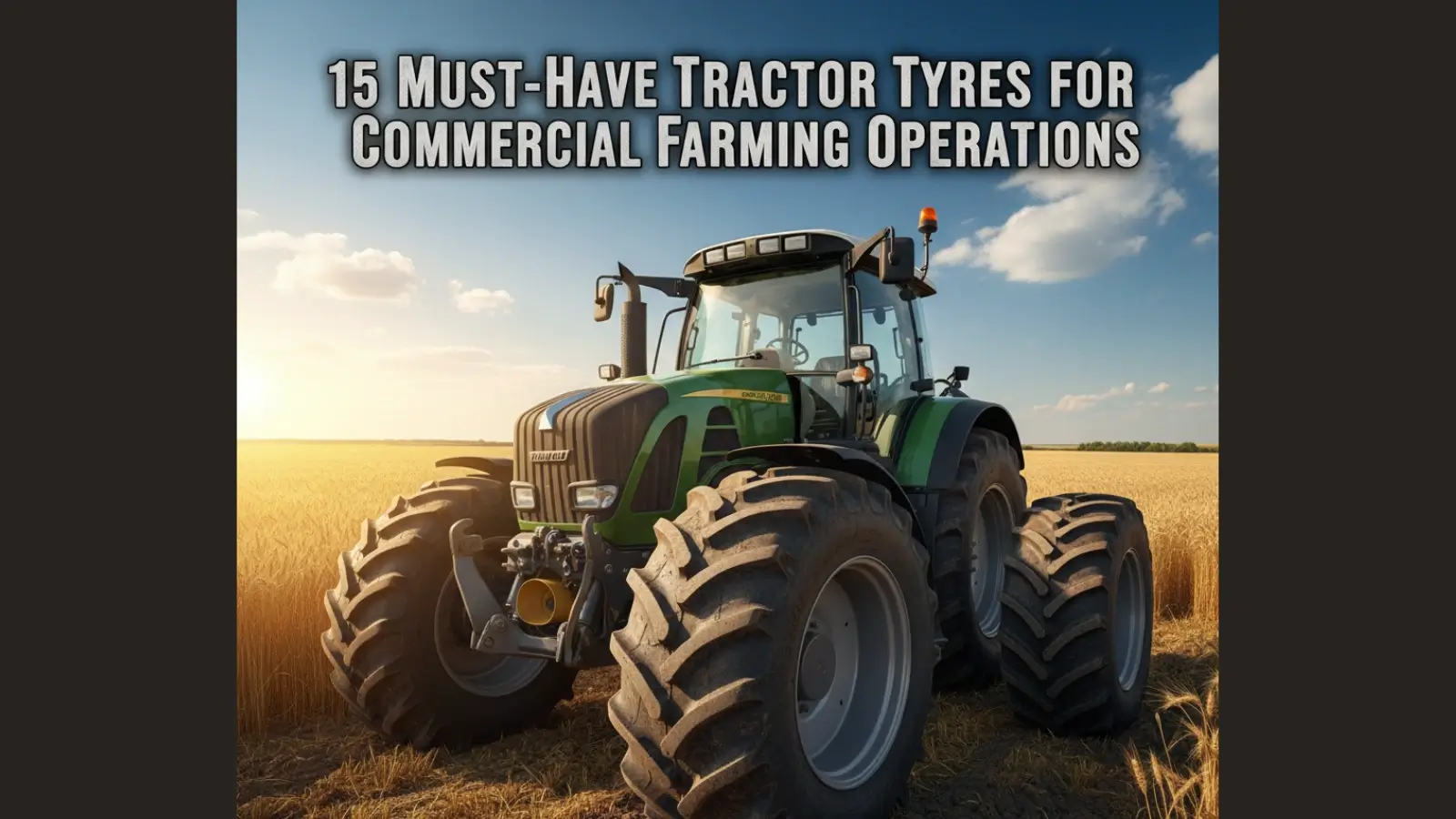
Commercial farming requires machinery that can operate efficiently across heavy loads, long hours, and diverse terrain conditions. Selecting high-performance tractor tyres is essential to keeping operations productive and profitable. This guide highlights 15 must-have options for commercial farming operations, including drive tyres, MFWD tyres, industrial tractor tyres, earthmoving tyres, construction tyres, and Power Tiller tyre models suitable for modern agricultural demands.
Introduction:
Commercial farming environments demand reliability, durability, and maximum traction from agricultural equipment. The right tractor tyres significantly influence fuel efficiency, ground protection, productivity, and overall operating cost. Since tractors are used for cultivation, haulage, lifting, earthwork, and multi-task field applications, tyre selection becomes a strategic investment rather than a routine purchase.
This guide presents 15 expert-recommended tyre categories and application-specific options that support heavy-duty performance for different tasks in commercial farming operations.
How Choosing the Right Tractor Tyres Impacts Productivity
Commercial tractors work under variable conditions: dry fields, muddy surfaces, rocky terrain, asphalt roads, and construction-grade sites. Choosing the right tyre ensures:
-
Superior traction and reduced wheel slip
-
Lower fuel usage through optimized rolling resistance
-
Longer tyre lifespan with consistent tread wear
-
Safer handling under heavy loads
-
Reduced downtime and maintenance expenses
-
Better soil care and crop protection
The Following 15 Tyre Types Help Meet These Productivity Goals for Modern Agricultural Machinery:
1. High-Traction Tractor Drive Tyres
Tractor drive tyres deliver the powerful grip needed during primary farm operations such as ploughing, tilling, and ridge formation. Deep tread depth and wide voids improve pulling strength without excessive slippage.
2. MFWD (Mechanical Front Wheel Drive) Tractor Tyres
Tractor MFWD tyre options provide balanced front-axle support when tractors operate on uneven or sloped farming surfaces. These tyres improve steering control and reduce stress on the drivetrain during tough pulling cycles.
3. Industrial Tractor Tyre for Loader and Utility Work
Industrial tractor tyres feature reinforced rubber compounds for rugged usage on compacted surfaces, construction sites, and warehouse or material-handling spaces. They provide greater puncture resistance and sidewall strength.
4. Power Tiller Tyre for Compact Farming Machinery
Power tiller tyres are built for lightweight farm machines working in smaller plots or horticulture fields. Their lug patterns enhance traction in soft and wet soil for seeding and ground preparation.
5. Flotation Tyres for Wet or Soft Soil
Flotation tyres reduce pressure concentration and keep the tractor from sinking in wet or muddy terrain. They are ideal during rainy seasons, paddy fields, and irrigation-heavy zones.
6. Radial Tractor Tyres for Long-Hour Field Performance
Radial tyres allow better ground contact and controlled pressure distribution. Their reduced rolling resistance and heat build-up improve efficiency across continuous work cycles.
7. Bias Tractor Tyres for Rough and Impact-Heavy Surfaces
Bias tyres are suitable for extremely rough surfaces and industrial farm tasks where structural stiffness is essential. These tyres remain stable under impact and heavy haulage work.
8. Wide-Base Agricultural Tyres for Front-Loader Tractors
Wide-base tyres improve balance when handling heavier attachments such as bale handlers, loaders, or sprayer booms, enhancing equipment stability.
9. Earthmoving Tyre for Land Development and Terracing
Earthmoving tyre variants support tractors working on leveling, grading, and terrain shaping. Their aggressive tread geometry improves grip on loose soil and debris.
10. Construction Tyre for Material Haulage
Construction tyres are designed for tractor use on projects requiring excavation, loading, and transport. They resist sharp stones, debris and permit movement between agricultural fields and roadside construction environments.
11. All-Terrain Tractor Tyres for Mixed Surface Operations
Ideal for operators switching regularly between highways, village roads, and open fields. These tyres balance tread durability and comfort.
12. Heavy-Duty Haulage Tyres for Transport Operations
These tyres support trailer towing and intrafarm logistics with high load-bearing capacity and excellent heat resistance on longer runs.
13. Lug-Deep Drive Patterns for Clay and Sticky Fields
Built for aggressive performance against suction-type soils, deep-lug designs lift tractors forward without requiring excessive power.
14. Turf-Friendly Tyres for Grasslands and Plantation Fields
Turf tyres minimize surface disturbance and prevent root damage when working in plantations, orchards or golf-range settings.
15. Hybrid Road-and-Field Tyres
Hybrid tread designs reduce vibration and improve efficiency for operators who commute between land parcels and perform multi-type tasks.
How to Choose the Best Tyres Based on Your Farm Operations
1. Evaluate load and horsepower requirements
Higher power tractors require stronger tyre bodies and precise pressure management to prevent structural failure.
2. Assess terrain and soil type
Muddy soil needs deeper lugs and flotation; dry-surface farming benefits from radial or wide-contact tyres.
3. Match tyre design with implement usage
Field-implement traction, loader weight, or transport operations all need specific performance characteristics.
4. Consider lifecycle cost rather than purchase price
Cheaper tyre options may increase long-term operational costs through frequent replacement or higher fuel usage.
Why Commercial Operators Prefer Specialized Tyres
-
Reduced downtime during peak season
-
Better machine control under stress
-
Improved crop protection through soil-friendly designs
-
Higher productivity during complex multi-task operations
-
Extended tyre life reduces total cost of ownership
Conclusion
Choosing the right tractor tyres is a critical step in achieving consistent performance, safety, and profitability in commercial farming. Different applications demand different tyre strengths, from traction and flotation to durability and load capacity. By selecting tyres that match tractor capability and field conditions, commercial farm operators can significantly improve handling, reduce slippage, save fuel, and extend machinery life.
Investing in the right tyre technology like ultimately results in lower cost per hour and higher returns throughout the farming cycle.
FAQs
What are the best tractor tyres for commercial farming operations?
The best tyres depend on field type, tractor power, and operational needs. Drive tyres, MFWD tyres, flotation tyres, industrial tractor tyres, construction tyre models, and radial tyres, by brands like TVS Eurogrip OHT are commonly used for enhancing traction, stability, and durability across commercial farm activities.
How do I choose the right tractor tyre for heavy haulage and transport?
Select tyres with high load-bearing capacity, strong sidewalls, and heat-resistant treads designed for long-distance transport. Haulage-focused tractor tyres reduce rolling resistance and protect tyre integrity during extended road usage.
Are radial tyres better for long working hours?
Yes. Radial tyres provide wider ground contact and lower rolling resistance, improving fuel efficiency and operator comfort. They allow consistent performance for longer duty cycles compared to bias tyres.
Can construction or earthmoving tyres be used on commercial farms?
Yes. Construction and earthmoving tyre options are suitable for farms managing excavation, terracing, digging, or raw material movement. They provide durability and resistance to sharp objects and rocky surfaces.
Do tyre types affect fuel consumption?
Tyre selection affects traction and rolling resistance. Better traction reduces engine strain and improves fuel economy, making specialized tractor tyres a key factor in controlling operational costs in commercial farming.