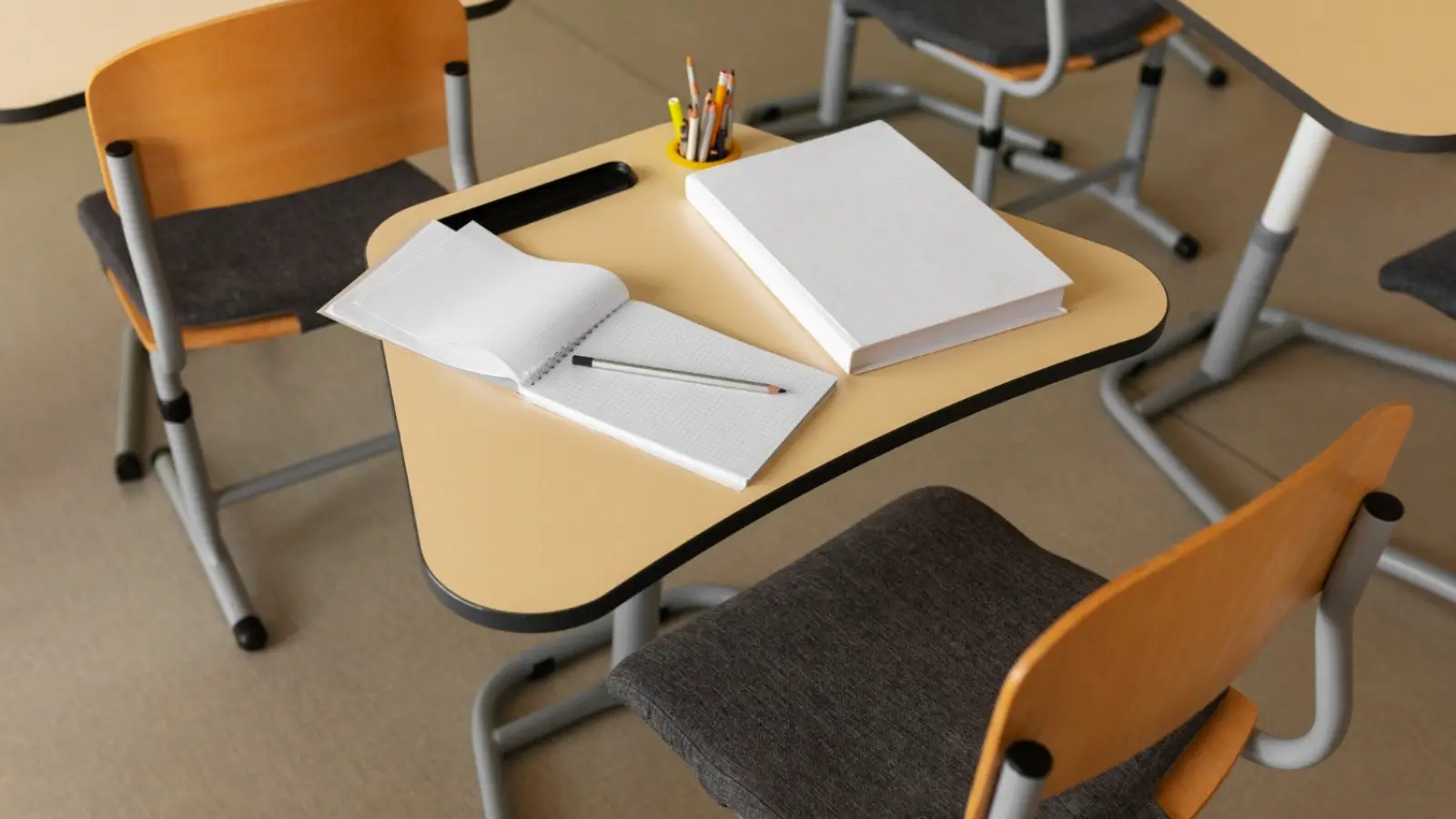
Kids spend around 7 hours a day, 180 days a year sitting in classroom furniture, which adds up to over 12,000 hours during their K-12 education. Education furniture shapes how students interact with material, engage with peers, and maintain focus throughout the school day in ways that most people never think about. Research from Salford University in the UK found that classroom design factors including furniture arrangement and quality accounted for 25% of the variation in student learning progress over an academic year. Poorly designed furniture creates physical discomfort that distracts from learning, limits teaching approaches, and can actually harm developing bodies. Good furniture does the opposite: it supports different learning styles, enables collaboration, and helps students stay engaged and comfortable throughout lessons.
Physical Development and Growing Bodies
School furniture has to work for kids whose bodies are constantly changing. A desk that's the right height for a first-grader in September might be too small by May. Traditional one-size-fits-all furniture never fits most students correctly, forcing kids to slouch, lean awkwardly, or perch on chair edges to reach their work comfortably.
Height-adjustable tables and chairs solve this problem but cost more upfront. Some schools compromise with furniture in multiple size ranges, like elementary, middle, and high school sizes, though that still doesn't account for the huge variation within age groups. Kindergarteners might range from 40 to 48 inches tall, which means significantly different ergonomic needs. Proper fit matters because kids sitting uncomfortably fidget more, pay less attention, and fatigue faster than when they're physically comfortable.
Flexibility for Different Learning Activities
Modern teaching involves way more than sitting in rows listening to lectures. Students work independently, collaborate in small groups, present to the class, and switch between activities throughout the period. Fixed furniture makes these transitions clumsy and time-consuming.
Mobile desks and chairs let teachers reconfigure the room quickly. Individual desks can cluster into groups of four for collaborative projects, then separate for independent work or testing. Lightweight furniture that moves easily means students can rearrange without disrupting adjacent classes. Some systems use nesting tables that stack compactly when not needed, creating flexible space for movement activities or large group discussions.
Durability in High-Use Environments
School furniture takes serious abuse. Chairs get tipped back, desks get carved or scratched, and everything gets moved around constantly. Elementary furniture especially needs to survive the roughhousing and accidents that happen with young kids. That means construction quality that far exceeds residential furniture.
Commercial-grade finishes resist stains, scratches, and cleaning chemicals that get used daily. Glides on chair and table legs need to be replaceable and should protect floors from damage. Metal frames should be welded and powder-coated, not just screwed together with painted finish. Many districts look at 20-year replacement cycles for furniture, which means it needs to literally outlast the students who first sat in it.
Acoustic Management in Classrooms
Hard surfaces make classrooms noisy, and noise kills concentration. When 25 students are moving, talking, and working, the sound bounces off tile floors, painted walls, and hard furniture creating a racket that makes it hard to think.
Acoustic furniture helps dampen this noise. Chairs with fabric seats absorb more sound than hard plastic. Soft seating areas with upholstered cushions lower ambient noise levels. Some manufacturers specifically design education furniture with sound-dampening properties built in. A study in the Journal of the Acoustical Society of America found that excessive classroom noise can reduce reading comprehension scores by up to 20%. Furniture choices directly impact whether students can actually hear and process instruction effectively.
Supporting Different Learning Needs
Not every student learns best sitting still at a desk. Some kids need movement to focus, others benefit from alternative seating positions. Inclusive furniture design accommodates this variety without singling out individual students.
Wobble stools or balance chairs let kinesthetic learners move while working. Standing desks or high tables give options for students who concentrate better when upright. Floor cushions or bean bags create alternative seating for reading or independent work. Having these options available normalizes different learning styles and lets students choose what works for them, which increases engagement and reduces disruptive behavior from kids who just can't sit still in traditional chairs.
Technology Integration
Tablets, laptops, and interactive displays are standard in most classrooms now, and furniture needs to support this technology. Tables require space for devices plus traditional materials like notebooks and textbooks. Power access matters since devices need charging, but cables create tripping hazards.
Some furniture systems include built-in cable management and power outlets at each workstation. Mobile charging carts store and charge entire classroom sets of tablets between uses. The furniture also needs to position screens at appropriate angles and distances to reduce eye strain, which means adjustable or angled surfaces rather than flat desktops for device work.
Cost versus Long-Term Value
Budget-conscious districts often buy the cheapest furniture available, which seems financially responsible but usually isn't. Cheap furniture breaks faster, looks shabby within a couple years, and doesn't support effective teaching. A $50 chair that lasts three years and limits how teachers can arrange the room costs more in the long run than a $150 chair that lasts fifteen years and enables flexible learning environments.
Beyond replacement costs, there's the impact on learning outcomes. If better furniture improves attention and reduces discomfort enough to boost test scores even slightly, that affects school funding, college admissions, and ultimately student futures. When you calculate it on a per-student basis, spending an extra $100 on furniture for a classroom of 25 kids works out to $4 per student. That's a bargain if it meaningfully improves their education over the year they use that classroom.
Business Outstanders brings you sharp insights on tech, business, entrepreneurship, law, crypto, and more. We uncover what’s next. Stay updated, sign up for our newsletter and be part of the future!