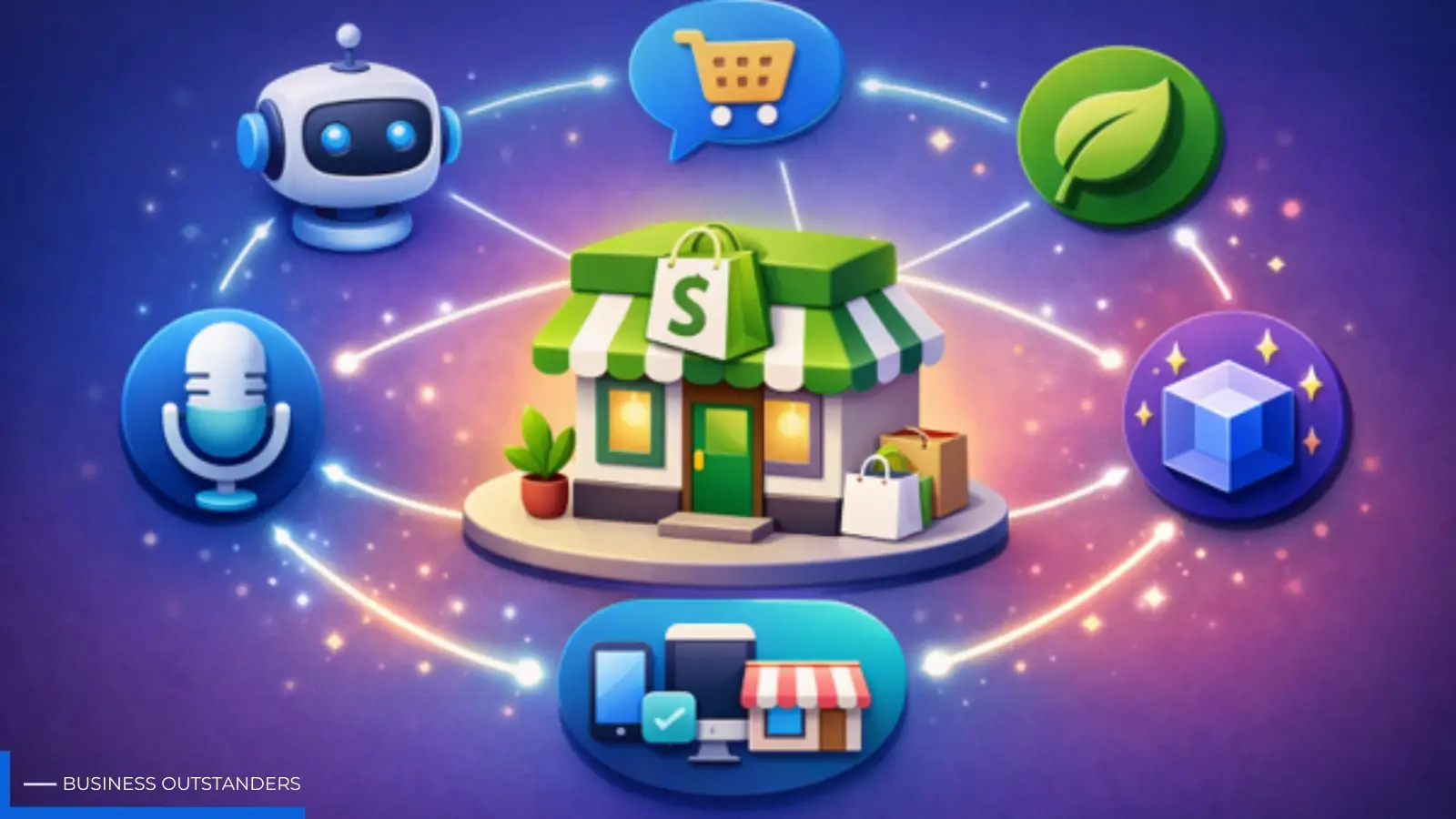
Search visibility for eCommerce brands looks so muhc different these days than it did in the past. Modern customers use AI powered tools to summarize and compare products before they ever visit a website. These tools influence buying decisions earlier than traditional search results.
That's a humongous shift in how eCommerce SEO works. The traditional rankings we know and love still matter, but they're not the only way to achieve visibility anymore. Brands must now structure their sites so AI systems can clearly understand and reuse their information.
But how can brands do that? With GEO. GEO, or Generative Engine Optimization, refers to structuring eCommerce content so AI-powered search engines can accurately summarize and recommend it.
Let's explore a practical framework you can use to develop and tailor a practical GEO checklist to your brand, so it can better navigate AI-driven discovery.
Quick Answer: How GEO Helps NJ eCommerce Brands Win AI Visibility
A GEO optimization checklist helps small NJ eCommerce brands structure their websites for AI-powered search engines like Google AI Overviews and ChatGPT. Instead of focusing only on rankings, GEO emphasizes entity clarity, product organization, internal linking, and extractable content. Following this checklist improves visibility in zero-click answers and generative search recommendations that influence early buying decisions.
What Is GEO and Why It Changes eCommerce SEO for NJ Brands
Generative Engine Optimization focuses on how AI systems interpret and summarize content. These systems extract meaning rather than simply ranking pages. Clarity and structure determine whether AI reuses your content.
For eCommerce brands, GEO affects how users discover and compare products. AI systems need to understand what you sell, who you serve, and how products solve specific problems. Sites that communicate this clearly are more likely to appear in summaries.
GEO builds on traditional SEO fundamentals. Keywords and technical health still matter, but interpretation now joins the fold.
How AI Search Engines Check eCommerce Websites and Products
AI-driven search tools analyze entire sites, not isolated pages. They look for consistent explanations and clear relationships between products, categories, and supporting content. This is what makes them confident in citing options.
If descriptions are inconsistent across pages, AI systems struggle to parse them. Any friction like that reduces likelihood of appearing in generative answers, especially in zero-click environments where users get answers without visiting a site. If you want a deeper breakdown of this shift, this guide on zero-click searches and how AI is changing SEO explains why extractable content now matters more than raw traffic.
The easier your site is to interpret, the more likely AI is to reference it.
GEO vs Traditional eCommerce SEO: What NJ Online Stores Need to Know
|
Traditional eCommerce SEO |
GEO-Focused Optimization |
|
Keyword targeting |
Entity clarity |
|
Rankings and traffic |
AI answer visibility |
|
Page-level focus |
Site-wide relationships |
|
SERP clicks |
Zero-click influence |
Traditional SEO supports discovery and validation. GEO keeps your brand visible when AI systems summarize results instead of listing them. Contemporary eCommerce growth requires both, especially as outlined in this 2026 outlook on GEO vs traditional SEO for NJ eCommerce brands.
Who This GEO Optimization Checklist Is Designed For
This checklist is designed for small to mid-sized eCommerce brands operating in New Jersey. It works best for businesses with control over their website content and structure.
Brands already investing in SEO or content marketing see the fastest ROI. GEO builds on existing assets.
This checklist is not intended for marketplace-only sellers without a standalone website.
GEO Optimization Checklist for eCommerce Brands: Core Foundations
Brand and Entity Signals for eCommerce Trust and Visibility
AI systems must understand who you are before they can recommend what you sell. Brand clarity is the seed that every other GEO signal grows out of. Thus, if it's weak, AI won't be confident enough to cite your brand in summaries.
Brand and entity checklist:
-
Consistent brand name and description across all pages
-
Clear About and Contact pages written in plain language
-
Transparent Shipping, Returns, and Policy pages
-
Aligned descriptions between website and external profiles
Strong consistency improves confidence and reuse across AI-generated answers.
Why Entity Consistency Matters for AI Search and eCommerce Credibility
Entity consistency allows AI systems to connect information across pages. Conflicting descriptions muddy the waters of understanding. Clear repetition builds confidence.
For small eCommerce brands, consistency is one of the highest-impact GEO improvements. Most people think it's about scale, but it's really about discipline.
Product and Category Structure That Helps AI Understand Your eCommerce Store
eCommerce Site Architecture for Generative Search
AI systems rely on hierarchy to understand how products relate to each other. Clear structure improves product discovery and comparison.
Architecture checklist:
-
Categories reflect customer shopping intent
-
Each product fits into one primary category
-
Category names are consistent site-wide
-
Product descriptions are unique and specific
Clear structure improves both GEO performance and traditional eCommerce SEO.
Supporting eCommerce Content That Improves AI Product Understanding
Supporting content provides context that AI systems use to determine relevance. This content helps AI engines understand when and why they should recommend a product.
Effective supporting content includes:
-
How-to guides tied to specific products
-
Comparison pages explaining differences
-
Use-case explanations linked from product pages
Content and commerce should reinforce each other throughout the site.
Content Formatting Best Practices for AI and Generative Search Extraction
eCommerce Content Design for AI Visibility
Formatting determines whether AI systems can extract answers efficiently. Clear segmentation improves reuse in AI-powered search results.
Content formatting checklist:
-
Short summaries near the top of key pages
-
Clear H2 and H3 headings aligned with customer questions
-
Paragraphs focused on one idea
-
Embedded FAQs placed near relevant content
Well-structured pages outperform longer, unstructured content.
Embedded FAQs vs Standalone FAQs for eCommerce GEO Performance
Embedded FAQs provide answers in direct context. AI systems value the links between questions and related information.
Standalone FAQ pages can still work when structured clearly. But, embedding answers where they naturally belong ripens them for citation and extraction.
Clarity is the ultimate goal here..
Technical SEO and Structured Data Signals That Support eCommerce GEO
Technical Readiness for AI-Driven eCommerce Search
Don't get it twisted, GEO still relies on technical SEO. AI systems can't extract or summarize content they can't access.
|
Technical Area |
GEO Requirement |
|
Crawlability |
Clean, indexable URLs |
|
Schema |
Product, Organization, Website |
|
Duplication |
Canonicals for variants |
|
Performance |
Fast load times |
Structured data reduces uncertainty and reinforces factual accuracy.
Common Technical Issues That Limit eCommerce GEO Visibility
Duplicate product pages confuse AI systems. Missing canonicals weaken clarity. Inconsistent indexing sends mixed signals.
Regular technical audits prevent these issues from compounding over time.
Local Trust Signals That Strengthen NJ eCommerce Brand Authority
Local Authority and Trust Signals for eCommerce Brands
Even eCommerce brands enjoy geographic relevance. AI systems often factor location into recommendations for users.
Local trust checklist:
-
Accurate New Jersey location references where relevant
-
Consistent business information
-
Customer reviews visible on-site
-
Clear contact and support information
Trust signals increase confidence and reuse in AI summaries.
Internal Linking Strategies That Improve eCommerce GEO Visibility
Contextual Internal Linking for eCommerce GEO
Internal links show AI systems how pages relate to one another. Strong connectivity improves interpretation and extraction.
Internal linking best practices:
-
Link blog content to relevant products
-
Use descriptive, consistent anchors
-
Reduce orphaned pages
-
Build topic clusters around key offerings
Internal linking supports both GEO and traditional SEO goals.
How NJ eCommerce Brands Can Install GEO Without Rebuilding Their Site
Using GEO strategies doesn't require a full site redesign. Start with pages that already drive traffic or revenue.
Implementation approach:
-
Improve clarity on high-impact pages first
-
Add summaries and refine headings during updates
-
Strengthen internal links incrementally
Revisit this GEO checklist quarterly as AI search continues to evolve.
Common GEO Mistakes That Hold eCommerce Brands Back in AI Search
Many brands treat GEO as a buzzword without actually doing the work. Publishing AI-generated content without strategy is just meaningless noise.
Other common mistakes include inconsistent brand descriptions and neglecting product pages. GEO applies across the entire eCommerce site.
Key Takeaways for NJ eCommerce Brands Using GEO
-
GEO focuses on AI answer visibility rather than rankings alone
-
Entity clarity and consistency improve extractability
-
Product and category structure matters for AI understanding
-
Internal linking strengthens contextual relevance
-
Small NJ eCommerce brands can compete through clarity
Preparing Your NJ eCommerce Brand for AI-Driven Search
Generative search is reshaping how customers discover eCommerce brands. Small NJ eCommerce businesses that adapt early gain visibility even in zero-click environments.
GEO is not about chasing trends. It is about making your site easier for AI systems and users to understand.
By applying this GEO optimization checklist, eCommerce brands can prepare for AI-driven discovery while preserving strong SEO fundamentals.
Business Outstanders brings you sharp insights on tech, business, entrepreneurship, law, crypto, and more. We uncover what’s next. Stay updated, sign up for our newsletter and be part of the future!