Implementing Circular Economy Practices: 5 Difficulties to Prepare For
— Circular economy practices are those that aim to keep materials and resources in circulation for as long as possible.
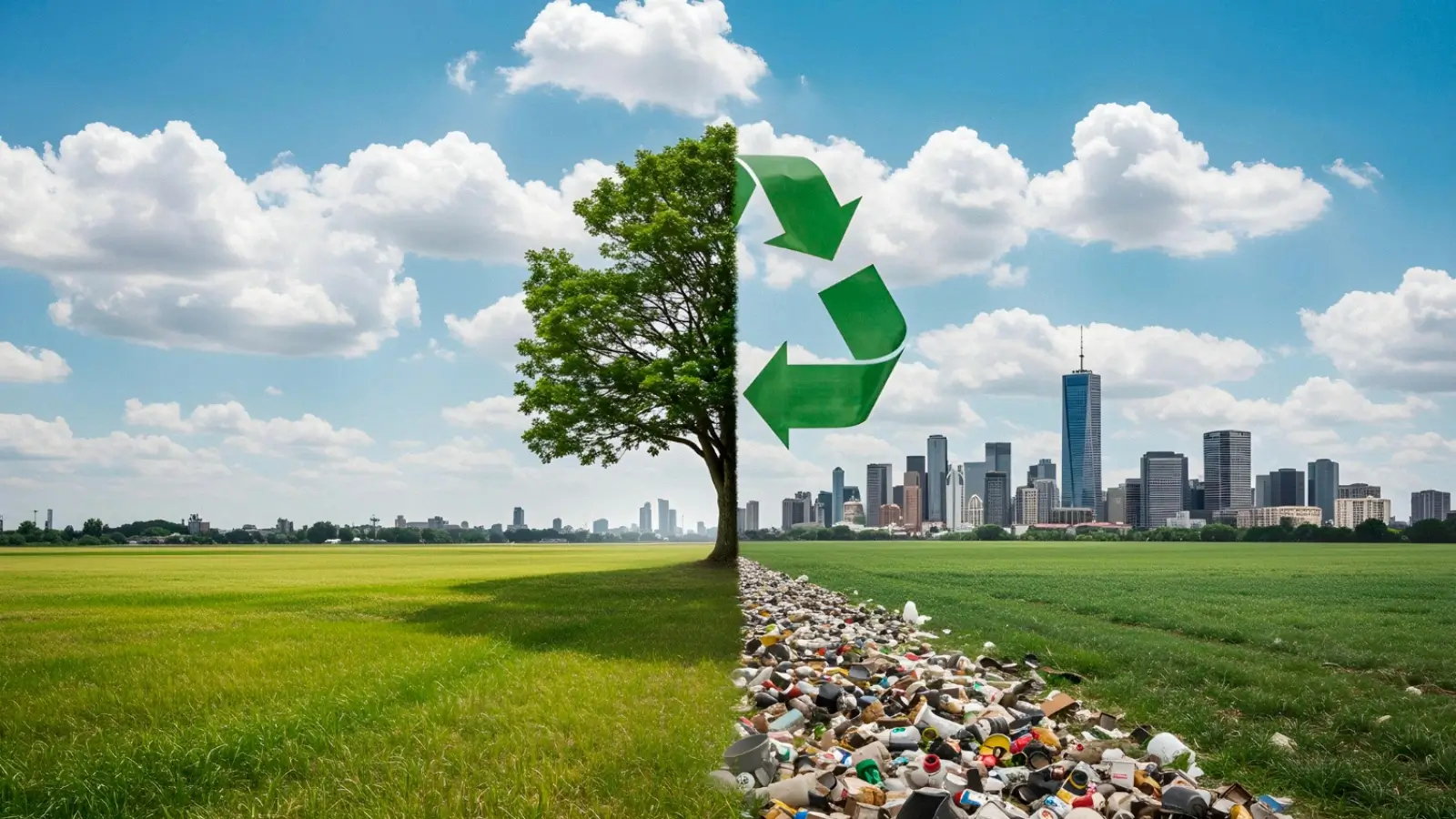
Circular economy practices are those that aim to keep materials and resources in circulation for as long as possible, usually through strategies like reuse, repair, remanufacturing, and recycling. Humans have historically engaged in these practices for nearly the whole of known history, only moving away significantly during the development of modern industrialisation and capitalist economies, which have created unprecedented abundance and ease of access in terms of consumer goods. This access has, at times, disincentivised the circular economy practices that were once part and parcel of everyday human existence, sometimes leading to unsustainable modes of production and challenges in maintaining resource security.
This has been the case for some time in Singapore, with its limited space and lack of domestic natural resources. Semakau Landfill, for instance, is expected to run out of space by 2035, a clear reminder that Singapore cannot rely on the “take-make-dispose” model that gained ascendance in the modern era. Likewise, the city-state’s reliance on imported raw materials has been a longstanding existential issue that has occasionally required extraordinary measures to address.
Circular approaches have long been encouraged by the Singaporean government because of the country’s underlying challenges, but it’s only fairly recently that a wave of private businesses and organisations have come fully aboard, thanks in part to incentives connected to initiatives like Green Plan 2030. Implementing circular economy practices is clearly good at a macro level for Singapore, but more than ever, locally-based businesses are also seeing it as a path to better resilience and cost efficiency.
Yet even with strong motivation, the transition is rarely straightforward. The challenges companies face today highlight just how much work is needed behind the scenes. Here are key difficulties businesses should be prepared to navigate as they shift towards circular economy practices within Singapore:
1) Understanding and Redesigning Material Flows
Many companies discover that their existing products or packaging weren’t designed with reuse or recovery in mind. Unfortunately, a straightforward redesign may not always be simple to implement, especially if a business’s supply chains are underdeveloped and lacking in alternatives. If the business’s culture is new to circular economy practices, the organisation may also hit roadblocks in design and production, and almost certainly in end-of-life processes.
A true circular strategy starts with knowing exactly where your materials come from, how they’re used, and what happens to them at the end of their life. In other words, it isn’t just about eliminating waste but completely realigning the business’s methodologies. These changes require time, capital, and cross-department coordination, which can be difficult for businesses used to traditional linear systems.
2) Limited Local Infrastructure
Even though Singapore is actively expanding its recycling and resource-recovery capabilities, gaps remain. Not all materials have downstream partners who can collect, sort, or process them at scale, and some specialised recycling technologies are either too expensive to implement or are still in the early stages of development.
In practice, this means even well-designed circular efforts can stall if there’s no local facility to handle returned materials. To fix this issue, companies may need to forge partnerships, explore shared infrastructure, or coordinate across multiple recovery channels, including overseas. These efforts all require serious commitments across the board.
3) Transitioning to New Business and Revenue Models
Because so many processes are impacted, circularity often requires shifts in how revenue is generated. For example, once you set up the infrastructure for leasing, repair services, and take-back programmes, the business’s profitability calculus is going to be impacted, one way or another. While refurbished products can still be profitable, they invariably work differently from traditional one-time sales, and it often requires a shift in long-term vision to adequately see the transition through.
Any transition raises fundamental questions, including but certainly not limited to:
- Will customers accept refurbished goods or subscription-based access?
- Can the company manage longer product lifecycles?
- How quickly will financial returns materialise?
At the most basic level, businesses need to rethink cost structures, pricing, asset management, and even customer reactions. For any organisation, that adjustment period can be a major hurdle.
4) Regulatory Alignment and Compliance Expectations
Singapore’s policy landscape for waste reduction, recycling, and resource efficiency is constantly evolving. As frameworks develop and incentives continue to expand, requirements and penalties will necessarily evolve.
Companies engaged in circular economy practices must keep pace with the latest:
- Mandatory waste reporting requirements
- National recycling and circularity targets
- Extended Producer Responsibility (EPR) schemes, when applicable
- Terms for existing and impending green financing or government grants
Not keeping up with these can lead to inefficiencies or missed opportunities for financial and operational support.
5) Measuring, Tracking, and Communicating Impact
It’s difficult to improve what you don’t measure. To address most of the challenges above, companies need clear data, not just on resource use but also on the financial performance of circular efforts. Setting up measurement systems and integrating reporting into ESG and stakeholder disclosures demands new capabilities and ways of thinking. Without these systems, decision-making and external credibility can be severely compromised in the circular economy transition.
Today’s Preparations Set the Stage for Tomorrow’s Sustainability Wins
The shift to a circular economy model demands thoughtful planning across every endeavour. Grants from the government or green funding are welcome, but they’re not enough to secure lasting success. Anticipating the challenges described above lets organisations build stronger foundations for circular growth and avoid the pitfalls that often slow progress. Through early action, your organisation can stay ahead as Singapore continues on its quest to develop a more resource-resilient economy.