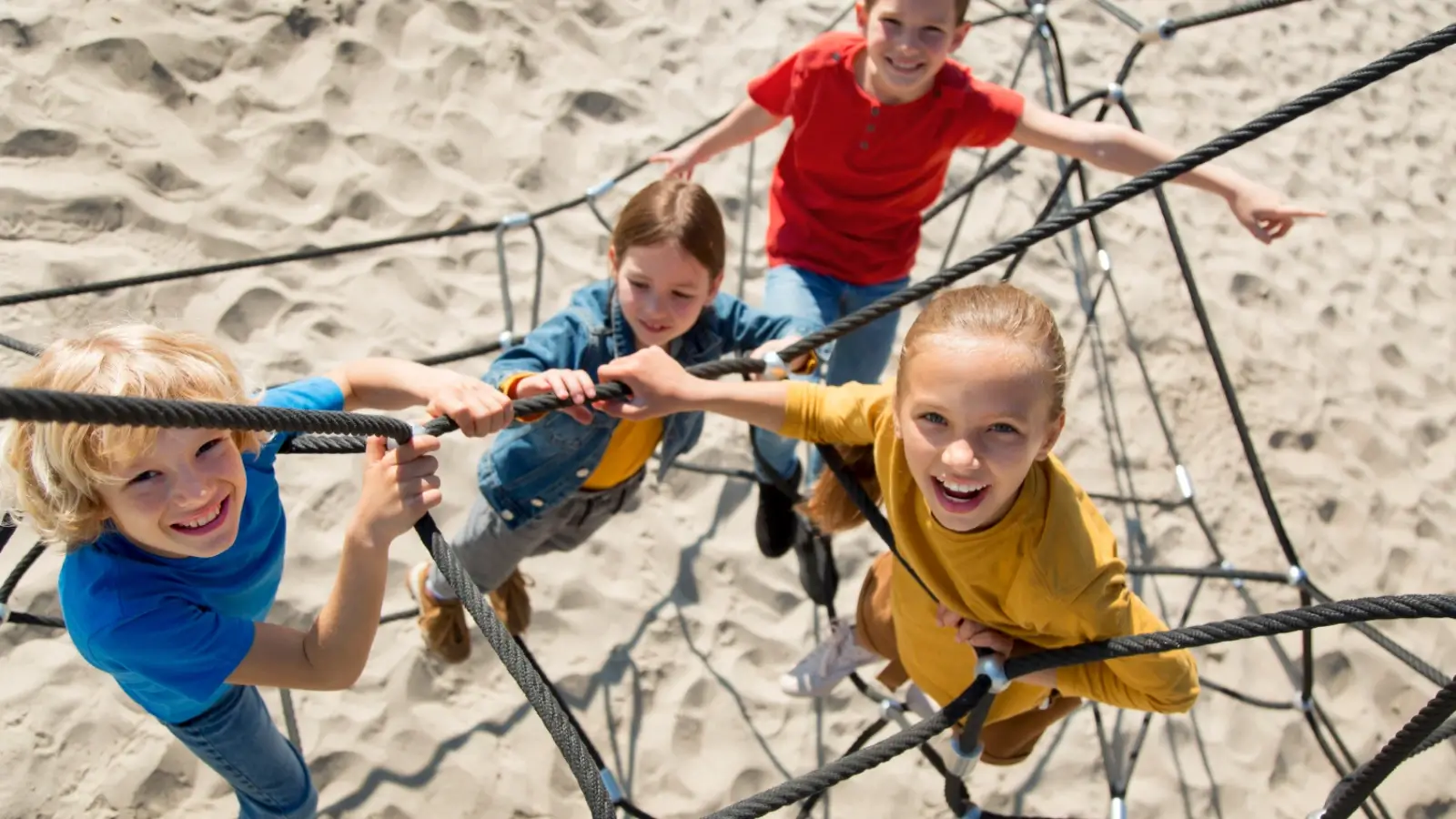
Climbing rope towers challenge multiple physical skills simultaneously while engaging children's natural desire to climb and explore vertical spaces. These structures typically feature thick rope netting configured into pyramid, dome, or tower shapes reaching heights of 2 to 6 meters. Unlike static playground equipment where children follow predetermined paths, rope towers require constant balance adjustments, grip strength, and spatial awareness as the flexible netting shifts with movement. Research published in the Journal of Physical Activity and Health found that climbing activities activate 95 percent of major muscle groups, making them among the most comprehensive forms of physical exercise available on playgrounds. The unstable surface of rope structures adds difficulty compared to rigid ladder climbing, demanding greater proprioceptive awareness and core stability.
Upper Body and Grip Strength Development
Climbing rope towers builds functional upper body strength differently than isolated gym exercises. Children pull their body weight upward using arms, shoulders, and back muscles in coordinated patterns that mirror real-world movements. The rope texture and thickness affect grip difficulty, with most playground rope towers using 16 to 20mm diameter ropes that are challenging but manageable for children's hands.
Grip strength matters more than many parents realize. It's foundational for handwriting, using utensils, and manipulating objects. Studies from occupational therapy research show that children with poor grip strength often struggle with fine motor tasks in school. Regular climbing naturally builds this strength through play rather than structured exercises.
The varied grip positions required on rope towers work different muscle groups. Gripping vertically activates different forearm muscles than horizontal grasping. Kids naturally experiment with different climbing techniques, unknowingly developing comprehensive hand and arm strength.
Core Stability and Balance Training
The unstable nature of rope netting forces constant core engagement to maintain balance. Unlike climbing a solid ladder where you can somewhat relax between movements, rope tower climbing requires continuous core activation. This develops the deep stabilizing muscles that support posture and movement control.
I watched my daughter learn to climb our local rope tower over several months. Initially she'd wobble dramatically with each step, overcompensating with jerky movements. After a few weeks, her movements became smoother as her body learned to make small anticipatory adjustments. That's proprioception developing in real-time.
Balance skills transfer to other activities. Research from the American Academy of Pediatrics notes that children with better balance and coordination perform better in organized sports and have fewer injuries. They're simply more in control of their bodies.
Spatial Awareness and Planning
Climbing a rope tower requires route planning and problem-solving. Which rope provides the best foothold? Can I reach that handhold from here? Children make dozens of micro-decisions during each climb, developing spatial reasoning skills.
The three-dimensional nature of rope towers adds complexity compared to flat climbing walls. Kids learn to judge distances and plan movements in all directions, including behind and beside them. This spatial awareness applies beyond playgrounds to activities like navigating crowded spaces or parking a car years later.
Risk Assessment and Confidence Building
Rope towers introduce manageable physical challenges that help children develop realistic risk assessment. They learn their current limits through experience. Maybe they can only climb halfway up initially, but with practice they reach the top. This builds genuine confidence based on actual capability rather than empty praise.
The flexible nature of rope structures provides some inherent safety. If a child slips, they typically slide down onto lower sections of netting rather than falling straight to the ground. This doesn't eliminate injury risk, but it reduces severity compared to rigid structures. That said, proper fall surfacing underneath remains essential, typically requiring impact-absorbing materials like rubber mulch or poured rubber to depths specified by safety standards.
Social Interaction and Cooperation
Multiple children climbing the same rope tower simultaneously creates natural opportunities for cooperation. They need to communicate and coordinate movements to avoid blocking paths or destabilizing the structure for others. These unscripted social interactions teach negotiation and awareness of others' needs.
Older children often help younger ones, pointing out good handholds or offering encouragement. This mixed-age play provides leadership opportunities and peer learning that structured activities can't replicate. The tower becomes a social space as much as a physical challenge.
Age-Appropriate Design Considerations
Rope towers for younger children typically max out at 2 to 3 meters height with tighter rope spacing to prevent falls through gaps. Elementary-age structures might reach 4 to 5 meters with larger climbing spaces. The rope diameter and spacing between attachment points affect difficulty levels significantly.
Business Outstanders brings you sharp insights on tech, business, entrepreneurship, law, crypto, and more. We uncover what’s next. Stay updated, sign up for our newsletter and be part of the future!