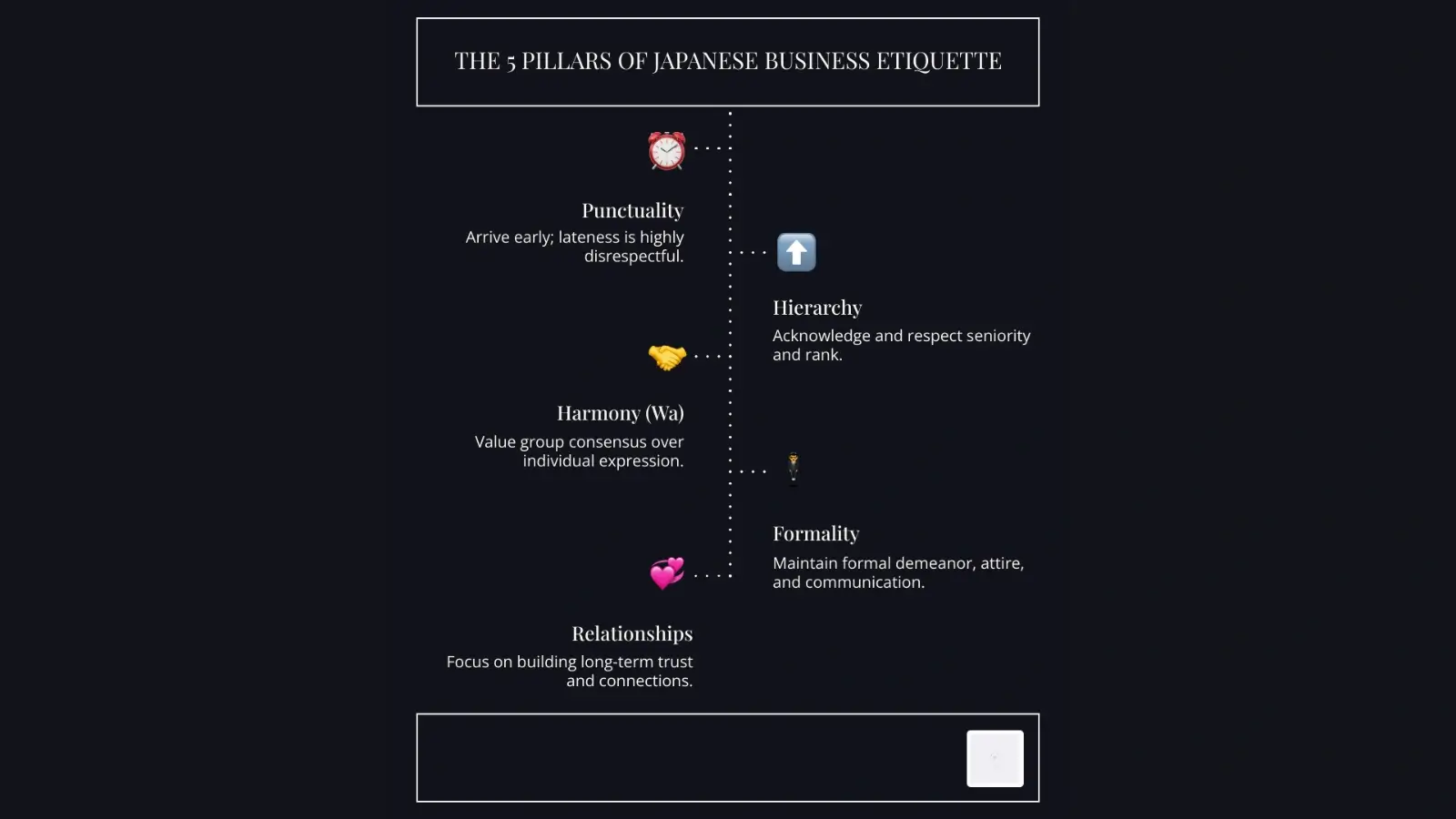
First Impressions: Mastering the Initial Encounter
Making a strong first impression is universally important, but in Japan, the nuances of initial encounters are particularly significant. From the moment you arrive, your actions speak volumes about your respect and professionalism. Punctuality, the manner of your greeting, your non-verbal communication, and your professional appearance all contribute to how you are perceived. We aim to equip you with the knowledge to steer these crucial first steps with confidence and grace.
1. The Art of the Bow (Ojigi)
In Japan, the bow, or ojigi, is the cornerstone of greetings and a profound expression of respect. While handshakes may be offered to foreigners, especially in international business settings, it is always respectful to be prepared to bow. The depth and duration of a bow convey different levels of formality and deference, reflecting the intricate hierarchy present in Japanese society.
Types of Bows:
-
Eshaku (15° bow): A slight nod of the head, often used for casual greetings or showing thanks to someone of equal or lower status.
-
Keirei (30° bow): A standard bow used for formal greetings, business interactions, and when meeting superiors. Your back should be straight, bending from the hip.
-
Saikeirei (45° bow): A deep, reverent bow reserved for expressing profound gratitude, sincere apologies, or showing extreme respect to a very senior individual.
When bowing, always keep your back straight and bend from the waist. Avoid making eye contact during the bow. If your Japanese counterpart bows, it is polite to mirror their bow in depth and duration, showing that you acknowledge and respect their gesture.
2. The Business Card (Meishi) Exchange Ritual
The exchange of business cards, or meishi koukan, is a highly ritualized and critical element of Japanese business introductions. A business card is not merely contact information; it is seen as an extension of the individual and their company, and it must be treated with the utmost respect.
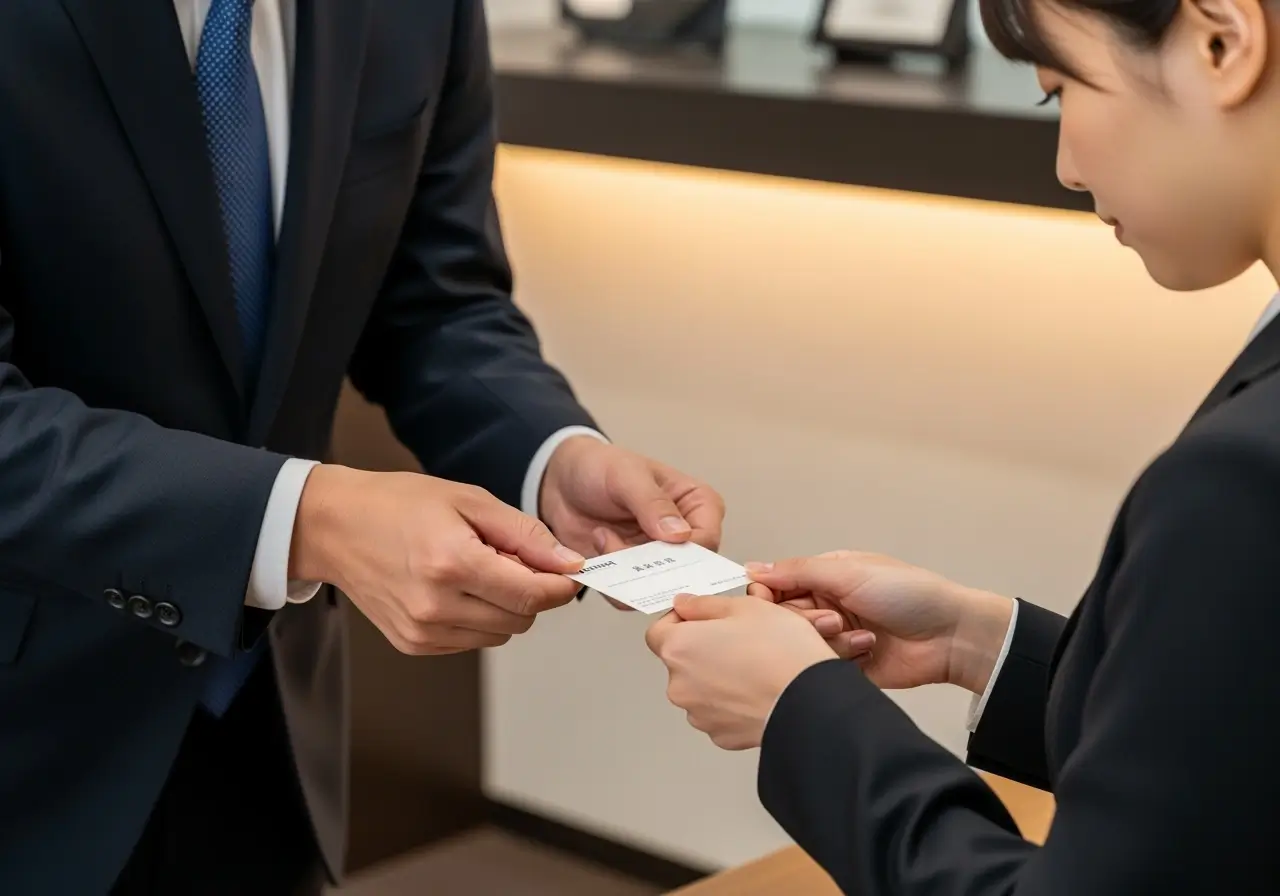
When presenting your meishi:
-
Always use both hands, holding the card by the top two corners.
-
Ensure the side with your Japanese translation (if you have one) faces the recipient, or that your name is clearly visible.
-
Present your card to the most senior person first, then proceed down the hierarchy.
-
Offer a slight bow as you present your card.
When receiving a meishi:
-
Accept it with both hands, holding it by the bottom two corners.
-
Take a moment to read the card, acknowledging the person's name and title. This shows respect.
-
Never write on a meishi in front of the giver, fidget with it, or put it directly into your pocket.
-
During a meeting, place the received meishi on the table in front of you, arranged by seating order, to help you remember names and titles.
-
At the end of the meeting, carefully place the cards into a dedicated cardholder, never just stuffing them into a wallet or pocket. This demonstrates that you value the connection.
3. Punctuality and Professional Attire
Punctuality in Japan is not just a courtesy; it is a fundamental expectation that reflects reliability and respect. Arriving even a few minutes late can be seen as disrespectful and a sign of disorganization. We recommend arriving at least 10 minutes early for any meeting or appointment. This buffer allows for unexpected delays and demonstrates your commitment. If, despite your best efforts, you anticipate being late, inform your counterparts immediately with a sincere apology and an estimated arrival time.
Professional attire in Japan is generally conservative and formal, even with the introduction of "Cool Biz" (summer casual) and "Warm Biz" (winter casual) policies aimed at reducing energy consumption. While these policies might allow slightly less formal attire in Japanese companies, it's always best for foreign visitors to err on the side of formality, especially during initial meetings.
For men:
-
A dark-colored suit (black, navy, or charcoal grey) is standard.
-
Pair with a white or light-colored shirt and a subdued tie.
-
Ensure shoes are polished and well-maintained. Beards and shaved heads are generally less common in Japanese business, so consider this when planning your appearance.
For women:
-
A conservative pantsuit or a skirt suit with a knee-length or longer skirt is appropriate.
-
Choose muted colors like black, navy, grey, or beige.
-
Blouses should be modest, and shoes should be closed-toe.
-
Makeup and jewelry should be minimal and understated. Hair should be neat, short, or tied back. The aim is to project a "strong" and professional image without being overly glamorous.
Your appearance is often considered an extension of your professionalism and respect for your counterparts.
Navigating the Japanese Business Meeting
Japanese business meetings are structured affairs, deeply influenced by hierarchy, communication styles, and a methodical approach to decision-making. Understanding these dynamics is crucial for effective participation and successful outcomes. We will guide you through the intricacies of seating arrangements, the art of small talk, interpreting communication cues, and the essential steps for presentations and follow-up.
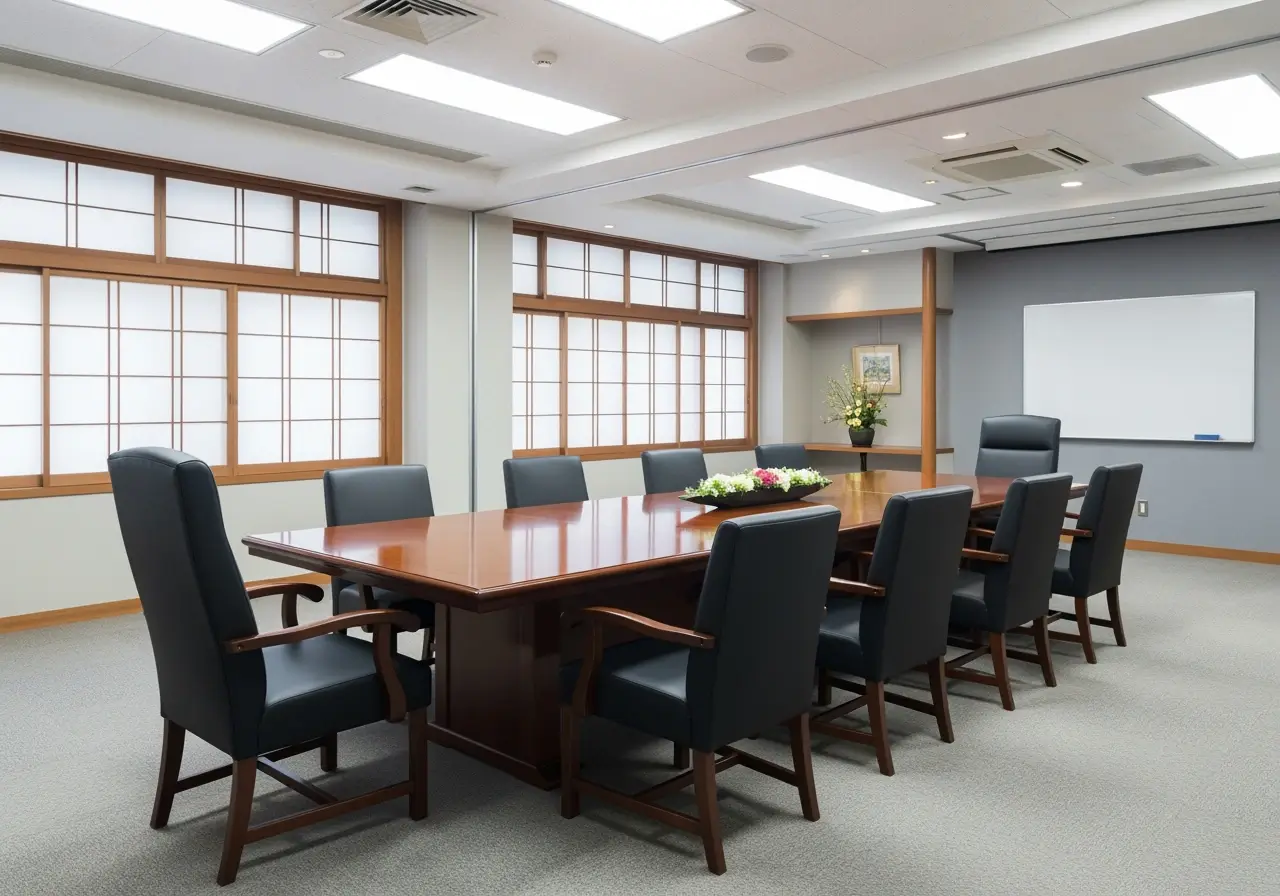
1. Seating, Small Talk, and Opening Remarks
Upon entering a meeting room, observe the seating arrangements. In Japan, seating is typically determined by rank, with the most senior person occupying the kamiza (upper seat), which is usually furthest from the entrance and often offers the best view. Guests are generally provided the kamiza seats as a sign of respect. Wait to be seated by your host or directed to your designated spot. Never sit yourself down without invitation.
Meetings often begin with polite small talk to establish rapport and create a comfortable atmosphere before diving into business. This is not wasted time; it's an important relationship-building exercise. Safe topics include the weather, your journey to Japan, positive observations about Japanese culture, or general pleasantries. Avoid discussing politics, religion, or potentially controversial personal topics.
Formal introductions will follow, often starting with the most senior member of the host team introducing their colleagues, followed by your team's introductions. Ensure you have your meishi ready for this crucial exchange.
2. Communication: Reading Between the Lines
Japanese communication styles often contrast sharply with Western directness. Indirect communication is prevalent, emphasizing harmony (wa) and avoiding confrontation or refusal. Silence, rather than being awkward, is often a sign of careful consideration and respect.
Key aspects to understand:
-
Indirectness: A Japanese counterpart might say "that may be difficult" or "we'll consider it" when they mean "no." Learn to interpret these subtle cues. Direct refusal can cause "loss of face" and is generally avoided.
-
Silence: Do not rush to fill silences. They can indicate that your counterpart is processing information, formulating a response, or simply listening attentively. Interrupting can be seen as rude.
-
Non-verbal cues: Pay close attention to body language, facial expressions, and overall demeanor, as these often convey more than spoken words.
-
Identifying the decision-maker: The most vocal person in the room, especially if they speak fluent English, may not be the ultimate decision-maker. Decision-making is often a consensus-driven process involving multiple hierarchical levels. The true authority might be a quieter, more senior individual who appears to be listening intently, even with their eyes closed.
To ensure clarity, we recommend asking open-ended questions and summarizing your understanding of key points. Patience and attentive listening are your most valuable tools here.
3. Presentations and Follow-Up
When delivering presentations in a Japanese business context, clarity and conciseness are paramount.
-
Structure: Present information logically and systematically. Japanese counterparts appreciate thoroughness and attention to detail.
-
Visual Aids: Use clear, professional visual aids such as slides or handouts. Consider having key documents translated into Japanese, especially for technical or complex information. Automated translation services can be unreliable for nuanced content, so professional translation is often advisable.
-
Language: If presenting in English, speak slowly and clearly, avoiding slang, colloquialisms, or overly complex sentence structures. If using an interpreter, be mindful that consecutive interpretation can double the presentation time, so adjust your content accordingly.
-
Note-taking: Japanese attendees often take extensive notes. This is a sign of engagement and respect, not a lack of understanding. We encourage you to do the same, as it demonstrates attentiveness and helps you recall details later.
After the meeting, follow-up is critical. Send a polite thank-you email within 24 hours, reiterating your appreciation for their time and summarizing key discussion points and agreed-upon actions. This helps confirm understanding, clarify responsibilities, and maintain momentum.
Understanding the Cultural Framework of Business in Japan
Beyond specific etiquette rules, understanding the underlying cultural framework of Japanese business is key to forging deep, lasting relationships. Concepts like group harmony, consensus-building, and a long-term perspective are not just abstract ideas; they are deeply woven into daily business practices. This section will explore these foundational elements, providing context for the etiquette we've discussed.

1. Hierarchy, Seniority, and the Decision-Making Process
Hierarchy is extremely important in Japanese corporate culture. Age often serves as a primary indicator of seniority, and deference is always shown to those higher in rank. This influences everything from seating arrangements to who speaks first in a meeting. Japanese who have risen to high positions are accustomed to being treated with significant respect. When interacting, identify the most senior individuals and address them with appropriate formality, such as using honorifics like "-sama" with their surname, especially during initial encounters.
Decision-making in Japanese companies is typically a methodical, consensus-driven process. This can often feel slow from a Western perspective, where individual decision-making is more common.
-
Nemawashi (根回し): This informal, behind-the-scenes consensus-building process is crucial. Before a formal decision is made, various stakeholders and departments are consulted informally to ensure everyone is on board. This "digging around the roots" ensures smooth implementation once a decision is formally announced.
-
Horenso (報告・連絡・相談): This acronym stands for hōkoku (report), renraku (update/contact), and sōdan (consult/discuss). It's a fundamental communication principle, especially when problems arise. Employees report to superiors, update relevant parties, and consult before taking action.
-
Patience: Because of this consensus-oriented approach, decisions are rarely made on the spot. We advise exercising patience and avoiding pressure tactics, as these can be counterproductive and damage relationships.
2. The Role of Group Harmony (Wa) in Business in Japan
The concept of Wa (和), or group harmony, is a cornerstone of Japanese culture and profoundly impacts business interactions. It emphasizes collective well-being over individual desires, fostering a strong sense of teamwork and shared responsibility.
Key implications of Wa:
-
Teamwork over Individualism: Success is often attributed to the group, and individual praise can sometimes cause embarrassment. When acknowledging achievements, give credit to the entire team.
-
Avoiding Public Criticism: Disagreements or criticisms are typically handled privately and subtly to maintain face and harmony within the group. Confrontation is generally avoided.
-
Building Trust: Given the emphasis on group cohesion and long-term relationships, building personal trust is paramount. Japanese counterparts will often want to establish a solid foundation of trust with you as an individual before committing to significant business dealings. This long-term approach is vital for successful cross-cultural business in Japan.
Understanding Wa helps explain why communication can be indirect, why decisions take time, and why maintaining a calm and composed demeanor is so valued. It's about ensuring everyone feels respected and included, fostering more stable, enduring partnerships.
3. Approaching Negotiations
Negotiations in Japan are often characterized by a focus on building long-term relationships and achieving mutual benefit, rather than aggressive, short-term gains.
-
Focus on Relationships: The primary goal is often to establish a strong, trusting relationship that can lead to future collaborations.
-
Avoid Aggression: A hard-sell approach or aggressive tactics are generally ineffective and can be off-putting. Maintain a calm, respectful, and patient demeanor.
-
Patience is Key: As decision-making is consensus-driven, negotiations can be lengthy. Be prepared for extended discussions, multiple meetings, and a thorough exploration of all details. Deals are rarely, if ever, closed in the first meeting.
-
Indirectness: Be prepared for indirect language, especially when discussing potential disagreements or difficulties. Your Japanese counterparts may use phrases like "that might be challenging" rather than a direct "no."
-
Mutual Benefit: Frame your proposals in terms of how they benefit both parties and contribute to a harmonious, long-term partnership.
By approaching negotiations with respect, patience, and a genuine desire for a win-win outcome, you can lay the foundation for successful, enduring business relationships.
Beyond the Boardroom: Building Stronger Relationships
While formal meetings are important, much of the true relationship-building in Japanese business happens outside the boardroom. Socializing, gift-giving, and understanding the unique aspects of Japanese work culture are crucial for fostering deeper connections and demonstrating your commitment.
1. Dining Etiquette (Settai and Nomikai)
Business meals, whether formal settai (client entertainment) or more casual nomikai (drinking parties with colleagues), are integral to building rapport. Observing proper dining etiquette shows respect and cultural awareness.
-
Waiting for the Host: Always wait for the host to initiate the meal or toast before you begin eating or drinking.
-
Pouring Drinks: It is customary to pour drinks for others at the table, especially for your superiors or guests. Never pour your own drink; wait for someone else to offer.
-
Chopstick Rules (Hashi): Never stick your chopsticks upright in a bowl of rice; this resembles an offering at a funeral.
-
Do not use your chopsticks to point at people or food.
-
Do not pass food directly from your chopsticks to another person's chopsticks; this is also a funeral ritual.
-
When serving yourself from a shared dish, use the opposite end of your chopsticks or a designated serving utensil.
-
When not using them, place your chopsticks on the chopstick rest or across your bowl.
-
Saying Itadakimasu (いただきます): Before eating, it's polite to say "itadakimasu" (I humbly receive), often accompanied by a slight bow with hands pressed together.
-
Slurping Noodles: When eating ramen or soba, it is perfectly acceptable, and even a sign of enjoyment, to slurp your noodles.
-
Finishing Your Meal: Try to finish everything on your plate to show appreciation. Leave your place setting as you found it.
These occasions are primarily for strengthening relationships. Engage in conversation, be attentive to your hosts and colleagues, and enjoy the experience.
2. The Nuances of Gift-Giving
Gift-giving (omiyage or temiyage) is an important tradition in Japanese business culture, symbolizing gratitude, respect, and goodwill.
-
When to Present: Gifts are typically presented at the end of a meeting or during a social occasion, rather than at the very beginning.
-
Wrapping Importance: The presentation is almost as important as the gift itself. Ensure your gifts are impeccably wrapped. Modesty is key; present the gift humbly with both hands.
-
Appropriate Gifts: High-quality local products or specialties from your home country are always appreciated.
-
Consider consumables like gourmet chocolates, fine spirits, or local crafts.
-
If giving to a group, a single, high-quality gift for the entire team is often suitable.
-
Gifts to Avoid: Sets of four or nine: The number four (shi) sounds like death, and nine (ku) sounds like suffering.
-
Sharp objects: Knives or scissors can symbolize cutting ties.
-
White flowers, lilies, lotus blossoms, camellias: These are associated with funerals.
-
Potted plants: Can symbolize sickness.
-
Overly expensive gifts: Can make the recipient feel indebted.
-
Red for Christmas cards: Funeral notices are often printed in red.
Always present and receive gifts with both hands, and express your gratitude.
3. Japanese Work Culture and Expectations
Japanese work culture is renowned for its dedication, long hours, and strong emphasis on group cohesion.
-
Long Working Hours: The stereotype of long working hours is largely true. A 2015 survey found that 94% of Americans see the Japanese as ‘hardworking’. Indeed, nearly a quarter of Japanese employees work more than 80 hours of overtime a month, often unpaid. This intense work ethic is deeply ingrained, sometimes leading to karoshi (過労死), or death from chronic overwork.
-
Overtime Culture: There's often a cultural expectation to stay as long as your colleagues or boss, even if your direct work is finished. Leaving before them can be frowned upon, although the government is increasingly pressuring companies to address this.
-
Annual Leave: The minimum annual leave entitlement in Japan is 10 days, with employees earning an additional day of leave for each year of service, up to a maximum of 20 days. However, many Japanese employees do not take their full entitlements, partly out of a sense of responsibility and a reluctance to inconvenience colleagues.
-
Group Identity: Employees often see themselves as part of a larger corporate family, with loyalty and dedication to the company being highly valued.
As a foreigner, you may not be expected to conform to the most extreme aspects of this culture, but understanding its existence helps you appreciate the context in which your Japanese counterparts operate. Showing respect for their dedication and work ethic will go a long way.
Frequently Asked Questions about Japanese Business Etiquette
What is the single most important rule to remember?
The single most important rule to remember is that effort and respect are paramount. While perfect execution of every nuanced etiquette point might be challenging for a foreigner, the sincere attempt to understand and adhere to Japanese customs is highly valued. Japanese counterparts are generally very understanding and appreciate the thoughtfulness behind your efforts, viewing it as a sign of respect for their culture and a desire to build a strong relationship.
How should I recover from a cultural faux pas?
If you realize you've made a cultural faux pas, the best approach is to offer a sincere and immediate apology. A simple "Sumimasen" (Excuse me/I'm sorry) or "Gomen nasai" (I am sorry) with a slight bow can often suffice. Most Japanese businesspeople are understanding and forgiving of unintentional mistakes by foreigners, recognizing that you are operating outside your native culture. Your humility and quick acknowledgment of the error will be more important than the mistake itself.
Is it necessary to speak Japanese to do business in Japan?
While not always mandatory, especially in larger international companies or for specific roles, learning basic Japanese phrases such as greetings ("Konnichiwa"), thank-yous ("Arigatou gozaimasu"), and apologies ("Sumimasen") shows immense respect and can significantly improve your interactions. For complex discussions, negotiations, or technical presentations, a professional interpreter is highly recommended and often essential to ensure clear and accurate communication. Please do not rely on colleagues who are not professional interpreters, as this places an undue burden on them and risks miscommunication.
Conclusion
Navigating the intricate world of Japanese business etiquette can seem daunting at first, but it is an incredibly rewarding endeavor. We have explored the fundamental principles that govern Japanese business interactions, from the critical first impressions shaped by bows and meishi exchanges, to the nuanced communication styles within meetings, and the profound influence of hierarchy and group harmony on decision-making. We also digd into the essential social dynamics of dining and gift-giving, as well as the realities of the Japanese work culture.
The core message remains consistent: respect, patience, and relationship-building are your most valuable assets. By embracing these principles and demonstrating a genuine willingness to understand and adapt to Japanese customs, you will not only avoid cultural missteps but also build trust, foster strong partnerships, and open up significant opportunities in this unique and vibrant market. Bridging the cultural gap is not just about following rules; it's about connecting on a deeper level, paving the way for mutual success and enduring collaboration.
Business Outstanders brings you sharp insights on tech, business, entrepreneurship, law, crypto, and more. We uncover what’s next. Stay updated, sign up for our newsletter and be part of the future!