AI in the Field: Why AI-Ready Rugged Laptops Are Becoming Essential for High-Risk Industries
— AI-ready rugged laptops combine smart technology with durable hardware for high-performance field work.
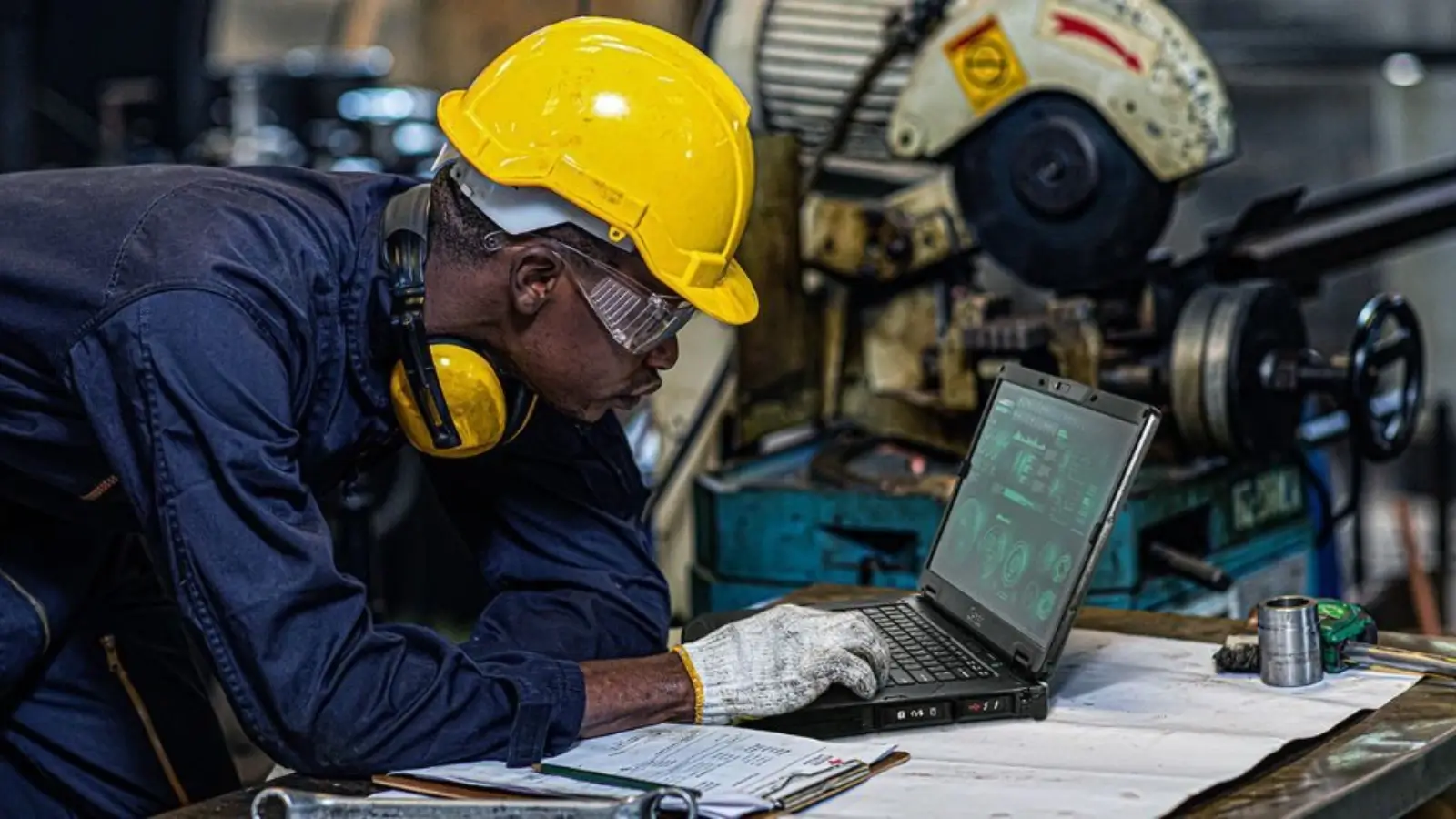
Bringing AI Beyond the Office
AI is changing many industries by predicting failures before they occur, automating complex tasks, and providing useful insights. And while many AI projects start in offices, labs, or data centers, their biggest impact is now seen in the field, where decisions must be made quickly, conditions can change suddenly, and errors can be expensive.
This is a challenge because regular laptops are not built for tough environments. Their hardware is fragile, batteries do not last long, and they often do not work well outside controlled spaces. As more organizations use AI in the field, they need specialized hardware.
Why AI and Rugged Computers Belong Together
Downtime is inconvenient and dangerous across industries such as public safety, utilities, manufacturing, and automotive maintenance, as field teams need quick access to information. They also need systems that keep running even if the network goes down, the weather changes, or shifts last longer than expected.
Edge AI helps solve these problems. By running AI directly on devices in the field, teams get faster results, don’t have to rely on a constant internet connection, and can make decisions then and there. Whether it’s analyzing live video, checking equipment health, or spotting problems in real time, AI gives teams better awareness when it counts.
Rugged computers make this possible. When powerful AI features are combined with hardware designed to withstand harsh conditions, organizations get both smart technology and dependable equipment.
What Makes a Rugged Laptop Truly AI-Ready
A rugged laptop built for AI needs must have strong performance, resilience, and long-lasting power to run tasks reliably outside the office.
Processing power is key. Today’s AI-ready rugged devices use advanced processors with built-in neural processing units (NPUs) that handle tasks such as analytics and automation simultaneously. Special AI engines and GPU support help speed up processing and keep the device efficient and cool, essential in field conditions.
Rugged laptops are more durable. Certifications such as MIL-STD-810H and appropriate IP ratings indicate that these devices can withstand drops, vibration, dust, water, and extreme temperatures, conditions that are common in field work.
Connectivity is also important. Features like Wi-Fi 6E, Bluetooth 5.3, and optional 4G LTE or 5G let teams connect to cloud and edge systems when networks are available, but still work on their own when they’re not.
Lastly, their battery life is often what makes these tools practical. Since AI tasks use a lot of power, high-capacity, hot-swappable batteries are needed for long shifts and remote work where charging may not be possible.
AI at Work: Real-World Field Applications
The benefits of AI-ready rugged laptops are easiest to see in everyday work. For example, in public safety, first responders use AI to analyze video from body-worn cameras or drones, quickly identifying threats, locating missing persons, or coordinating responses with better situational awareness.
Manufacturing teams rely on AI-driven predictive maintenance to monitor equipment health, anticipate failures, and reduce downtime. In utilities, field crews process real-time data from smart meters and IoT sensors to detect anomalies, stabilize grids, and respond faster to outages.
Automotive technicians use AI-powered diagnostics to analyze sensor data and historical maintenance records, predicting issues before they escalate and keeping vehicles on the road longer.
In all these settings, the result is similar: using AI at the edge helps teams respond faster, face fewer disruptions, and work more safely and efficiently.
Built for the Field: AI Performance Without Compromise
AI-ready rugged laptops such as the Getac S510 are built to offer both high performance and durability. With Intel® Core™ Ultra processors, built-in NPUs, and Intel® AI Boost technology, the S510 provides the power needed for demanding AI tasks while staying efficient.
The S510’s bright display is easy to read outdoors, and its design protects it from drops, vibration, dust, and water. Modern features like Wi-Fi 6E, Bluetooth 5.3, and optional cellular support help users stay connected to cloud and edge systems when possible.
It is also equipped with hot-swappable batteries that let users work without interruption.
Choosing the Right AI-Ready Rugged Laptop
When choosing AI-ready rugged laptops, it’s more important to find the right fit for your needs than to focus only on technical specs.
Think about the work the laptop will do. Knowing which AI applications you’ll use helps you decide on the right processing power, memory, and storage. The environment should also guide how rugged the laptop needs to be, taking into account temperature, dust, moisture, and sunlight.
And since network access can vary in the field, it’s essential to have flexible options like Wi-Fi, cellular, and wired connections. Battery plans should also fit real-world needs, especially for remote or long-term use.
Scalability is also key. Since AI evolves rapidly, devices should be able to handle future tasks and new standards, and withstand use without needing to be replaced too soon.
Powering the Next Generation of Field Intelligence
AI-ready rugged laptops are now essential equipment in high-risk, field-based industries. When organizations combine strong AI features with rugged reliability, they can modernize their work where it matters most: in the field.
As more teams adopt edge AI, enabled by faster processors, better 5G networks, and improved power management, rugged laptops will be key to future innovation. AI is no longer limited to the office, and the devices that run it need to keep up.