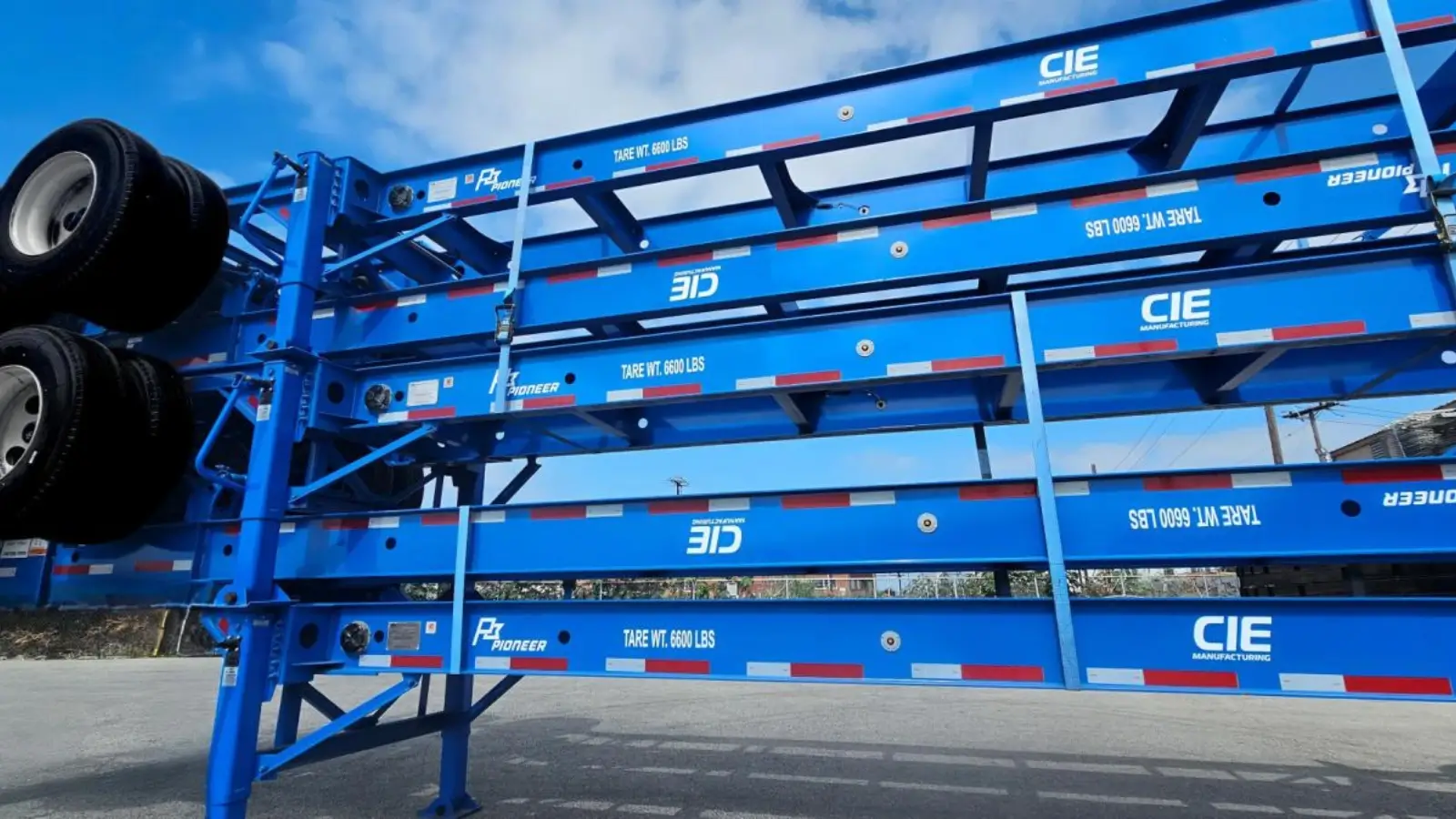
In the world of logistics and transport, a cargo trailer is more than just a simple trailer—it’s a highly specialized piece of equipment that powers modern intermodal freight systems. Also known in the industry as a container trailer or container chassis, this trailer plays a crucial role in moving standardized shipping containers between ships, rail yards, and trucking routes. Businesses that rely on cargo trailers are at the heart of global commerce, making them indispensable for efficient and cost-effective transportation.
The Cargo Trailer Defined
A cargo trailer—or container trailer—is a skeletal trailer specifically designed to transport ISO shipping containers. These chassis serve as the foundation for containers during over-the-road transport, built to endure heavy loads while maintaining safety and stability. According to CIE Manufacturing, these trailers are engineered to carry containers securely, thanks to essential components like twist locks, strong steel frames, reliable brakes, and durable mechanics.
Rather than enclosing freight within walls or a roof, cargo trailers focus on the container itself as the unit of transport. By carrying sealed, full ISO containers, logistics companies minimize unnecessary handling, reduce cargo damage, and improve operational efficiency across different transport modes.
Why Cargo Trailers Matter in Intermodal Logistics
Cargo trailers are critical because they bridge the “last mile” between port or rail terminals and final destinations such as warehouses or distribution centers. Without them, the concept of truly intermodal transportation—moving a container by ship, train, and truck without unpacking—would be far less efficient.
-
The twist locks on a chassis secure the container’s corners to the frame, preventing movement during transit.
-
The design ensures a balance between strength and weight, enabling the chassis to maximize payload while staying road-legal.
-
By staying sealed in their original containers, freight avoids unnecessary unloading and reloading, which reduces the risk of damage, loss, and extra labor costs.
This seamless container transport—from sea to land—makes cargo trailers indispensable in a global supply chain that values speed, reliability, and cost control.
Types of Cargo Trailers (Container Trailers) from CIE Manufacturing
CIE Manufacturing offers a wide range of container trailers (chassis) tailored to specific container sizes and transport demands. Here are some of the key types and their applications:
1. Standard 40’ Chassis (CityCombo / SL Combo)
-
Designed to carry 40-foot ISO containers. These chassis meet rigorous North American standards such as DOT, ISO, FMVSS, and AAR.
-
Available in both tandem and tridem axle configurations to suit different load and distance requirements.
2. 20-Foot Chassis (23.5’ / Lightweight 33’ Tridem)
-
Ideal for 20-ft containers, these chassis are compact, stable, and optimized for ports or short-haul operations.
-
The 33-ft tridem chassis provides extra strength with low weight, combining maneuverability with high performance.
3. Gooseneck 40’ Chassis
-
Features a gooseneck design that lowers the container’s center of gravity. This improves stability and height clearance.
-
Available with different axle configurations to match a variety of load and route needs.
4. Extendable 40’–45’ Chassis
-
Highly versatile, this chassis can stretch to carry either 40’ or 45’ container.
-
Eliminates the need for multiple fixed-length chassis, reducing fleet complexity and increasing flexibility.
5. Drop-Frame 43’ Chassis
-
Built for specialized containers like high-cube or tank units. The lower deck height allows for safer transport of tall or bulky container cargo.
By offering multiple chassis types, CIE Manufacturing empowers logistics companies to choose the equipment that matches their specific cargo, route, and operational requirements.
Key Engineering Features of CIE’s Cargo Trailers
CIE Manufacturing’s cargo trailers are more than just frames—they are precision-engineered for durability, safety, and long-term reliability. Highlights include:
-
Robotic Welding & Laser Cut Steel: Automated welds ensure consistency and strength, while laser-cut components enhance precision.
-
KTL Powder-Coat: A corrosion-resistant coating that helps chassis withstand harsh environmental conditions, especially near ports.
-
ABS Brakes: Anti-lock braking systems ensure safe deceleration, even under full loads.
-
LED Lighting: Efficient and long-lasting, LED lights improve visibility and reduce electrical issues.
-
High-Performance Tires: Durable radial tires contribute to stability, fuel efficiency, and wear resistance.
Together, these features help ensure that cargo trailers deliver reliable service day in and day out—even in the most demanding logistics environments.
Advantages of Using a Cargo Trailer
-
Intermodal Efficiency: Cargo trailers simplify container movement between ships, trains, and trucks without unpacking.
-
Cost Savings: Less handling, fewer labor costs, and lower risk of cargo damage translate into long-term savings.
-
Safety and Stability: Secure locking systems and engineered design protect loads throughout the transport cycle.
-
Operational Flexibility: With a variety of chassis types, users can match equipment to mission (e.g., short-haul, long-haul, specialized cargo).
-
Durability: Precision engineering, strong welding, and corrosion protection contribute to a long service life.
Choosing the Right Cargo Trailer for Your Fleet
Selecting the right chassis means aligning with your operational needs. Here are key considerations:
1. Container Size Compatibility
Identify whether you need chassis for 20-ft, 40-ft, or 45-ft containers, and choose a model accordingly.
2. Axle Configuration
Determine whether a tandem or tridem setup works best for your load and transport route.
3. Type of Use
For port drayage and yard work, a 20-ft chassis might suffice. For long-haul and international transport, a 40-ft or extendable chassis could be more appropriate.
4. Regulatory Requirements
Ensure that your chosen chassis meets key regulations: DOT, FMVSS, AAR, and ISO are critical for safe and compliant transport.
5. Maintenance & Durability
Look for high-quality materials (steel, corrosion protection), reliable braking, and a strong welding process to minimize maintenance costs over time.
CIE Manufacturing: A Trusted Name in Container Trailers
CIE Manufacturing, formerly part of CIMC, has solidified its reputation as a leading manufacturer of container chassis and trailers in North America. With production facilities on both U.S coasts and in Canada, they provide a robust dealer network and responsive service to fleets across the region.
Their commitment to innovation and quality—through precision welding, protective coating, and advanced engineering—makes their cargo trailers reliable, compliant, and built for the long haul.
Conclusion
A cargo trailer (or container trailer) is one of the foundational assets in intermodal logistics, enabling safe, efficient, and cost-effective transport of ISO shipping containers by road. With models tailored for different container sizes and use cases—alongside high-quality engineering—CIE Manufacturing’s chassis provide a strong, reliable solution for logistics professionals.