The modern home is an ecosystem of interconnected devices. From voice assistants managing our lighting to smart locks securing our perimeter, we live in an era of unprecedented digital convenience. However, this sophisticated infrastructure has a singular, glaring weakness.
It is entirely dependent on a consistent flow of electricity. When the grid fails, a "smart" home instantly becomes "dumb." Security cameras go blind, thermostats become unresponsive, and the digital brain of the house shuts down.
True home automation requires more than just connectivity; it requires resilience. Energy independence is no longer a political buzzword but a technical necessity for maintaining a functional IoT environment. A robust battery backup strategy is the missing piece in the smart home puzzle.
The Fragility of Digital Infrastructure
We often overlook how fragile our home networks are. A momentary flicker in the grid, lasting less than a second, is enough to reboot a modem. This disconnects every smart device in the residence, disrupting automation routines and severing remote access.
This latency in reconnection can be problematic. Some devices require manual intervention to reconnect to Wi-Fi after a power loss. If you are away from home, a simple brownout could leave your property offline and unmonitored for days.
The solution is not just about keeping the lights on. It is about maintaining the digital "heartbeat" of the home. A centralized battery unit ensures that the logic center of your house continues to operate, regardless of external grid conditions.
Defining Technical Energy Independence
Energy independence for a smart home does not necessarily mean disconnecting from the utility company entirely. It implies the ability to island your critical systems during instability. It is about bridging the gap between grid failure and restoration.
In the past, this was achieved with loud, dirty gas generators. These are ill-suited for the modern tech stack. They produce "dirty" power with voltage fluctuations that can damage sensitive microprocessors found in smart hubs and servers.
Modern energy independence relies on lithium-based storage. These units provide pure sine wave output, which mimics the clean electricity supplied by the grid. This is crucial for the longevity of delicate circuit boards in your expensive electronics.
The Role of the Central Energy Hub
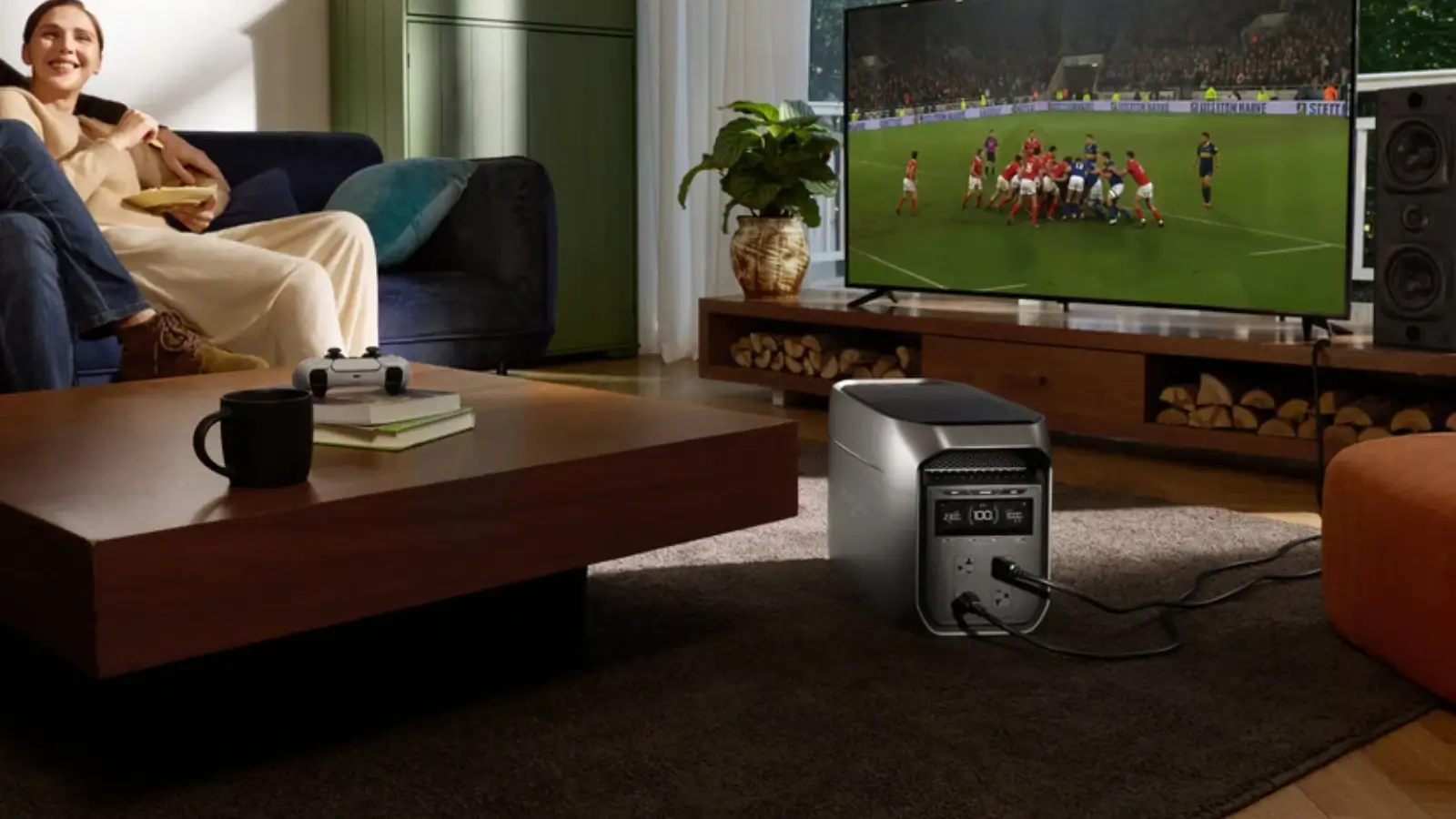
A dedicated energy hub acts as a buffer. It sits between the unstable grid and your precision electronics. For the tech-savvy homeowner, a high-capacity portable power station serves as this critical buffer, ensuring continuity.
Unlike a traditional UPS (Uninterruptible Power Supply) designed only for a desktop computer, a larger station handles multiple nodes. It has the watt-hour capacity to sustain a router, a smart hub, and essential sensors for prolonged periods.
This centralized approach simplifies power management. Instead of maintaining small batteries in every device, you rely on one robust source. This unit becomes the cornerstone of your home's disaster recovery plan, keeping the digital lights on when the physical ones go out.
1) Protecting the Network Core
The modem and router are the most critical components to protect. Without them, local network (LAN) communication fails. A portable power station can run standard networking gear for days, keeping your internal network alive even if the internet service provider goes down.
2) Securing the Perimeter
Smart locks and video doorbells often rely on low-voltage wiring or Wi-Fi. A prolonged outage can drain their internal backup batteries. plugging the central power hub into your security system's base station ensures continuous recording and remote alerts.
3) Environmental Monitoring
Smart thermostats and leak detectors prevent costly damage. In winter, a dead thermostat can lead to frozen pipes. A backup power station ensures these sensors continue to report data, allowing you to monitor home health remotely during a storm.
-
Network Gear: Approx. 10-20 watts continuous draw.
-
Smart Hubs: Approx. 5-10 watts continuous draw.
-
Security Cameras: Approx. 4-8 watts per camera.
Why Pure Sine Wave Matters
Technical enthusiasts know that not all AC power is created equal. The waveform of the alternating current dictates how efficiently a device runs. The grid provides a smooth sine wave, which induction motors and power supplies expect.
Cheaper battery inverters produce a "modified" sine wave. This blocky, stepped waveform causes heat buildup in AC adapters. It can introduce audio buzz in smart speakers and visual static in video feeds.
For a smart home loaded with microprocessors, a pure sine wave inverter is non-negotiable. It ensures that the backup power is indistinguishable from wall power. This prevents hardware degradation during extended runtimes on battery power.
Deployment Strategies for Outages
Integrating a backup unit requires strategic planning. You cannot simply plug it in after the power goes out if you want seamless operation. The placement of your backup unit should be central to your critical hardware.
Many users designate a "server closet" or a central tech shelf. This is where the modem, router, and smart home hubs live. Placing the portable power station here allows for short cable runs and easy access.
For extended outages, portability becomes a key asset. Unlike a Tesla Powerwall which is bolted to the garage, a portable unit can be moved. You can take it to the kitchen to run a coffee maker, then return it to the router.
The Economics of Battery Backup
Investing in resilience is an insurance policy for your hardware. The cost of a high-quality battery generator must be weighed against the potential loss. A fried server or a flooded basement due to a failed sump pump is far more expensive.
Furthermore, these units offer utility beyond emergencies. They can be used for energy arbitrage in areas with time-of-use rates. You can charge the station during off-peak hours and use that stored energy during peak times.
This versatility changes the ROI calculation. It is not just an emergency doorstop; it is an active participant in your home's energy management. It empowers the user to take control of their consumption patterns.
Integrating the Unit into Daily Life
The modern power station is designed to be seen, not hidden. With sleek aesthetics and silent operation, it fits into the living space. It doesn't need to be relegated to the garage like a diesel generator.
Smart home enthusiasts can automate the charging of the station itself. Using smart plugs, you can set the station to charge only when solar production is high. This creates a green energy loop within the home.
Pass-through charging is another essential feature to look for. This allows the unit to charge from the wall while simultaneously powering devices. It effectively turns the unit into a massive, whole-room surge protector and battery backup.
Future-Proofing Your Residence
The grid is not getting younger, and weather events are becoming more extreme. The frequency of blackouts is statistically increasing in many developed nations. Reliance on the grid alone is a gamble that smart home owners should not take.
We are moving toward a decentralized energy future. The ability to generate, store, and deploy power locally is the next frontier of home technology. A battery unit is the entry point into this new paradigm.
By securing your energy source, you secure your lifestyle. You ensure that the conveniences you have invested in continue to serve you, regardless of the weather. It is the ultimate upgrade for the intelligent residence.
Maintenance of Lithium Systems
While lithium batteries are low maintenance, they are not "no maintenance." To ensure your station is ready for an emergency, a routine check-up is required. Treating the battery well extends its lifespan significantly.
Store the unit at room temperature. Extreme cold or heat degrades battery chemistry over time. If the power station sits unused for months, the internal cells can become unbalanced, reducing total capacity.
-
Cycle the battery: Discharge and recharge every 3 months.
-
Firmware updates: Check the app for software improvements.
-
Clean ports: Ensure dust doesn't accumulate in the fans.
Conclusion
A smart home without power is just a collection of plastic and glass. To truly unlock the potential of home automation, one must address the foundation of electricity. Reliance on an aging infrastructure undermines the very intelligence we try to build into our homes.
A portable battery solution provides the stability that sensitive electronics demand. It bridges the gap during interruptions and protects hardware from dirty power. It transforms a fragile network into a resilient ecosystem.
As we continue to add more devices to our homes, the demand for stable power will only grow. Integrating a robust energy storage solution is the most "smart" decision a homeowner can make. It is the definitive step toward true energy independence.
Business Outstanders brings you sharp insights on tech, business, entrepreneurship, law, crypto, and more. We uncover what’s next. Stay updated, sign up for our newsletter and be part of the future!